Showing posts with label filim. Show all posts

Thursday, December 28, 2023

Reel Trouble


 Thinking about cinema on the 128th anniversary of its birth.  The so-called Seventh art has historically renewed itself every decade or so.  Origins in 1895, narrative in the 1910s, sound in 1929, color trickling in in the '40s, 3D and Cinescope (et, al) in the '50s, New Hollywood formally burying the studio system in the late '60s and '70s (further countered in the late 70's by Blockbusters, ironically ushered in by those same New Hollywood directors), video in the '80s, then digital and CGI in the early '90s (countered by a little blip of Indie film in the mid-decade).  

With no real innovations since, little wonder the product has grown so shoddy.  


On the turntable:  The Shadows, "Life Story."

On the nighttable:  Stephen Teo, "Wong Kar-Wai: Auteur of Time"


Wednesday, January 19, 2022

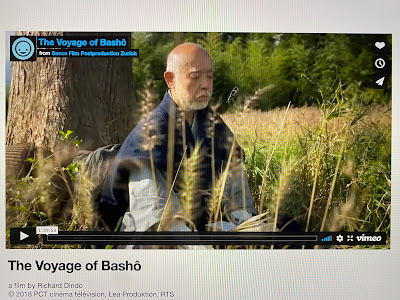
The Voyage of Basho


And from the "I totally forgot about this" file: 


"The Voyage of Basho" is a 2018 release by the renowned Swiss director Richard Dindo. Shot throughout Japan over the course of a year, Roger Walch's photography is a visual feast. I am happy to have played a small role in the production, as "landscape counselor."

 Watch here.


On the turntable:  Quincy Jones, "In the Heat of the Night"


Wednesday, November 11, 2020

Twenty-four shames a Second


I used this idle year to enroll myself in autodidactic film school.  As I cycle chronologically through films and directors, it dawns on me that the history of cinema is like childhood.  First you see, then you speak. 

It is obvious too why (with a few notable exceptions), the Hollywood film is a dead medium.  I've often felt that film as art began to spiral in the late 1970s.  Jaws created the blockbuster, and Star Wars was an exercise in developing tie-in merchandise rather than in writing good dialogue.  Then Heaven's Gate destroyed forever the director as auteur.  The freedom that filmmakers had been given in the late '60s was taken away, with the money men now making creative decisions sans any sort of creativity.  

The history of film is one of generational innovation.  First was film itself, then in the 1930s came sound.  Color followed in the '50s, then the freewheeling storytelling and technique of the '70s.  Digital animation in the 1990s revolutionized (and in my opinion dumbed down) the presentation of image.  

And since then?  Nothing.  We skipped a cycle about a decade ago, and are meant to be satisfied with a rehash of anniversary reissues (with the usual cosmetic surgery of improved definition and sound),  as a palate cleanse after the junk food violence that is supposed to entertain us. 

Roll credits.


On the turntable:  Ennio Morricone, "The Best of Ennio Morricone"      


Tuesday, July 28, 2020

Stuff from an Old Notebook #16


Notes from a Zen film retreat at Upaya Zen Center, April 2010


MANUFACTURED LANDSCAPES

Narration comes in where a viewer might grow bored.  The everyday is intensified in a way that takes the eye a moment to adjust. The bows of ships resemble shells and molluscs. The eye first goes to large objects, then we note as figures enter, dwarfed against the ships, or strip mines, or warehouses.  It is like looking at a Chinese landscape painting.  And we too are dwarfed, dehumanized.  No one person is sure of the scale of the system that drives all this.  There is beauty in the shots of tires and freeways, the eye finding relief in the curves, after all the shots of sharp metallic edges.  

Li Po, Tu Fu, and a hundred other poets, whole histories, folklores, cultures gone.  They defined China, and the places that defined them are soon to be gone.

The rhythm of the hands of the old women in the factories.  There is memory in those hands.


On the turntable:  Charley Parker & Miles Davis, "Historical Session"

Wednesday, April 29, 2020

On the Set


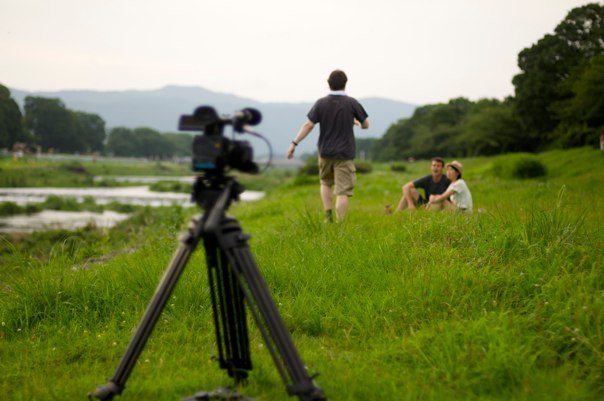
 Notes from the set of the 2008 Swiss/Japanese co-production of Tengu:

Filming one of the flashback scenes at Temple 36 on the course behind Ninnaji, which corresponds to Shoryu-ji in Tosa.  The sky changes from sunny to hail and back again, repeatedly.  The skyline of Kyoto in waning sunlight looks like a mouth full of broken teeth. Due to the rapidly changing light, there are many takes, and I eat pork until I nearly puke, knock back one half a bottle of red wine.  

Werner Herzog writes that 'acting is physical.'  My memories will be of running and running through the reeds, the lakeside, the Kurama forest.  I go through kata with a tree branch as a bo, and somewhere along the line I cut my finger badly on a nail, and worry about tetanus. The blood flows heavily. 

Laying in the waters of Biwa in February.   The crew offers me towels between takes, but I don't want to go from warm to cold too often. I choose to stay wet, but at least the sun is out.  It was fun to set dress the trees and hide signage, amusing to attract gawkers. 

During the shoot at the rural Shiga train station, I forget to tuck my shirt in.  In checking my watch, I lift the arm that is carrying my suitcase, making it obvious it is empty.  I must look suspicious, wandering around with this empty case, in terror-stricken Japan. 

The ridiculousness of filming the love scene.  I block how I'm going to kiss the leading lady, going from seated at a low table to reclining on the floor, all while kissing and keeping our faces in the frame.  After the actual love scene, I look up to see the gaffer leaning over us, a big grin on his face.    

The DP sitting on the floor cross-legged, his knees about an inch off the floor.  A testament to a career spent shooting at Ozu's camera level.  

Learning to pace myself during the many meal scenes.  I feel heavy and full too quickly, so simple sip lukewarm tea as the retakes grind on.  I'm playing a newbie in Japan, and find it difficult to misuse chopsticks

The problems:  
-The argument between the director who wants to avoid the tedious process of getting permission from the railway company and film guerrilla-style on the train.  The DP is nationally famous and doesn't want to put his career at risk.  Shooting is held up as they argue it out;  
-The inevitable trouble with microphones;  I belch and fart and forget to turn off when I pee;
-A few weeks after the shoot wraps and the crew leaves, the director wants to get a shot of me silhouetted against the mountains.  The woman selling tickets at Kuramadera somehow notes the camera in the handbag and refuses us entry.  We instead film up on Hieizan.

I'm exhausted at the end of each day, but sleep is odd, filled with dreams.  Perhaps acting brings the subconscious closer to the surface.   These psychological states take form in many ways:  seeing the shapes of foxes everywhere; getting a slight crush on the female lead with whom I have love scenes; conning myself into feeling I'm special since I am the lead in this thing.     

But it was the scenes with the Geiko who put it all back into perspective.  It didn't matter if I were the most famous actor in the world, or the Prime Minister, or a clerk from the Lawson's around the corner.  If I were paying the bill, I'd be one thing: the customer.  There is ultimately nothing special about simply being a prop, and taking up space.  


On the turntable: "Avalon Blues: A Tribute to Mississippi John Hurt (Various)" 

Wednesday, December 11, 2019

Generation Hexed


Japan's economic miracle begat what I think of as its cultural miracle, where rural communities were given funds to build attractions in the most unlikely of places.  It is astounding the types things you come across as you travel around the middle of nowhere.  

One of these is Matsue's Kunibiki Messe, a post-modern behemoth that squats on the shores of Lake Shinji.  With a design plan seemingly based on a painting by de Chirico, it is a building far out of place in the old castle town where Lafcadio Hearn wrote his best books.  For some reason it also had a cultural exchange office, which had an incredible number of Japanese books and films, yours for the borrowing.  Over the years, I read and saw just about everything.

And so it was that one day I borrowed a VHS copy of what became one of my favorite films, "The Ballad of Narayama."  I found the film's central concept horrifying, that of abandoning the elderly residents of a small rural village in the mountains when they became too physically unproductive to warrant any further feeding. (Like "Logan's Run" as set in 19th Century Japan.)   

Imagine my surprise when 20 years later I passed through a train station that bore the name of the mountain in Imamura's 1983 film, Obasute.  While the shooting location  was slightly to the south in Azumino, the train station stood at the foot of Ubasuteyama, these days referred to as Kamurikiyama.  I knew immediately I needed to climb it.  

It took me a few years, and in less than the ideal season.  I found myself in the neighborhood during the first days of December, and while I was concerned with early snow upon its 1200 meter flanks, I figured that at least the bears and the vipers would be asleep.  A quick look at Google Street View reaffirmed the station's remote environs, so I had a taxi meet my train.   The trip to the trailhead was meant to take 20 minutes or so, but about 5 km shy we came to a gate that definitively closed the road for the winter.  I did some quick calculations, and figured that even with the additional 75 minutes it would take, I could probably be down again before darkness fell. I paid my somewhat anxious driver and set off.  

The sun shone down on the road as I wound through the turns.  There were a good number of bear warning signs which didn't help my enthusiasm.   Within ten short minutes I was happy to see a van parked at the side of the road, with two forestry workers resting within.  Thank god for lunch hour. 

With a little persuading I got them to agree to drive me up. I wished that I had something to give them, but they refused all I did have -- a mikan and a granola bar.  Instead it was they who gave me something, a canned coffee that they pulled out from a box in the back.  (If you are a taxpayer in Nagano, I thank you.)

Ten minutes later, I began walking toward the trail, through a well-funded campground composed of a number of tidy cottages and a large central dining hall.  Just beyond a small array of monolithic stones named after Buddhist deities, the path began to switchback mercilessly upward.  I found myself quickly winded, due probably to not having had any real lunch, combined with the elevation.   But before long I was reentering the sunshine at the top.  

The view on this clear day was incredible, not only of the Chikuma rivershed and Nagano city beyond, but also of Mounts Asama, Ontake, and all three ranges of Alps.  Fuji's flat-topped cone was well-recognizable out in the far distance.  I offered a quick prayer in the shrine, and tried to puzzle out the worn characters on the much older stones nearby, attempting to see if they made any reference to the mountain's infamous role.  It was a lovely day made for lingering.  But after awhile I began to grow uneasy about bears, which the forestry workers had assured me were still lurking about.  So down the far side I dropped. 

It was easier going on this side (and I would recommend climbing from this direction, as a return trip from the carpark not far below).  Along the way, I startled something big which crashed down the hill below me, probably a bear from the sound of the movement.  Reaching a stone forestry road brought some relief, and my feet hitting pavement not long afterward brought more.  

Incredibly, a young construction worker raced by just at that moment, but unfortunately he was heading in the wrong direction to give me a lift.  My map showed that Kamuriki train station was only an hour away, and the day was still bright.  Long descending road walks relieve you from having to take care with where you place your feet, and the attention begins to drift.  The rhythm of my footfalls always bring songs to mind, and today it was "Her Majesty," by The Beatles," which went on much longer than the band's twenty-three second version on Abbey Road.   I was probably on my 123rd chorus when a trio of trucks rolled past, the last one driven by the worker I'd met earlier.  Happily he gave me a lift.  

For some odd reason I am almost always racing for a train at the end of my walks, but today I had about a half-hour to kill. The sun had begun to drop not long before, replaced by the chill.  I was dying for a hot drink, but a railworker told me that there were no machines nearby.  On the wall of the old station were newspaper stories about the cat who was a stationmaster there, a not unusual, only-in-Japan phenomenon.  Unfortunately the "stationmaster" was in the hospital, but there was a stand-in, a stuffed cat that sat where the ticket-taker would be. 

I gave it a friendly little pat on the head as I stepped out, thinking that the concept of aging in Japan had certainly changed over the past century.  While the elderly have grown more physically resilient due to more ample resources, trite distractions like the stuffed cat are a sign that emotional grown has ceased long before.

On the turntable:  Icehouse, "White Heat; 30 Hits"

Wednesday, December 05, 2018

Autumn Sketches


The day before going to Yonago, I watched the 1960 film ‘Akitsu Onsen.’ As the filming location of Okutsu Onsen was on the way home, I thought I’d drop by to walk the Okutsu gorge, atop fallen leaves slick with the night’s rain. 

The old Otsuri Inn featured in the film has long since gone, but the adjacent riverside bath of Hannyaji still exists, so I enjoyed a nice soak as the autumn foliage danced around me, falling quietly from above.

I later made a quick stop at Tsuyama castle, which is also briefly featured, though without the current structure built in 2005, nor the 300 yen entrance fee to pay for this folly.


On the turntable:  Grateful Dead, Dick's Picks Vol. 15"

Tuesday, December 29, 2015

The Empire's New Clothes


(SOME STAR WARS SPOILERS MAY FOLLOW)

Watching the first Star Wars back in 1977, was revelatory.  Like many of my generation, it was a high water mark in our childhood.   The film launched in us hundreds of games, where we ran around the woods or housing construction sites, having shootouts with invisible stormtroopers.   I was probably a little too old to play with the subsequent toys and action figures, but I did anyway. Later I would be disheartened to find that these product tie-ins marked the first shift in American film going from an art form to a product, and by the beginning of the next decade, the quality began to free fall, from which in my opinion it has never recovered (exemplified most aptly by the poor standard of Star Wars episodes I-III).  Hollywood cinema is critically ill and George Lucas is responsible for the initial infection.

I was greatly optimistic about the latest installment, particularly because Lucas had so little to do with it.  Nostalgia washed over me as the opening scroll began to roll away from me, in IMAX 3D.  Despite a somewhat slow start, I found myself quickly enthused with the story.  I really enjoyed the in-jokes and the familiar tropes...until the tropes began to look a little too familiar.  By the end of the film, I felt that I was back in 1977 watching A New Hope again, but with the names changed and the roles and genres all mixed around.  Driving home afterward, I wasn't sure if I'd seen a sequel or a remake.  

That said, I truly enjoyed the film.  I don't usually go for big budget popcorn movies anymore, but this one won me over.  I quite look forward to seeing the follow up films, and more than that, to introducing my daughter to the franchise, once she is a bit older.  

Truth be told, I didn't open my laptop this morning in order to write a review.  Instead, I wanted to write what a wonderfully Singaporean experience I had.  I watched the film in a theater belonging to Shaw Brothers, who had an influence equal to Star Wars in my upbringing, in their chop-socky films that I watched every Saturday on the Just for Kicks program on New York's WWOR.   While living in Hong Kong in 1997, I went to Shaw Studios on a pilgrimage of sorts, hoping to see the full scale Qing dynasty town they'd built on their back lot.   Overdressed in a suit and taking the guise of a foreign exec, I failed to convince the security guard to let me pass, though I did have better luck talking myself into Jackie Chan's offices a short walk away at Golden Harvest.   

But I wasn't thinking about that here in Singapore.  Instead I was delighting in the fact that the movie hot dogs are chicken rather than pork (beaks and feet rather than snouts and tails?), in respect of the country's large Muslim population, including the girl at the concessions stand who handed it across the counter to me, along with hot sauce rather than ketchup.  Compared to the New Jersey suburbs of 1977, it truly is a galaxy far far away...


On the turntable:  "Fusion from India"
On the nighttable:  J. G. Farrell, "The Singapore Grip"


Sunday, February 16, 2014

Sunday Papers: Audie Bock


“There are no happy endings for Naruse, but there are incredibly enlightened defeats.”


On the turntable:  The Rolling Stones, "12x4"

Thursday, October 25, 2012

Off the Road?


Between tours last week, I passed five days in Kyoto, though rarely at home.

Saturday.  Drove over to Gichu-ji, and Basho's grave.  The grounds were small, but busy.  Luckily, we left as a large group was coming in.  I was surprised to see that Kiso Yoshinaka had also been buried there.  I knew had been slain in the swamps of Biwa, but didn't know that his head had been interned here.  After introducing Basho to Sora, I of course composed a verse:

The roar of leafblowers
Scatter leaves and shatter peace,
At Basho's final idyll.

Afterward, we went over to the lake and found a flower festival.  To my delight, there was also some kind of German Octoberfest going on next door.  I enjoyed brats and beer down on the sand.  Thus fortified, I showed Sora how to skim stones.  But on a beach this heavily trodden, good stones were hard to find.  So we turned our backs to the water and headed toward one of those inflatable bouncers found at most funfairs.  The kinpatsu crew in charge gave me the nod, so I led Sora inside this giant maniacal rabbit, where I bounced around with the other kids, trying not to fall atop my daughter who bounced with laughter.  

Back in Kyoto, we went to perhaps the world's smallest festival.  For polished Kyoto, it had a rough DIY feel, and most of the people running the games and food stalls looked to be locals rather than the usual chimpira set.  The following hungover morning, they'd drag a mikoshi through the street, for the first time in 52 years.

Sunday. Spent part of the morning biking around Kinugasa, trying to find a trail up to Ura Daimonji. Unlike her well-climbed counterpart across town in Higashiyama, there seems to be no way up.  I've climbed it once, after scrambling over a wall at the top of a Buddhist cemetery.  Now I can't even find that temple.  At any rate, it was a lovely morning spent biking under the trees and around the hills. 

In the afternoon, I took part in a casual discussion about the Shikoku Pilgrimage with Tom Stanley (who founded Walk Japan), and Charlie Canning, who's just written a novel inspired by his walking the pilgrimage.  A good afternoon in good company.   

Monday.  Drove out to Shiga again, to share with Miki and Sora a couple spots that I particularly enjoyed when I'd walked through back in August:   Oiso no Mori and Samegai.  We returned to that trout shop for lunch, but rather than a repeat of a quiet meal I'd had, there was a drunk old man there smoking at the counter and talking in a ridiculously loud voice.  The service too was quite poor, but the fish held its own.  

After lunch, we drove up to Mukainokura, ghost town I found here.  The drive up was along a narrow road strewn with rocks tumbled from the hillside above.  There was no guard rail to protect us from a sheer drop into the forest below.  I particularly liked this, this holdover from when Japan hadn't yet become such a nanny society.  Considering that this former charcoal-making village had been abandoned almost 30 years before, the road was in pretty good shape.  At the top were a few structures now collapsed in on themselves, with tiles and brick cooking stoves standing on squared clearings amongst the trees.  It was a quiet space, the air clean.  Down a path in the woods was an huge tree that had split into 12 trunks, and was subsequently deified.  We milled around here awhile, finding ourselves once again in a place where we felt rooted, unable to draw away due to the quiet, the peace.

Tuesday.  Riding in the rain reminded me that I actually am a resident of Kyoto.  As my work now takes me elsewhere, I usually don't need to be out in bad weather, like I used to back when I had been employed here in town. As the rain splashed my face, I felt at home.  So I braved the weather, looking forward to a slice of  Japanese film history, in order to view an installment of Tora-san on a big screen at the famous Minamiza, much like I'd seen that Godzilla flick back in the '90's.  (I deeply regret not having gone to see 'Seven Samurai' when it was screened as the final film of that beautiful old cinema on Kawaramachi that closed a number of years ago.)  At the theater, I found my seat amongst all the old timers.  As the light flickered across their faces, I wondered what was going on in their minds, in what manner were they were playing out their own version of Showa-era nostalgia.  It was interesting to see where in the narrative they'd contribute their subdued laughter.  When the film ended, we all wandered amongst the Tora-san memorabilia that had been displayed in various corners of the Minamiza.  Under one glass case was Tora-san's suitcase and hat, and in gazing at these artifacts of simpler times, tears nearly began to well up.  But as Mike Watt cautions, "It's not reality, just someone else's sentimentality."

Afterward, I continued the Showa theme and went to read "Coffee Life in Japan" at Maki, an old timey kissaten near my house.  It wasn't particularly pleasant, with the hard wooden seat and every single man there but me emitting smoke from his lungs.  Thus polluted, I fled for home.

Wednesday.  I had a kinder kissaten experience at Cattleya, on the site of an defunct Gion shrine from whose old well they draw the water for their brew.  Later, I biked over to see a couple of 1970's documentaries on old Japanese craft and culture.  The first, on Rikyu, was informative, but the second, on the paintings and woodcarvings of Shiko Munakata, was mindblowing.  Creativity literally poured out of the man, his hands moving at the speed of thought.  (No English, but you can get a sense of this guy's incredible fury and energy here.)

My feet took on a similar speed as I raced up the Kamogawa in order to pick up my daughter from school, for some brief moments of play before, like Tora-san, I'd set off bags in hand, out on the road once again...


On the turntable:  Pat Benetar, "In the Heat of the Night"
On the nighttable:  Shimazaki Toson, "Before the Dawn"

Thursday, September 23, 2010

Children of Water


Fall in Kyoto has much to offer. Multi-colored maple leaves strewn across stone like little lost gloves. Dango eaten beneath the full autumnal moon. Festive student carnivals played out in game and song.

This fall, there is even more. On October 1st, a band I used to play with, Morphic Jukebox, will play a short set prior to the screening of a film in which I had a hand in, "Children of Water."
It's as if I never left...


Details here at Deep Kyoto
.


On the turntable: Neil Young, "Dreamin' Man 92" (I'm here too, in the audience...)


Tuesday, August 17, 2010

Izu Dancing


My work situation has finally stopped thrashing about, entitling me to some free evenings. The nightly monsoons have kept me away from the live music down on The Plaza, so films once again present themselves as alternative. After the marathon stretch of Kobayashi's "The Human Condition" (we could only handle one hour doses of this brutal, 10 hour masterpiece), we've settled in with Shimizu Hiroshi. He reminds us some of our beloved Ozu, manipulating actors as props as a means of diminishing the subjectivity of role, and creating a story that speaks to the universal in us all. If Ozu was a maker of tofu (as he famously claimed), then Shimizu is a master of okayū. He shares Ozu's slow pace of storytelling, yet utilizes camera techniques seemingly cribbed from European Surrealist films of a decade earlier. These effects weren't commonly seen in Hollywood until being 'pioneered' in Citizen Kane in 1941.

Shimizu was one of the first directors to commonly use location rather than sets. To view the dirt roads of 1930's rural Japan is to see the contemporary Laos roads over which I traveled this winter. It also shares a lot with the deep-country Shikoku pilgrimage trails I walked last autumn, minus the power lines and vending machines. Shot on a bus actually traversing the Izu countryside, "ありがとうさん” ("Mr. Thank You") features scenes of a long gone country life rolling behind the characters ,
showing it such deference that the landscape itself eventually becomes more important than the actors themselves. It is one of the earliest road movies that I can think of. As I watched it, I surprised myself in that the film reminded me somewhat of John Ford's 'Stagecoach' (filmed three years later), where archetypes are thrown together, then bound by the landscape through which they pass. But rather than solidifying that bond through the drama of an Indian attack, Shimizu's film stays true to the fact that most of our human encounters stay light and impersonal, in our sharing moments with strangers who will remain just that. His films offer glimpses of life that, while possibly thought mundane at the time of release, bask in a beauty that is both bittersweet and enchanting, made more so by their fleeting nature.


On the turntable: Drive-by Truckers, "The Big To-Do"
On the nighttable: Hammett, et al., "The Essence of Santa Fe"


Thursday, August 13, 2009

Takenouchi Kaido


The heat had come back. And with it, David Attenborough. When the simple act of making a decision caused me to break a sweat, I returned to my tried and true method of beating the heat: watching the BBC documentary, 'Blue Planet.' The underwater photography creates a psychological feeling of coolness, as if you yourself are underwater.

Deciding then that all the sitting around contained the risk of my taking on the size of the cetaceans drifting across my TV screen, it was time for a walk.

I chose the Takenouchi Kaidō, which is just north of the Katsuragi Kaido that I had walked in June. I left the train in one of those bedroom towns that are the cul-de-sac of dreams. Today was the official start to Obon, and the few people I passed were gearing up for the holiday, carrying flowers and decorating graves and jizo. At the corner in front of a school was a makeshift site with flowers, drinks, and two crossed baseball bats. I'm guessing that a child had been hit by a car here, poor thing.

The town seemed to take great pride in this Kaido, which goes back to the year 613. There were frequent stone markers and, like other old Osaka roads, the asphalt was a different color than usual, making it very easy to follow. In fact it followed a different route than that in my guidebook, one that mercifully kept me off of busy roads for the most part. It led me out of the new town and climbed a narrow road lined on both sides with Edo-style homes that had probably been inns for travelers. Above this was a small museum with displays on the Kaidō's history.

Leaving the 19th Century, I came to the inevitable busy road that I was forced to follow up and over the pass. It was a dismal hour, but for the stones and Buddhas at the top. Just below, I passed a guy dressed like a civil servant, wearing the wrong shoes and holding a newspaper close to his face like he was on the train. A couple times a year I'll come across people like this, who look suspiciously out of place, and it spooks me every time.

Once on the other side of the pass I was in Edo again. There was a small museum to Basho, who had also walked this route. The banana tree in the garden was a nice touch. At the bottom of the road was a magical forest. I expected to find a shrine under the dark trees, but there was none. Bizarre, this ancient grove in the middle of prime suburban real estate.

As if on cue, the valley in front of me was fast filling with storm. The Katsuragi peaks looked their part as the lair of wizards. As I waited for my train, I felt that this road, despite its age, had been minor, though it served as a nice 2 hour diversion. And here at the end of this post, I feel like I have nothing new to add; these walks are starting to get more and more similar. There was the usual busy road, the obligatory beautifully maintained street, the typical confusion.

It was at that moment that I saw the Tengu...


On the turntable: Miles Davis, "Complete Miles at Montreaux"
On the nighttable: Frederik L. Schodt, "Native American in the Land of the Shogun"
On the reel table: "Lagaan" (Gowaricker, 2001) 

Friday, August 07, 2009

Children of Water

 
http://www.deepkyoto.com/children-of-water/

"An Interview with film-makers Roger Walch and Ted Taylor

I love film-making… I love to think of stories, to make a film, to edit a film, to put the sound track together… And as soon as I’m finshed with a film. I want to do the next one…
(Roger Walch)

IMG_0982
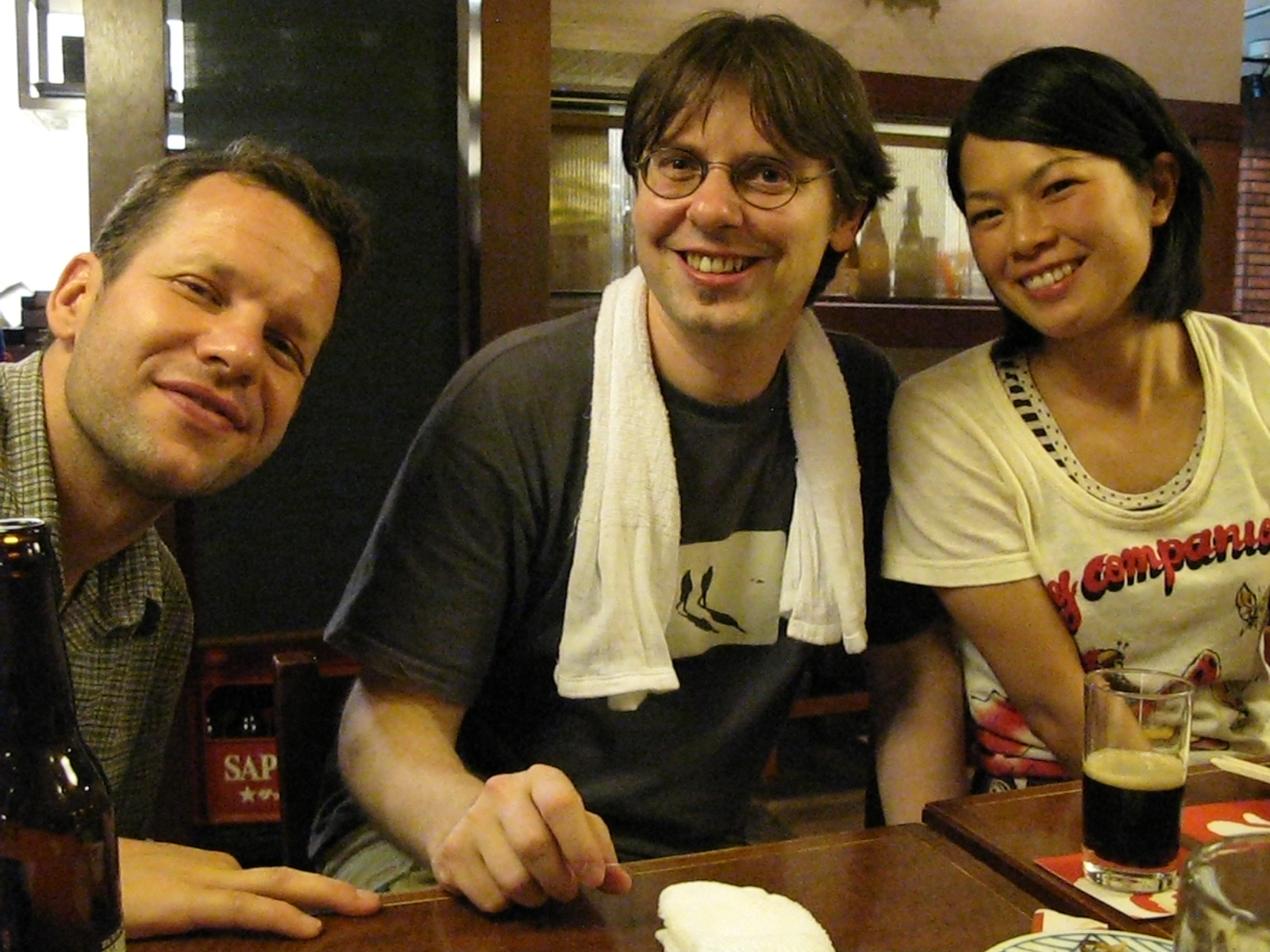
Left to right, Thomas Cramer (sound, lighting and still photography), Roger Walch (director), Lili Sakamoto (actress).

Last week Ted Taylor invited me to dinner with the makers of the movie “Tengu” in the izakaya “Tengu” (do you see what they did there?). I spoke to Ted and to the director Roger Walch about their new film project: “Children of Water”. They had just completed a long day location shooting at Itami airport, the Kamo river, Yoshida yama, and in front of Tengu. Though tired, over a bite to eat and a few beers they waxed enthusiastic about their new movie. Roger explains the plot as follows:

After one year in an ESL-course in the US a Japanese graphic designer returns to Japan and discovers that she is pregnant. She contemplates abortion, but her American boyfriend strongly opposes and flies to Japan to convince her to keep the baby. During his stay he not only gets to know life and customs in Japan but also different moral and religious values.IMG_0978

Ted: It’s a cross-cultural thing. He’s trying to come back and save the relationship and he wants to have the kid, but she thinks he comes to support her. She thinks he’s coming to be kind like “oh I’m gonna come with you and be at your side while you have it”. You know. Whereas, he’s coming to prevent her from having it and convince her to come back to the US, she’s more businesslike about it,
Michael: She’s already decided?
Ted: She’s more black and white about it, right. And he’s more like no, no, no! He’s there to keep the relationship alive and she’s just dealing with the baby situation so again they’re not communicating. Roger was saying first he was just gonna do rooms and shooting in rooms, but now he wants to shoot a couple of days around Kyoto because he said, well you know we should show some Kyoto… He is using this as a platform to show more about Japanese culture – so things related to children and the death of children like jizo [see note at end of article] and kokeshi…
Michael: Kokeshi?
Ted: Kokeshi is like – you know those kokeshi dolls.
Michael: Yeah. How do they relate to that?
Ted: Um, in particular up in Tohoku, in the old days when farm families didn’t have enough, they would have an unwanted child, and they couldn’t feed it and they would basically starve it to death or kill it. They would get a kokeshi doll that would basically be a representation like the spirit of the kokeshi doll is actually in…
Michael: That’s where kokeshi dolls come from? That’s horrific! I thought they were just like cute little dolls.
Ted: Yeah. Exactly and that’s the reaction I think. And that’s why… the Tohoku region is basically putting the kabash on that, they are really keeping that fact underground now because kokeshi dolls are considered a folk art for that region. A lot of tourism is based on people buying that as omiyage. So were people to know these represent the spirit of a child, people would not be buying these things… “Ko” [子] is child and “keshi”is like kesu [消す].
Roger: Kesu. Like “erase a child”.
Michael: It gets creepier every time you talk about it!
Roger: You can hardly find any reference to it on the internet because in northern Japan they are now –
Michael: How did you find out about it?
Roger: It’s just logic. You look at the name. The Japanese characters.
Michael: But to find out that that’s what it was for you must have done some research.
Roger: Some Japanese told me and … it’s like the ubasuteyamas [姥捨], you know. Where you throw away your grandmother in the mountains…
Michael: There was a short story…
Roger: Yeah, Narayama Bushiko “The Ballad of Narayama”.
Ted: It’s a brilliant film. Have you seen it? I’ll give you a copy…
Roger: There’s two films, a black and white film and the remake by Imamura Shohei in 1983. And that’s a very good movie. I think it’s one of my favorite movies. It’s about when the old men, old women reach the age of 70 they have to make space for the young generation.
Ted: Like Logan’s Run?
Michael: I was just about to say that! (laughs)
Roger: Kokeshi is a little bit like this ubasuteyama. You know in Japan, until 100 years ago to kill your own child was not a big deal or a big sin. It’s just if you couldn’t feed them… The same happened in Europe.
Michael: There was a lot of rural poverty wasn’t there?
Roger: Yeah poverty and especially in the countryside, if you live in a valley and in long winters… so that’s one explanation of the kokeshi. Of course the officials of Yamagata and Akita will not admit it. Kokeshi are a big export. …A good friend of mine, a French guy who lived in Kyoto, his name is Eric Faure and he wrote three books on Japanese cults and demons and spirits so he’s an absolute specialist on Japanese ghosts and demons and myths and legends and everything and I talked to him about kokeshi too. I brought up the topic and I said I need a kokeshi doll as a prop for my movie and he said never ever get a kokeshi doll at an antique store, he really urged me never ever get a kokeshi doll at an antique store, never ever get a second hand kokeshi doll because it could be possessed by the soul of a child.
Ted: If they were new they would be fine because they are technically pure but if you were to buy them at an antique shop you are technically buying a fetish item that has the spirit of a child in it.
Michael: Eek!
Ted: Yeah. It’s like Chucky yeah.
Roger: There is a famous temple in Kyoto, not far from Horikawa/Imadegawa and it’s the doll’s temple. It’s where you bring your possessed doll! It’s a little bit north-east of Imadegawa/Horikawa. The temple is run by nuns, and there are dolls with growing hair… behaving strangely . If you have a doll that is possessed they do the exorcism and they destroy it for you.
Ted: So we’re using the film as a springboard for that, this fantastic, supernatural element of Japan, but it’s not so overt like the whole Tengu naked kitsune thing. It’s more like this is just part of the culture…

Picture by Thomas Cramer

[Roger and Ted co-wrote the script for “Children of Water”. I asked Roger about the script writing process…]

Roger: I outlined the script and I wrote some basic dialogues, or my ideas for dialogues… he [Ted] kind of works them out and puts them in his words… a little bit more eloquently than my English. Basically I laid down the story…
Ted: I do have to say, if you’ll allow me to be immodest for a minute, I tried to write an emotionally powerful scene without having a whole lot of faith in it. But then when we acted it, it was quite powerful. I got kind of emotional and there was a great sense of anger in both of us… I could feel it building in me as we were acting so that was really cool. I mean again you know I’m not an actor, I don’t know what to do as an actor but to be able to create an emotion out of nothing, for the first time to ever do that, it was like wow – we actually acted. She and I, neither of us are pros but it was like wow we actually created emotion. And Roger said he was watching the dailies that night and he said yeah it was really good. The words were good. The way we conveyed the words were good. So I was really happy. And I told Roger that. My words are my strength not my acting. I have more faith in what I write. That’s why I’m happy to write. Because when we are saying the words later, when we are filming it I can feel more confident in what I’m doing when I try to convey these words.
Michael: So when will the film be finished and ready to show?
Roger: That’s a good question. A very good question. We will have to finish shooting with Ted by the 4th of August because we leave for Switzerland on the 5th. And then Ted will be gone. You know he leaves in September. So in September we will do some location shots or just her alone. I’ll do some things in September. Then editing and everything, post production, probably end of the year, beginning of next year.
Michael: And distribution?
Roger: Yeah! Always the question. Showings are still undiscussed. (laughs)
“Tengu”, is generating some interest… we show it here and there. I had screenings in Tokyo and Nagoya and I’ll show it in Switzerland in August, and…
Ted: Bringing it to New Mexico next year…
Roger: Yeah right, and I’ll show it in Tokyo again in October and December… I’ll send it to festivals and everything but there is no distributor. …It’s a short film and it’s a very current theme so it’s easy to send to short film festivals. The problem is I love film-making but I’m not a business man, I love to think of stories, to make a film, to edit a film, to put the sound track together…
Michael: But actually selling it is a weak point?
Roger: Yeah, totally, totally, totally. I’m totally not interested in that at all. So what I need is a producer..
Michael: A Brian Epstein?
Ted: Yes, yes yes. A Colonel Parker.
Roger: And as soon as I’m finished with a film. I want to do the next one. I don’t want to sit back for two years sending it to all the festivals – it bores me to death!

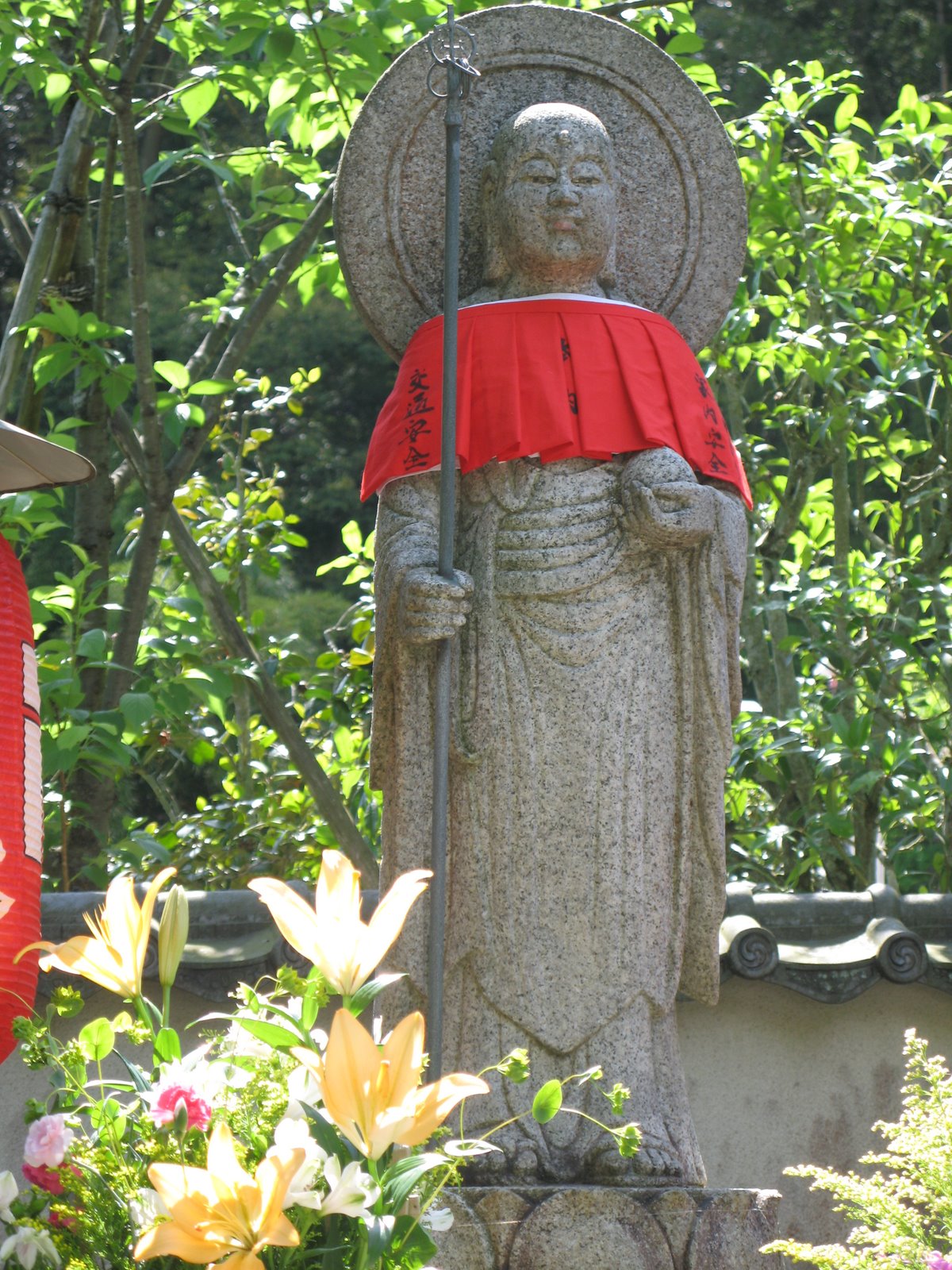
Jizo at Suzumushi Temple - Picture by Michael Lambe

Note: Jizo or Ojizosama is a kind of  Buddhist saint, considered to be the patron of children, particularly those who die young. His statue can be seen everywhere in Japan, by the roadside, in temples, shrines, up a mountain or in a forest. Often he is dressed in a red bib or decorated with childrens’ toys to make his appearance less fearsome to the spirits of the children he will guide into the afterlife. More recently in Japan he has been worshipped as the guardian of the souls of stillborn, miscarried or aborted fetuses. These are known as 水子 “mizuko” or “children of water“.

You can see trailers for Roger’s previous body of filmwork on his website here: rowmusefilms.com. Roger is also an accomplished musician. He writes his own soundtrack music and performs regularly as a pianist with a shakuhachi player, percussionist and trombone player. You can see some of his musical work here: shakuhachipiano."


Wednesday, July 22, 2009

Tokai Shizen Hoedown XV (Pt 1)


Miki and I wanted to escape Kyoto's Gion Matsuri like the plague. We still had to finish the Yama-no-be section of the TSH. For whatever reason, our guidebook neglected to cover this section, and the usual TSH bloggers had little to say either. One guy did it over four 6-hour days, but he proves to be a powerhouse, clocking times much quicker than ours. We reckoned that if we carried camping gear, we could do it in three long days. The additional weight would slow us down of course, but it would be good practice for the six week walk we have planned for later this summer.

On the Japanese national holiday commemorating the sea, we once again headed to the mountains. We spent Friday night in Nabari, in one of those small seedy hotels that blurs the line between business- and love-hotel. A cheap dinner in a locals only izakaya fuelled us for an early start the next morning. The bus had us at the trail head before nine. A month before, we stood in the same place, admiring this same view. But this day was to teach me that those same mountains whose shapes you most admire tend to bring the most grief. A sudden ascent led us quickly through a village and into a forest where we soon became lost. The path here is well marked, but a typhoon had caused some heavy damage to the region, sections of the hills shoved violently down into the streams below. The path took some unusual twists and turns, no doubt created by the footfalls of hikers winging it. We found ourselves looking up at the remnants of a slide. After poking around looking for alternative routes we decide to push straight up the slide, happy to find the actually trail just above. We soon came to a parking area, where a frog-like granny sold unseasonably warm drinks. I wanted something cold, but her cute expressive face nearly made me cave. Just above this lot was the Soni Kogen, a wide grassy plateau that rose up toward three peaks. A marshy lake filled the basin between and beyond it, we could see small figures pushing their way slowly up a long, straight diagonal toward the 800 meter pass. For some reason, my mind flashed onto a famous eight minute long take from Wender's "Wrong Move," where his characters riff about life while ascending toward similar heights. The climb was quicker than expected, through grass moving in waves toward the col. Other figures were higher up on the peaks themselves. Our own route brought a merciful descent, into a well tended forest, and eventually to farmland well fortified against hungry wild critters. We passed a woodcutter with a machine slung over his shoulder in a way similar to Mifune's wanna-be samurai slung his in Kurosawa's classic. A bearded artist-type was weeding amongst his chickens and goats. One kind old gentleman offered us a ride. The other villagers we passed were equally nice and friendly, but one disturbing thing about the place was that the trail signs had been altered to point toward a single destination; some kind of herb garden for tourists. We really need those markers as we didn't have a map. Mie performed as well as expected, offering not only well-marked trails but also the occasional map. We sat beside one of these, eating lunch in the shade of a sake shop. The map showed that we'd be spending the afternoon going over two 900 meter peaks and both Miki and I seemed to dawdle over our food, not wanted to face the inevitable.

We eventually moved on toward Ōborayama. Halfway up the mountain we passed the only temple we'd see in two days. Beyond it was a field of bizarre rock shapes. Apparently this whole mountain was supposedly the body of Zao Gongen, the deity so beloved to the yamabushi. And typically, spiritual peaks are in the best shape. The forest up here was lively, frogs jumping all about, doing extreme leaps off the trail and free-falling out into open space below. I saw more than one bounce headfirst off trees or rocks, wondering each time if their joints and heads were as elastic and squishy as they look. And the higher we climbed, the bigger the frogs were. Long legged spiders moved out from beneath our feet, their extreme appendages looking like sci-fi moon landers. Most bizarre were the crabs that never fail to surprise me when I see them at these heights, near no water whatsoever. We moved below the peak and came to a stone trail that paved the ridge. The stones were weathered and uneven and slowed our pace a great deal. There was no surety to our steps due to many of the stones rolling if trod upon. Another slide forced us to drop far below the ridge, then rapidly up again. We came across more and more of these rapid ascents, striated by those helpful 'log' steps that are a boon to hikers everywhere. New they might serve a purpose, but years of erosion turns them into hurdles, the hiker then forced to goosestep over them. Killer on the knees. Up until now I'd been thankful how Mie had kept the trails well-marked and clean, but now it seemed excessive.

We soon came to Amagatake. Whereas the former mountain had been green and teeming with life, this mountain was the land of the dead. The flora? Cedars. Fauna? Cicadas. We moved along the bare forest floor devoid of anything but dirt. More of those deadly steps strained our knees as we moved up and down the hills. The descents were most fearful, the logs shifting with our weight. My footing wasn't sure yet, my center of gravity uncertain under the heavy pack. As we moved downward, we saw a sign that promised a short cut that would save us nearly a kilometer of walking. Instead we walked nearly three times that as we moved the wrong way along a road. Miraculously, a car came from nowhere and the driver set us straight. No more short cuts.

Around six-thirty, we finally came to Menard, a posh resort for golf and tennis and overpriced food that sprawls across the hills. We stocked up on water, then found a nice patch of grass at the resort's far end. As we were illegally camped, I won't reveal exactly where, but we had toilets, a vending machine, and BBQ pits. We had dinner near the latter, as stars came out and fireflies flew by, bigger and much faster than their citified cousins. We waited until after dark to set up the tent and settled down for a restless sleep. Resort workers came and went from a building not far away, every voice bringing anxiety about being caught. The cicada had quieted down considerably after the sun fell, but their occasion soft buzz sounded too much like the footfall of large predators, bringing me quickly back to alertness. A couple of deer had a conversation down where I'd hung my sweat-soaked clothes. I pictured them having a feast at this newest salt-lick, and my shreaded clothes strewn about the next morning. And then there was the genius who parked nearby, turning his car stereo up to 11, and blasting some asinine talk radio from 4 to 4:30. Thanks dude...


On the turntable: "Putumayo Presents Acoustic Africa"
On the reel table: "Omohide Poroporo" (Takahata, 1991)

Saturday, March 28, 2009

Tokai Shizen Hoedown XV


We had three days ahead of us and blue skies overhead. At an early hour, we found ourselves yet again walking away from Ishiyama-dera Station. This being the Shiga suburbs, it didn't take us long to lose the trail, always marked at annoyingly random intervals. (I said once again how I wanted to write a letter to the parks department, and this time Miki might actually hold me to it.) Despite walking lost between cookie-cutter houses, we made our way toward the tall hotels farther off, knowing they marked Nango Onsen and the bridge that would take us east across the river. The houses fell away quickly and we were soon on a farmroad that shook with every passing truck. The mountains weren't too far off and we were on them quickly. This area is known by the hopeful moniker of "Konan Alps", thought we found out later that this name referred only to the two low hills that rose to our left like perfectly shaped breasts. The figure of a lone hiker leaning into a stick was making his way slowly and gingerly up their steep sloped sides. The trail we were on was lovely, leading us along a stream. Just past a small Fudo Statue, a trio of waterfalls splashed their way down a series of huge boulders. We found a spot between them and tucked into our riceballs. Three old women suddenly came out of nowhere and complimented us on our perfect picnic spot. We surrendered it soon afterward and began to really climb, higher into the wilder and unspoiled reaches above.


At the top was Fudo-ji, and our approach was marked by more Fudo statues. One had a freakish gaze which followed us as we passed between the make-shift torii arch that serves as the barrier between the land of the living and the metaphoric land of death that belongs to Shugendo. The mountains where the yamabushi play are always marked by a certain quality. There's always the same sort of wind, the same sort of chill and darkness, with the clouds hemming in low overhead, and tree roots pushing up from the earth hazardously underfoot. This path is well-trod, sunken below the rest of the forest. The bird song, what little there is, sounds like a rusty gate. The temple grounds themselves are sparse, a few small structures, nearly windowless and lacking the frills and varnish of moneyed city temples. There are no patrons here, only hard training. Behind a small Jizo, a tiny ghoulish stone figure squats, and waits. We move up a set of stone stairs to an open area below high, swaying trees. A single figure of Fudo stands at one end, and upon our approach, he is lit up by a single beam of light from between briefly parting clouds. We have been accepted. Yet behind him too, nearly impercievable in the cliff face, is an older, more sinister Fudo, who scowls. There is some sort of duality going on here that is unsettling. Marking the furthest reaches of this open space is a cypress that is simply massive, stretching hundreds of feet up, with branches wind-shorn into an ironic bonsai. Shugendo is a sect strongly forbidden to women yet here on the grounds is a small shrine for preventing health issues specific to that gender. Nearby is a well named after a legendary dragon, and beyond that a path closed to all but those who lie down in this mountain. We find ourselves winded by a steep flight of stairs which we climb to the Hondo. It too is dark and dirty, thrusting out over the abyss and fastened to the cliff face by strong pillars and stronger faith. Whatever deity that is housed here (Fudo or Zao Gongen most likely) is hidden from us by the dark. We wander a little outside, pushing finally through a narrow gap in the rocks. Reborn once again, we descend sharply toward our world...


...which is sunny again. We follow the road awhile along a creek that flows through the grounds of the Shinji Shumeikai Sect, owners of the Miho Musuem which lies just beyond that hill to our east. The trail takes us onto their property at Misuji-no-taki Falls, dropping beautifully into fast moving water. A short ways away is a small farm collective, with a few farmhouses built in the traditional thatch style, yet completely refurbished within. We poke around some, and after awhile a young women comes over to chat, curious yet openly friendly in a way that members of these new religions tend to be. We move into the village proper now, older by centuries, then up a nice patch of forest. A half hour later it begins to widen, and Miki says, "Civilization again." Yet all I see is a hillside torn away, and the yellow machines that are responsible. We follow the narrow muddy potholed dirt road that led them here. Over the course of the day, we'll encounter three such roads, which seem to go on forever and offer little in the way of scenery. While I respect the fact those who designed this Shizen Hodo opted to use existing trails, I wish they'd been a little more creative in their choices. Close to half seems to be along roads such as this or down their paved, faster cousins. The trail markers here in Shiga are the worst of any prefecture. Most are old, and are quite dubious in which direction they are pointing. Despite them, we finally reached another village, gratefully grabbed a warm tea, then climbed into forest again. At the top of this particular rise were the ruins of Shigaraki Gushi, pronounced the capital in 745 by the impulsive Emperor Shomu. (The capital returned to Heian within the year.) Stones spread throughout the forest, marking the foundations of the cypress beams that had probably been contemporaries of the giant we'd encountered up at Fudo-ji. We stood up here amongst these remaining wisps of history, in a forest lonely but peaceful. Dropping down again, to meet the road at the Safari Museum(!), now closed. Dusk was falling and the wind, strong all day, was picking up. I'd been cold for hours so was thrilled when, upon approaching the platform, a train pulled up, saving us over an hour's wait 'til the next one on this quiet line.


We got off the train at another lonely platform, surrounded by fields and not much else. The hill directly in front of us was flicking with Christmas lights. We had reservations for a small inn out here, and had little idea which way to go, but the owner had earlier assured us that we'd know. We headed toward the lights. The owner of Oishi Minshiku was standing out front, having had some sort of premonition (or at least an idea of the train schedule). "I wasn't sure whether you were coming." He showed us to our room in an adjacent building. It was two adjoining rooms, both tiny, and at first I guessed that this was a renovated love hotel. We later found out that it was a dormitory for his apprentices. Oishi-san(?) was a potter and a wood-carver who'd once lived in Osaka, but had moved out to these wilds 17 years ago. His temperament as an artist was apparent in the inn's design, of a few rambling buildings completely littered with artwork both classic and cheesy. His pottery and woodwork were simply everywhere. On the hill behind the inn was an outdoor hot spring, which he offered to let us use, but he'd have to get it ready. Taking the hint, we said, "No, no, the bath in our room is fine." A smile of relief crossed his face as he turned, his ponytail bobbing its way toward the kitchen and the pressing business of dinner. I'd found his inn online and had wanted to stay here for the food. Oishi was also a hunter, and whatever he'd recently shot would be our meal. Today we had slices of frozen deer, katsuo sashimi, and thin sliced wild boar. The latter was to be eaten shabu shabu style. I was worried both karmically (as recently my anxiety about meeting one in the wild seems to be growing weekly) and gastronomically (not wanting to be weighted down by digesting meat during the following day's hike). Unlike the heavier, oilier botan nabe, this meat was really light, due to the fact that he'd raised the animal himself. His traps are especially small, letting him trap only adolescent hogs, which he'd fatten for three years to around 60kg, making for some tender and tasty meat. (There were apparently 17 more inoshishi on the grounds here.) The meat from a single boar would last around one week, and could last longer except that the internal organs are too smelly to be eaten by anything but his dogs. Alcohol seemed to be on the house tonight and flowed freely. We were the only guests, and besides the omnipresent TV, the only entertainment for the night. He was a funky guy with his own way of thinking, which entertained us as well. Written on the board above him are all the different types of game that he was able to prepare. (I believe another trip out here is necessary.) He told us how business had been off since the new bypass was built. "Most folks just come out for a quick golf game or a look at some pottery, then head home." As if to emphasize this, the news on the TV was mentioning that this had been the first day that highway tolls had been reduced to 1000 yen, and that traffic was triple the average. Some folks had driven all the way to Shikoku just for lunch, then returned home. Miki and the owner clucked their tongues, saying how ridiculous that the government talked "Eco-this" and "Eco-that," yet would create measures which ensured waste by encouraging more mindless, sheep-like consumerism. With this, we pushed ourselves off the wolf-skins upon which we'd been sitting and waddled toward bath and bed.


The train back to the trail left before eight. Oishi had woken us early, fed us, and even let us make some rice balls for lunch. He was a real delight and I hope to go back. (As should you. Oishi is atop this list.) We picked up the trail again, climbing a steep set of stairs into beautiful soft light. Miki and I are early risers but rarely make it out this early since we are usually on a train making our way toward a trailhead. It is a bit lame to call light delicious, but it was, and I miss those days of solo travel when I'd break camp at dawn and set out. (I look forward to seeing more of this light come summer.) The trail went over this low peak and descended again, alongside a creek. We passed a few shrines during the morning, most being little more than a rope or a stone marking a huge tree. The animist element of Shinto was alive and kicking out here. The next village was about a dozen homes spread out along a wide valley. This rare acceptance of space is unusual for Japan. Each home was huge and far away from the others. I could imagine the villagers coming together for festivals, gathering at the town hall, which stood just in front of the rice paddy where we sat and enjoyed some trail mix. We climbed out of the village into some real forest, dark and wild. The trail led through a small tunnel cut into a narrow bank of earth, passing between a few high lakes. Atop the next peak we had a wonderful view of space stretching away toward some high, wild looking peaks out west. (I'd later realize that we were now looking at the remainder of the day's walk.) It was rare to look out at this much...nothing. None of the usual concrete eyesores or power lines scarring the sky. The villages too were few, the green of trees ever-present. What we'd descend toward in a few minutes was the border of modern Shiga and Mie Prefectures. But in older times, this line bisected the towns of Iga and Koga. Both were traditionally the strongholds of the ninja. These ninja clans are mysterious in origin, thought by some to be remnants of defeated warriors, either of the dethroned Taira, or of the T'ang who'd fled China a couple centuries before. Or they could simply be former yamabushi who'd given up their mountain training grounds for a more settled existence of farming or esoteric Buddhist espionage. Either way, it was easy to see how the vastness of the forest below us would appeal to someone looking to be anonymous. We moved through the day, criss-crossing this border. The forest was filled with Spring, of new flowers, of bees, birdsong, and the voices of frogs. We moved along fencing designed to keep out the boars. It was creepy to pass through a gate between the safe village-side and the outer, unprotected barricades. It added to the whole medieval feel of things. Being this close to the pottery center of Shigaraki, it was natural that some of these villages had a kiln. Smoke rising from forged weapons could therefore be easily disguised as pots firing. We found ourselves moving through a Mie-ken relatively untouched, along a trail system which didn't rise or fall much, proving to be built more to traverse an area with ease and a certain amount of speed. In fact, we hadn't expected to go this far in one day. As the morning turned to afternoon, we realized that we wouldn't need our hotel reservation for the night, and that we wouldn't have any more hike to do tomorrow. For us, the trail stopped just below where those high ominous peaks shot straight up. They would keep. In their shadow was Tsuge Station, and a reasonably short ride back to Kyoto. We'd get there before dusk, to settle in with a DVD--Princess Mononoke, reminding us of where we'd come from.


On the turntable: Ryukyu Underground, "An Evening with Ryukyu Underground"

On the night table: Will Ferguson, "Hokkaido Hitchhike Blues"

On the reel table: "Gandhi" (Attenborough, 1982)