Sunday, March 26, 2023

Sunday Papers: Terrence Malick


"This great evil, where does it come from? How did it steal into the world? What seed, what root did it grow from? Who’s doin’ this? What’s killin’ us? Robbin’ us of life and light? Mockin’ us with the sight of what we might have known? Does our ruin benefit the earth? Does it help the grass to grow or the sun to shine? Is this darkness in you, too? Have you passed through this night?" 
 
 
On the turntable:  Bob Dylan, "The Live Aid Hotel Rehearsals Tape"  

Tuesday, March 21, 2023

(untitled)


Changes; 

Petals fall

In delicate symmetry,

In a garden

Not my own. 


 On the turntable:  The Hollies, "Greatest Hits...Live!"  

On the nighttable:  Agatha Christie, "Murder on the Orient Express"


Sunday, February 12, 2023

Sunday Papers: Francis Spufford


"Ideas lose their form when they decay, yet do not necessarily lose their place in the mentality of an age.  They turn to imaginative compost."   


On the turntable:  Grateful Dead, "1987-09-18, Madison Square Garden"


Sunday, January 01, 2023

Saturday, December 31, 2022

A year in reads: 2022


On the turntable: Tomaso Albinoni, "Adagio in G minor"


Wednesday, December 28, 2022

The Top of the Top of the Lake


It had been a pretty uneventful morning.  I tried to hitch, but only three cars passed, none of them going all the way anyway.  My reward was a long beautiful walk, pointed toward the rising sun.  I was freezing when I got off the train, but my temperature was rising in the sunshine, though dropping quickly under the odd patches of shade. A few fisherman were standing up in those mini one-man boats I noted on my last walk up here.  

Having hitched along this section on my walk the month before, I felt guilty that I hadn't taken in this section on foot, as lovely as it was.  And the weather was far better today.  After returning to Tsukide village, the plan was to backtrack, then follow the Umi no Be across the top of the lake and up to Shizu-ga-take to meet the section that I'd walked (though not written about) last year.  Online info was sparse and not terribly accurate, so I'd be relying mainly on signposts.  I recognized the futility of this, being in inconsistent Shiga after all, but signage for the route had been pretty good elsewhere in the prefecture.  Fingers crossed.  

I fell in behind another walker who was about 50 meters ahead of me.  He stayed along the water's edge, I cut through the center of Tsukide proper, but we eventually met at the base of the steps of Hiyoshi shrine.  I thought that he was looking for the trailhead that I too had sought out last time, relying on the same incorrect maps as I had.  It turned out he was on a different mission altogether, walking the countryside to connect the area's shrines.  In cases where the distances between were too great he would drive, ditch the car somewhere, then loop around on foot, as he was doing today.  

As we were both returning the way we came, we fell in step to chat.  He too was a seasoned walker, having successfully summited the Hyakumeizan, albeit stretched over 25 years of weekends. (A pace not unlike my own, though I've not been actively seeking out the goal.). Since retirement, he went on to climb the 300 peaks of the Sanbyakumeizan, and now was aiming even higher to pay house calls on the gods.       

His car was parked along some rice fields, so I bid him farewell, heading across and through Shiotsu, a small post town along the Shiotsu Kaidō, a spur route off the Hōkkoku Kaidō.  Jizo that had once lined this route had been unceremoniously clustered together at the edge of the concrete walls meant to prevent erosion.  But what protects against the erosion of tradition?  

Good new signage contradicted the older weathered signage. The newer was aimed at the bicyclists attempting a loop of the entire lake.  One sign at the far end of town made little sense, the arrow pointed in the wrong direction, and the accompanying text completely bleached away by the sun.  So I continued to follow my online map.  I decided to pop in and pay my respects at a large shrine, and climbed the leaf-strewn steps behind up to some smaller shrines higher up.  From there I noted a small clearing with a sacred tree and a stone marker, the latter perhaps indicating trail, had that odd arrow earlier been correct.  But the path between had been rubbed away by the crash of a pair of tall trees felled by storm.  I tried to make my way there anyway, moving up steep slopes slick with mud, into which I dug my fingertips, seeking a better grip. Finally at the stone marker, it revealed nothing. 

The sign posts continued to fail, any lettering long ago faded.  I followed the map along a course that looked right, which crossed a river and a highway, then a bit of wasteland.  I knew I had to enter the forest at the far end, between the two buildings of a concrete factory. I hurried through, not wanting to get told off by the workmen zooming around on heavy machinery.  Then I found my signage again, having been more or less on course all along.  

The entrance to the forest lay in the shadow of two slag heaps.  And for the first few minutes, the hike reeked of old oil.  Not many did this route any more, to judge from the fallen bridge, and the trail overlaid with debris of stick and stone.  I reached a junction, my map splitting into two routes.  The followed the one to the left, until it became less trail and more stream bed.  In some sections it felt more like I was canyoning than hiking. I was grateful for the cold temperatures, which ensured the absence of leech and viper. Felled trees proved an obnoxious obstacle, making for a lot of up and over, or ducking beneath on weary legs.     

Midway up, I again checked my map, and realized that the trail I'd forsaken below had actually been correct.  The junction wasn't that far back, but I didn't fancy navigating all those downed trees again.  I knew the trail was above and to the right, and the hillside didn't look that steep.  It turned out that my scrambling at the shrine was a dress rehearsal for what was to come next.  I stretched and lurched upward, a few steps at a time, testing and grasping at roots, or throwing an arm around medium sized trunks.  To miss would have meant a slide rather than a fall, but the risk of injury was always there.  And yet again, I found myself wondering when I was going stop doing such stupid stunts. 

Safe at the top, I found my trail, which eventually joined a junction with a better marked trail, and the rest of the day was an easy stroll along the ridge line.  One col had been sheared away to construct massive electrical towers, which opened up the view of Oku-biwa and the north end of the lake.  I lunched here with the view, then met the ridge line which ringed Lake Yogo on the other side.  I plunged down to another saddle before making the final and ascent to the familiar clearing of Shizu-ga-take. 

I'd originally intended to do this entire hike in reverse, until train delays and the threat of missed connections made me come up with a better Plan B.  My initial route had me cheating with the chairlift up to this very spot, so imagine my delight in seeing that the lift wasn't running at all. Closed for the winter, a fact neglected by their website.  So, with brand-new trekking poles in hand, I raced down the switchbacks
like a skier, into the village below.

It was a 30 minute walk from here to the station.  I considered hitching, as I always do in these situations, but the day was still bright and warm.  So I walked happily, feeling the sun on my face, a sensation that is at a premium in this month when the days continue to grow shorter, and cold. 


On the turntable:  Grateful Dead, "1983-04-17, Meadowlands Arena"


Friday, December 02, 2022

Western Front Redux


When I set out to walk the Umi no Be no Michi in August 2009, I hadn't realized that it extended along the Katsuraka-go-ozaki peninsula.  My mistake became clear last year while driving the high Oku-biwako Parkway which parallels the trail, with signage for the latter popping up now and again along the way.   So it was that I returned on an overcast morning at the beginning of November.  

It was a less than auspicious start. I made the rookie maneuver of not checking my return train times until on the outbound ride, and was horrified at how early this line shut down.  I'd have to race all day to catch the last one at just before 5 o'clock, leaving me just under six hours to do an eight to nine hour walk.  Hitching would be crucial, and it was in my favor that it was a national holiday, meaning more people on the road, many devoid of any solid plan.  Picking up a foreign hitchhiker made for a pleasant diversion.

Unfortunately the road itself conspired against me.  The long stretch running south from Ōmi-Shiotsu station was lined with a guardrail, offering no place to pull over, thus no chance of a pickup. For the first half and hour, my thoughts were as dark as the fog that enshrouded me, made even worse in noting that there were no busses along here after about 8 a.m.  But I kept the faith, spinning frequently with thumb out.  And in doing so summoned up a miracle ride somehow, the driver stopping just in front of the village police box, prompting me to jokingly ask if this was legal.  A woman who I'd been keeping pace with during the last ten minutes was standing nearby, and laughed. 

The ride was a short one, along a quiet road that traced the shoreline before terminating at the tiny fishing village of Tsukide.  I dutifully followed a directional sign pointing up toward the hills,  pleased with both my good luck and with a gorgeous thatched roof house whose surroundings were decorated with items of a long ago age.  Within a minute the smile left my face, as the trail halted below a massive dam.  I scanned for any trace of trail, but all was overgrown.  I was further puzzled that my online map showed the route to be on the complete opposite side of the village.  I retreated back to to the sign I'd seen earlier.  

Besides being a national holiday, it also appeared to be a day when the entire hamlet was out for their village cleaning.  A man and woman were busy pulling debris out of the rocks at the water's edge.  I asked them if they knew about the Umi no Be, and in broken English, the man beckoned me to follow. 

I followed him into the house that I'd be admiring minutes before.  Both he and I were unmasked (mine in my pocket), but he seemed little concerned as he sat just beside me, and spread a paper map across our laps.  Local knowledge once again trumped technology, but he talked incredibly slowly, in what seemed to my deadline-obsessed mind to be like one syllable every three seconds.  Finally armed with the right directions, I moved quickly up some steep switchbacks, finding myself out of breath on the ridge a mere hour after leaving the train.  There was a decrepit little park there, so I stopped to de-layer before moving on.  

This was the time that I most feared the risk of bears, and I was walking a trail pockmarked with spiky horse chestnuts, most of them already cracked open.  The trail led over a little rickety bridge, offering me a Sorcerer moment in every step.  The opposite side had recently been torn apart by wild boar, probably the night before.  From here the path was carpeted with magnolia leaves, under any of which could be a viper a-coil. I wanted to believe that they were already in hibernation, as the cool fog chilled the sweat of my earlier climb.  

The paved parkway road below twisted and turned with the contours of the ridge.  But I followed a roller coaster that rose and fell, in keeping with the actual ridge line. I was still hoping for the fog to burn off, not only for the views that weren't too far in front of me, but also so I wouldn't surprise any bears that might also be.  I probably had nothing to fear from animals, giving fair warning with my huffing and puffing, this being my first real hike in almost three months.  And the moment I thought this, from the forest below me I heard a strange kind of yelp which wasn't a deer or any other bird I'd ever heard before.  It repeated a few times, followed then by a low roar. Shit!, a mother and her cub.  Their cries repeated a couple of times:  the yelp, the roar.  The squeal. The roar. It took the mind a second to parse out the motorcyclist on the road just below, firing up his bike with a squeaky kickstarter.

My route wasn't on either of my trusty go-to hiking apps, so I was flying blind, putting my trust in the signage.  It had been pretty good so far, but of the worn, 1990s vintage. Inevitably three decades of storms coming off the lake will have brought rot to the base of the post of one, and an arrow that I might eventually need to rely on will be lying in the overgrowth of weeds a half step off-trail.  Fingers crossed, I came over the peak that served as the ridge's high point, and continued my undulations south.  

And the fog lingered on, past the lunch hour.  Every time I came to a view point, I could do nothing but smile.  When I solo hike I'm generally pretty good with the weather, and I could have easily chosen the following day, though the forecast for the current day had looked better.  I could write an entire post on how poor the meteorological system has become in Japan over the last decade.  Not surprising, right on the heels of their investing massive amounts of money in new technology.  

I stopped for a moment to confirm my course from my digital map, which did at least include the southern half of my course.  And as I did, a venomous yamakagashi drifted across the trail two meters in front of me.  Some steps led down to the road proper, and then lo and behold I saw through the trees the lake opening up below me.  With the lifting of the fog, thus did my spirits.  

The trail began to drop steadily toward the fishing village of Sugaura.  I played peek a boo with views, the structures getting bigger each time.  The final descent to a lower section of trail was hazardous even with trekking poles, but it was through a gentle pitch of cedar forest that I returned to the water's edge.  I had flown over my hike today, and found that I had ample time to make my train.  It would be a two hour road walk to the station, but the course was flat, the skies now blue, and the lake's surface shimmered in the warm sunshine.

There were no signs here to speak of, but I knew that I was supposed to hug the lake's edge.  I detoured to follw a now closed trail that led directly along a long beach, before returning to the road again.  A quick glimpse of the map brought me to a halt, as it was possible that the trail might have returned to the hills above.  I backtracked on the road proper, looking for signs or any indications that it actually did, arriving yet again back where I'd popped out of the forest.  I scanned what little online info I could get on the trail, and finally came to the conclusion that I'd been correct all along.  

I thought I'd hitch to make up for my backtracking.  There were only a couple of features between here and the next town, so I walked to the first, a small cluster of Buddhist statues, before throwing out my thumb.  There very very few cars, but the second one did stop, driven by a middle aged woman on her way to work.  We were only together for five minutes or so before I hopped out again at a campsite, to walk the rest of the way to the station.  The town began to slowly build up not far along from here, past sorghum fields, run-down shacks, and the odd fishing business whose small stature betrayed a fleet of high powered boats. One beautiful and stately home looked recently abandoned, now overrun by a troupe of playful monkeys.  

Nagahara had the look of a feudal town, its narrow main street lined with houses mainly of wood.  I detoured to a shrine or two, then arrived early at the train station, to sit and read and sip from an iced coffee.  I watched some schoolkids play in a park just down the hill from my platform perch, and thought how we had all gotten the day right, had capitalized on the holiday and the weather, and the spirit of play that should be a mainstay of all of us, yet is too regularly obscured by the grey gloom of fog that rolls in from time to time, often of our own making.    


On the turntable:  Grateful Dead, "Community War Memorial Auditorium, 09-02-1980"


Sunday, November 20, 2022

Sunday Papers: Tim Parks


"The wheel may have given us mobility and freedom, but it cuts us off from the world."


On the turntable:  Phish, "Live Bait, Vol. 12"


Wednesday, November 16, 2022

Nakasendo Waypoints #104


                                         Northern winds
                                  Blow away the faint cries
                              Of the last insects of summer


On the turntable: Bob Dylan, "Dancing in the Dark"


Wednesday, November 09, 2022

Knowing Tranquility XXV (Momoshima)


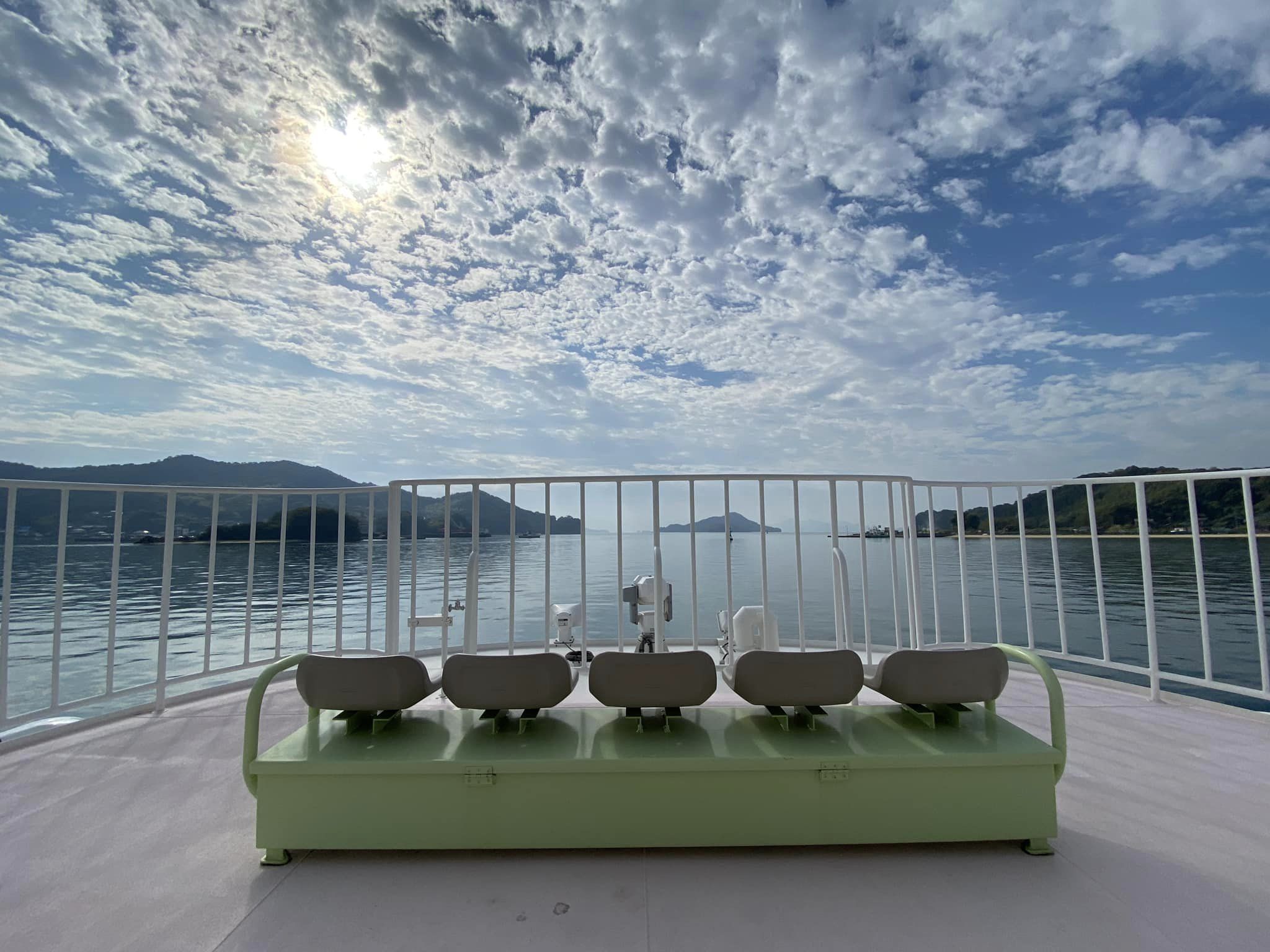
The sea reflected silver under herringbone skies.  The ferry drifted along the colorful wooden houses that lined the shore and past the stone Ozu lantern, before picking up speed once beyond the Onomichi Bridge towering above.  We were essentially traveling in the wake of yesterday's high speed trip, but I was solo this time, my two companions have left on a morning train.  I stood alone on the bow, face into a wind so high that I removed my sunglasses for fear of them being torn from my face.  

Seen from above, the figures standing on the dock at Momoshima were spaced in a way that made them look like they were posing for an album cover.  I had nearly three hours until my scheduled rendezvous with the people from the island's Art Base, so decided to buy my return ticket.  I caught up with elderly the ticket taker as she made her way back to the village proper, and as she counted out my change I noted that her eyes were a deep blue.  My daughter's mother, also an island girl, had mentioned that her own grandfather had eyes of a similar shade.  I pondered ancient seafaring foreigners who may have spent time sheltering from storms on these islands, adding in a night of passion their own personal stamp on the genetic makeup of the inhabitants.  

I headed inland to explore, aiming for a dotted line on a map that might have indicated a trailhead up to the site of the old castle that had once overlooked the harbor.  Momoshima had an interesting geography in having a central inland indentation ringed by hills, that undoubtedly offered ample protection from typhoons.  It helped explain why there were so few houses near the harbor itself.  There was no rice cultivation here, but plenty of vegetable plots.  

I wandered up through the quiet grounds of a small shrine tucked against a grove of bamboo.  Below me was the long abandoned school that was the now home to the Art Base.  I wound down and around the foot of the mountain but couldn't find a feeder route anywhere.  The most likely road dead-ended suddenly, home now to a pair of decades old vehicles rusting themselves out of existence beneath the bamboo.  I probably could have bushwhacked, but these thickets belied the existence of vipers who thrive in their shadowy corners.  

I instead returned to the bowl-like valley, not a soul in sight.  The homes were old but definitely lived in, the post office that served them shaped like the straw hats of the festival dancers of Shikoku just across the water.  The Art Base had a small mushroom farm beside the water, but there was no one here either.  So I wandered back to the harbor to read awhile.  

This too was void of activity but for a young man preparing to open a coffee shop.  The adjacent lot had a small trailer/kiosk Beer Bar that did drinks and food, plus a few chairs scattered across the lawn.  As the young man was telling me that he wouldn't be set up for a while, I noted a poster for a glamping site at the island's extreme west end.  The walk there and back provided the perfect diversion.

A family of bicyclists passed me as I moved past fields of weeds topped with little yellow christmas trees.  One plot looked post apocalyptic as it engulfed a long beached boat and a towering crane whose rust combined with the weeds below provided a sort of foretaste of the hues the maples would do in a couple month's time.  I traced the shoreline to a small peninsula upon which new guest houses were sprouting up like mushrooms.  Though varying in look, their uniform theme hinted at a common owner, who had a created pretty remarkable chill-out space indeed, with long wide-decks, cozy chairs, and every-ready BBQ grills, all reflected in large windows facing the sea.  

I backtracked to the glamping grounds.  Beside the yurts and tent sites was a small cafe, and I called out an order of iced coffee to the young couple running the place.  They joined me out on the deck out front, where I alternated between chatting with them and dipping into Alex Kerr's book on the Heart Sutra when they were pulled away by one duty or another.  All the while, the sea quietly lapped the sand of a small stretch of beach not far beyond my toes.  


The noon ferry rolled into the harbor, but there was no one there to meet it.  As I waited around, I thought about how these guided visits were only on the Japanese page of the Art Base website. Non-Japanese speakers would have no idea they even existed. A policy far different from the usual open nature to the organizers on other islands.  Granted they were independent and not affiliated with Benessee, but this soft racism left me with mixed feelings.  I suppose it was one way to protect themselves from the onslaught experienced at other sites during this decade of overtourism.    

Having been given no real instructions in any language, I backtracked to the Art Base, met the organizers, and settled into lunch.  We were allowed 90 minutes to eat and to explore the art works within the old school, before we'd regroup and be led around to a pair of remote sites.  I ate alone at a picnic table out on the deck, finishing in about ten minutes.  The exhibits by Yukinori Yanagi within similarly took little time.  "Wandering Mickey" had the iconic mouse sitting in a race car inside what was essentially a hamster wheel, in a room whose walls were lined with oil drums.  I found what could have possible been their contents up on the third floor, its still, dark surface reflecting the sky and the trees outside. Thinking it to be a plastic surface, I placed my hand on what I expected to be solid, only to come away with a hand caked with black.  Thank god I hadn't sat down.  After visiting a couple of other exhibits (each leaving me with a feeling of, "Oh that's pretty cool," but with little desire to do any deep examination), I washed my hand in the rest room, which I found to be the most interesting of all, with ample greenery growing from the porcelain.           

I had originally planned to take a late-afternoon ferry back to Onomichi, but I noticed that I could probably catch the earlier one that left in 45 minutes.  There was still over an hour to go before we were meant to regroup for the tour of the remote sites. I explained my situation to the office and asked whether I could visit those on my own.  Thus given permission, I raced away.  

I moved quickly through the village to the first site, which was within an old cinema, a surprise find on a island of this small size.  The projectors were still visible in the back room, and in the seat of the main hall itself, all the seats but three had been torn out to open more space to in order to provide more visual impact for the upper half of a Japanese hinomaru flag made of steel and reflected in a pool of slag to bring it into its usual full form.   After a long absence, films were still screened here, usually on the fiftieth anniversary of the original screening dates in this now 60 year old theater.

The other site was around the hill and back down toward the harbor.  It was a lovely old house, named for the giant Goemon cauldron bath outside.  These baths were once a feature in older Japanese rural homes, and named for a bandit who had been boiled alive in one.  The house had been gutted but for the wooden beams and frames, and in what had once been the living room was mounted a massive machine gun, the floor beneath piled high with shells.  The political implication of this, and all the exhibits, were obvious and strong, and I could better see the Art Base's independence from its bigger corporate brother across the water.   

And it was in that direction I went.  I rode the slower ferry this time, an older hulk that disappointed in having very few chairs out on deck, and what few were there were directly in the line of fire from the exhaust pipes.  It took a pair of beers to wash the taste from my mouth, enjoyed while sitting out on the boardwalk beside hotel U2.  I had booked a room at the main location this time, a funky-functional cube of modest size but very cozy and private.  And even here on the mainland island time continued, in the passage of the feet of strolling couples, or the whirl of bicycle wheels, or the boats large and small, which lumbered by in a race with the setting sun. 

The last of these, the Guntu, cast a large shadow from its hefty mass, like a Twain-era steamboat camouflaged in battleship grey.  The cruise ship's equally hefty price tag runs almost contrary in spirit to its preferred mode of travel, which is to meander almost aimlessly between the islands, in wide circuitous arcs.  I liked the designer's ideology of providing a means of forgetting the passage of time.  It was a far cry from my method of trying to link up the linearity of train and boat schedules.  One could well appreciate Guntu's well-choreographed aimless drift, as if at the mercy of wind and tide, like the mariners of old. 


On the turntable:  Phish, "1994-10-31, Glens Falls, NY" 


Sunday, October 30, 2022

Sunday Papers: Gore Vidal

 
"It makes no difference who you vote for — the two parties are really one party representing four percent of the people.""


On the turntable:  The Alarm, "History Repeating 1981-2021"


Friday, October 14, 2022

Tuesday, October 04, 2022

The Super Parisian


Finale in a trilogy of posts, over at the French blog.

http://viewsfromaprovincialperch.blogspot.com/2022/10/the-super-parisian.html


On the turntable:  Phish, "Baker's Dozen"


Wednesday, September 28, 2022

C'est la Guerre


Another post, over at the French blog.

http://viewsfromaprovincialperch.blogspot.com/2022/09/cest-la-guerre.html


On the turntable:  Rufus Wainwright, "Rufus Does Judy at Carnegie Hall" 


Sunday, September 18, 2022

Sunday Papers: Martin Buber


"Never think of men except in terms of those specific individuals whose names you know." 


On the turntable: Roxy Music, "Siren"


Thursday, September 15, 2022

After the Fire, the Fire still Burns


First post in three years, over at the French blog.

http://viewsfromaprovincialperch.blogspot.com/2022/09/after-fire-fire-still-burns.html


On the turntable:  Red Hot Chili Peppers, "The Uplift Mofo Party Plan "


Sunday, August 21, 2022

Sunday Papers: Noël Coward


“It's discouraging to think how many people are shocked by honesty and how few by deceit.” 


On the turntable:  Rod Stewart, "Thanks for the Memories"


Wednesday, August 17, 2022

Knowing Tranquility XXVI (Hiroshima)


Despite being only a couple of kilometers apart, there were no direct ferries between Honjima and its neighbor, Hiroshima.  So it was that for the second morning in a row I found myself on a boat leaving Marugame, as it streamed past the cantaloupes and rocket ships that are the most common shapes of industrial ports.  

The night before, I'd lucked upon Miroc Brewery, housed in an old warehouse and filled with decorative trappings often seen in similar microbreweries in the States or the UK. There was only another pair of customers, so the bartendress stayed mainly in the kitchen with the cook, whose teasing conversation drifted out to me as I sipped my udon IPA, a nod to the region's famed Sanuki Udon.  Belly filled, I wandered the older part of town, which had a curious beauty in the shuttered dark.      

At the wharf this morning, the ticket taker seemed determined to speak to me only in English.  I was asking him clear questions in Japanese, but I'm not sure what language he was actually hearing.  I asked twice if I could buy a round-trip ticket, which he confirmed.  But the ticket machine had a different opinion. I turned to him and say, "Oh, so we actually cannot?"  To which he said yes, again in English.  At least he pointed out the correct departure pier.   

I'd called ahead to rent a bicycle, an old beater bike which I found waiting for me at the pier.  I cycled clockwise, following the shoreline, past little clusters of houses that popped up again, and again.  I'd initially wanted to spend the night here, but there were only a few guest house, and none appeared to do food.  Maps showed that there was little else in the way of shops or eateries, and my ride confirmed the sparsity of just about anything.  Obviously, not many tourists visited Hiroshima.  

Nor had Richie.  He may have known about the quarry, whose scars now covered tremendous swathes of the islands northwest corner.  The accompanying small industry made up the other structures near the water's edge.  Were they instead picturesque homes the island wouldn't have felt so forlorn.  Unfortunately, at some point in the island's history some political bigwig had decided it expendable, a mere resource. 

I pedaled away from all this, into the island's heart. There I found a lovely little shrine, and a dusty road that pulled strongly against gravity over its sharply ascending pitch.  Luckily the trail, or what was left of a trail, quickly led into the forest.  Bamboo and felled trees leaned into my path, the footing below dense with last year's leaves.  Despite its condition, the path was reasonably obvious, but like the road below it climbed briskly up the mountain face.  

I reached a low saddle and turned right and toward the peak. It was easy going for some time, then a steep descent forced me to climb once again, this time through low spiky brush. Out to sea, I could hear the engine throb of passing ships that is the ever-present soundtrack to the Inland Sea, a throbbing that matched the rapid beating of my heart. It was hot along this stretch.  At least the earlier sections had had shade.      


The peak had no view, so I continued toward a picturesque formation of stones not far off, which I'd seen on a sign beside the road, but whose shapes were oddly not visible on Google maps.  I ran and climbed along the smooth faces of the stones here, softened and shaped by centuries of erosion, an ironic counterpoint to the severely-hewn quarries down by the shore.  

After a quick detour to a small Kobō Daishi temple cut into a cliff face, I backtracked to my bicycle, then rode to a lone vending machine where I quickly downed two cold drinks, under a sun growing even hotter.  My goal was to do a loop around the entire island, and check out the two other settlements to the north.  But I quickly found that the sole road around the island didn't stick to sea level, instead rising and falling repeatedly over Hiroshima's hilly topography.  I managed one set of steep hills, but midway up the next I pulled the bike over to cool myself in a small patch of shade.  

I sat here and thought awhile.  The island hadn't been giving me much, and what little there was seemed to be along this southern shore.  Plus the high temperatures and rolling hills were conspiring against legs already weary from the challenging hike.  In general, I have good physical endurance but I just didn't have it today. So it was that I wheeled the bicycle around, my conscious nagging at me.

I returned to a small stretch of beach that I'd seen earlier on.  As I was locking the bike against a small shelter, I peered into the shaded interior to see a handful of people silently watching me.  And who needs words when you have gestures, and the next gesture was one of unmistakable welcome, when the middle aged patriarch came over and handed me a cold beer.   

He and his family had come over on the early ferry, day-tripping to barbecue and to give the grandkids a day in the water.  I joined the latter there, looking across the windless, still surface of the water, to the mountain I'd not long before suffered up.  Yes, I'd made the right choice in quitting early.  

I hopped the early boat which would ride out to a few remote neighboring islands, before making a brief return to Hiroshima  prior to the crossing back to the mainland.  I felt even greater relief now, passing before a veritable roller coaster of shoreline hills, one dropping upon a village that was an overly concreted mass of nothing at all. 

The clouds began to come over and the wind changed, the sea taking on the slate-grey color of the sky.  Far out to the west, the horizon wore a distinct petrochemical glow.  Sailing past the shipbuilding factory was like going through a supermarket, each component part laid out in various hangers.  Immense cranes towered ten stories above.   

Onshore, a man asked for my tickets, then showed a bit of consternation that I'd done the loop to the outer islands free of charge.  He called a superior in an office somewhere, then told me that they wouldn't charge me extra this time, but that I mustn't do it again.  I knew my role here and dutifully apologized.  All very Japanese, each of us playing our parts, each getting what they wanted, yet still preserving face.  


 On the turntable:  Phish, "1998-11-02, E Center, Utah" 


Wednesday, August 10, 2022

Spirit of Shizen


Quite pleased to have contributed to this anthology, the catalogue for the exhibition “Spirit of Shizen - Japan’s nature through its 72 seasons” at Musée national d'histoire naturelle Luxembourg.


On the turntable:  "The Big Chill (Sdtk)"


Sunday, July 24, 2022

Sunday Papers: Richard Burton


"Soul is not a thing, it is a state of things"


On the turntable:  Roxy Music, "Heart Still Beating"