Tuesday, May 31, 2022

Writers in Kyoto talk


John Dougill writes:

"Yesterday saw the resumption of physical meetings for WiK with an At Home with Ted Taylor. There was a good turn out, with fourteen people in all, and the event started off with a tour of the house (which was built in 1986 as a Culture Centre) and an introduction to Ted's voluminous book collection. After refreshment the group listened to Ted talk of his lifelong love of travel and his devotion to travel writing. Not surprisingly given the nature of the group, there was a lively question period.

At least three new members attended, and it was heartening to see introductions and networking going on. This is one aspect of the writers group of which I am proudest. When I used to belong to Writers in Oxford, which was the inspiration for this group, the main activity was in fact social gatherings in each other's houses to discuss writerly matters such as publishing and state of the market etc. It was a delight to see this happening here in Kyoto, and I'm told discussions continued till late in the evening - or at least until the bottles were empty.
 
Many thanks to Ted for hosting the occasion and providing a stimulating focus for the meeting. The house was a perfect setting for such an event, and it may be that we can make use of it again at some stage."


On the turntable: Foo Fighters, "Wasting Light"

Thursday, May 26, 2022

Seek Sustainable Japan


Quite pleased to be this week's guest on JJ Walsh's Seek Sustainable Japan. 

https://www.youtube.com/watch?v=DOVSr6ICeWE


On the turntable:   Jool Holland, "Best of Friends"


Tuesday, May 24, 2022

Kyƍ Kaido (Slight Return)


Time wounds all heels. Then time heals all wounds.  The months pass, memory dulls.  Forgotten is the monotony, the blisters, the pain in shoulder and hip.  Then suddenly a new map pops up, and I'm once again lacing the sneakers in the genkan, one leg up like a stork.

Again, maps are the key.  I've already walked so many of Kansai's old roads, but digital technology has improved exponentially upon my old guidebooks with their minute, hand-drawn attempts devoid of any scale. A recent online discovery shows that I had been misled a great deal along the Kyƍ Kaidƍ, and my curiousity (or perhaps ego), demands a rematch.  I'd done two sections back in 2009 and 2013 respectively, and decide this time to orient myself toward Osaka, and walk into that city's heart.       

I grab my buddy Joel to join on the first leg, as he is as keen on discovery as I, and we can stave off monotony with a flow of conversation that will carry us away from the more dismal sections.  We leave the train at Kujƍ station, and walk west.  I am happy to see that the old Minami-Kaikan has once again reverted to screening old classics of Euro-cinema, albeit in a new location.  We decide to give Tƍ-ji a miss, taken more with the heron that peers into the murky moat, unperturbed by the steady flow of passers-by.  We reach the small park that marks the site of the old Rajomon gate, the bare earth and lonely children's slide makes it seem almost as forlorn as the epic reproduction in Kurosawa's near eponymous film.  Then again, it might just be the glooming overcast weather.

The road lumbers due south from here, along a diminished Senbon-dƍri.  At the dogleg stands little cluster of Jizƍ statues, probably moved here due to some past road construction.  I had just been commenting to Joel about my love for old cities such as Rome, Athens, and Istanbul, where even the most casual of strolls has you stumbling over ancient stone relics.  I had been pondering why a city as old as Kyoto doesn't have these things, but I'd indeed forgotten about Jizƍ.     

Senbon proves a mismatch of architectural styles, as is common in modern Japan.  This stretch has a good number of old Edo period wooden delights, and it also has bland, post-bubble cookie cutter clones. I'm quite taken with the rustic wooden Little Church on the Prairie look to the Assembly of God. The more I do these road walks, the more it dawns on me that rather than fret about the mundane nature of some of these places, particularly in the cities, I should appreciate that they express the variety of building styles that have arise over the last 150 years.  Is that not in itself historic? 

We cross the Kamogawa, then pass a stele marking the opening salvo of the Battle of Toba-Fushimi and the greater Bƍshin War, that mopping up operation to root out the remaining Shogunate loyalists. Jƍnan-gu Shrine is not far to our left, but we are more interested in getting to the river.  Hunger is looming, and we hope to find a good grassy spot to picnic.  There are a fair number of Edƍ-period houses, along the telltale four-meter width that marks a feudal road. Many properties have large, high walls surrounding their gardens.  One wall has open gaps that lack the usual latticework, and I find its seeming lack of completion troubling somehow.  Lush crops fill a garden of another sort, and it is refreshing to see that rather than with the usual plastic mulch, the stalks of the plants have been covered with straw in order to keep weeds at bay.   Black plastic sheets do appear soon enough a short walk away, where the only crops at the moment are human boot prints.

We get to the river and our lunch spot, as storm clouds build over the mountains to the city's north.  The air grows muggy as we continue along the high flood-control berms that protect the suburbs below.  The humidity will rise to become slightly uncomfortable, as the early days of summer begin to assert themselves. There is a thatch-roofed temple, and a home built like an medieval castle, flanked defiantly by a neighboring window decorated in French Ironwork. 

The Kaidƍ drops us back onto the tarmac again, which alternates between open vegetable fields and more clusters of little, two-story homes.  The latter are almost cottages, colorfully attractive though standing linked shoulder to shoulder.  While they face the river, the four-meter high berm prevents any chance of seeing water.  I sense that this is a neighborhood for Japan's unmentionable untouchables, which is more or less confirmed by a stone marking the burial place of the war dead of the eastern army of the Battle of Toba-Fushimi.  An old couple pulls down freshly cut boughs from a tree overhanging one house, while behind them, trash is piled high in the doorway.  I sense that they are family to the owners, who are no doubt just as dead as the soldiers buried beneath the soil here.  

We move inland at Yodo, where the odd historical signage reveals that this might have all been river at some point. We find the place where the Korea diplomatic dispatches disembarked their river launches prior to the long walk to Edƍ.  There is the landlocked site of the Yodo Kobashi, and the equally high and dry Yodo waterwheel, documented by Engelbert Kaempfer when he accompanied the Dutch on an Edƍ-bound procession of their own.  Our own road takes us through more and more modern suburb, whose main charm is in an ancient sakura standing atop a quiet bridge.

The next bridge is immense, spanning the Uji river racing in from the east.  We follow it for the rest of the walk, an hour spent below the massive berm that rises to our left.  The true road is atop it, but it is featureless, with a glut of cars.  Far more preferable, and safer, to be down here with the reeds, and the resident birds.  Joel is something of an amateur ornithologist, and he stops from time to time to hone in on a particular call, before whipping out the binoculars to get a better look at the soloist.  His bird app provides the liner notes.  

Just shy of where the Uji meets the Katsura, moments before their manage-a-trois with the Kizu, we exchange the road for a pair of rails.  From here, the offspring of the three rivers is christened the Yodo.  I walked this exact stretch in 2008, though I favored the riverbank itself.  I'll be back before long, to see what she bears on her eastern shoreline.   


On the turntable:  The English Beat, "Bonus Beat"


Wednesday, May 18, 2022

Experience Japan


I feel honored to have been one of the writing team for this new release by the iconic Lonely Planet. 

https://shop.lonelyplanet.com/products/experience-japan 


On the turntable:   The Durutti Column,  "Idiot Savants"

On the nighttable:  Henri CharriĂšre, "Papillon"


Sunday, May 08, 2022

Sunday Papers: Iain Maloney


"Old punks don't die, they just stand at the back, nodding." 


On the turntable:  Rush, "Different Stages"


Tuesday, April 26, 2022

Gion, 2:02 pm


Watching the world go by from a stoop in Gion, on an April day that hits 29° C. Architecture bound in wires; delivery trucks unloading fish iced in Styrofoam boxes; a pair of Geiko chat beneath parasols; the rigid gait of a well-coiffed okamisan; and an older woman tumbles painfully into the street.


On the turntable:   Robyn Hitchcock, "Fegmania!"


Sunday, April 24, 2022

Sunday Papers: Hans Brinckmann


"Trying to run Heisei with a Showa mindset is like retrofitting a Boeing 780 with propeller engines.  It won't fly."


On the turntable: Ravi Shankar, "West Meets East "


Monday, April 18, 2022

Hiking Down the Kamogawa


Just received the latest issue of Kyoto Journal, in which I’m pleased to have a short piece about walking the Kamogawa. This Number 101 is visually stunning, and I’m quite looking forward to diving in.


On the turntable: Rick Wakeman, "Journey to the Centre of the Earth" 


Friday, April 15, 2022

Knowing Tranquility XXIII (Tamashima)


As we have the car, we detour over to Tamashima.  Donald Richie never made it this far, though it was historically an important part of the region.  The suffix shima hardly applies anymore, as nearby mountaintops gave their crowns to attach the former island to the outer suburbs of Kurashiki city. A narrow canal bisects the old town, though the proper sea is far off, out by those block-shaped man-made islands that extend to the south like a robotic prosthetic.     

All of this is visible from the heights of Entsu-ji temple, whose picturesque grounds are filled with ponds, thatch buildings, and stone statuary that climb the hillside, all beneath spreading cherry trees.  A torii-like gate formed by tree-trunks leads to an array of trails made for light hiking.  As we make our way through the shade, I imagine myself in the footsteps of one of my Zen heroes, Ryokan, who trained here two centuries before.  Stone figures silently watch as we spiral toward the top of the mountain, upon whose summit is a towering statue of Ryokan himself, at play with a group of children, as was his wont.  The scale of the thing seems out of place with the simplicity of his life, and of his haiku:  


The thief left it behind:
the moon
at my window.


Down at sea level, we walk through what had once been the center of Tamashima.  The Saisƍ-tei was once the home of the Yunoki family, who ran the town on behalf of the Lord of Bitchu-Matsuyama, whose atmospheric and original castle still sits majestically in the mountains an hour from here.  Among the displays within the house, I discovered that the reclamation went back as far as 1671, creating a important port which at its height hosted over 200 warehouses.  None of these were visible today, but a handful of trade houses still existed across the canal in Nakaigai-cho, all repurposed into shops or trendy eateries.  We did a quick spin through the area, before excitedly crossing the canal again to buy a gelato at a colorful little shop near the water.    


On the turntable:  Grateful Dead, "1983-04-12, Broome County Arena"


Sunday, March 27, 2022

Sunday Papers: Wes Anderson


"Self-reflection is a vice best conducted in private or not at all." 


On the turntable:  Joep Beving, "Henosis"

On the nighttable:  Soejima Teruto, "Free Jazz in Japan"

Thursday, March 24, 2022

Crawling Curmudgeonly along Hiei’s Eastern Hills


Thank you to Writers in Kyoto for hosting my latest piece, detailing an errant walk beneath Mt. Hiei:

Crawling Curmudgeonly along Hiei’s Eastern Hills 


On the turntable:  George Fenton, "Gandhi (Sdtk)"   


Sunday, February 20, 2022

Sunday Papers: Edward Seidensticker


"The relationship between tradition and change in Japan has always been complicated by the fact that change is in itself a tradition." 


On the turntable:   Poco, "The Very Best of Poco"


Friday, February 11, 2022

Meet the New Gods. Same as the Old Gods


Thank you to Tokyo Weekender for publishing this piece on Japan's oldest road...   


https://www.tokyoweekender.com/2022/02/tw-creatives-meet-the-new-gods-by-edward-j-taylor/


 On the turntable: Paul McCartney, "Ram"


Sunday, January 30, 2022

Sunday Papers: Suzuki Shunryƫ


"I think you're all enlightened until you open your mouths."  


On the turntable:  Andreas Vollenweider, "Vox"


Wednesday, January 19, 2022

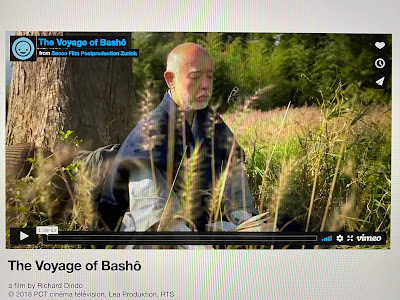
The Voyage of Basho


And from the "I totally forgot about this" file: 


"The Voyage of Basho" is a 2018 release by the renowned Swiss director Richard Dindo. Shot throughout Japan over the course of a year, Roger Walch's photography is a visual feast. I am happy to have played a small role in the production, as "landscape counselor."

 Watch here.


On the turntable:  Quincy Jones, "In the Heat of the Night"


Sunday, January 16, 2022

Sunday Papers: Kenneth Rexroth


“Religion is not something you believe, it’s something you do.”


On the turntable:  David Crosby: "If I Could Only Remember My Name" 


Thursday, January 13, 2022

Unresolved


I snuck in one last hike in the waning days of the year, a large loop around the hills above Uji.  I've mentioned before that I don't usually write much about my hikes unless something particularly interesting occurs, but at one point "writer's voice" kicked in to internally narrate a series of thoughts and impressions.   

Heading toward the start of my hike I passed the Tale of Genji museum, which I had been wanting to visit awhile.  For four consecutive autumns I read one translation of the great tome, so felt I needed to pop in.  Exhibits were few but the layout was tastefully done and it was obvious that they'd spent a great deal of money on the place. But I am always baffled at why the Japanese choose to represent some of the older and dearest parts of their culture with neon and animation.  As I had my eyes on the mountains, I moved through quickly, a metered visit of about 100 yen/minute. 

The prow of my face cold as it cut through the winter air.  This would change later, as the day grew to be a warm one, and the inevitable internal combustion during the steeper ascents.  The first of these was a zig-zag path up a hillside that had all the feel of a city park.  There were two different kindergarten groups doing the same climb, joyfully and effortlessly in the way of little kids.  Their handlers had differing ideas about how to present the experience, evident in the shapeshifting amoebic freedom of the yellow hats vs the dour straight lines of the blue hats.   

A group of old men sat individually enjoying the view over Byodo-in and the west, and I soon left them to find a pleasant ridgeline leading off into the hills.  Before long I came to the peak of Asahiyama, where a pair of old timers chatted beside a fire that burned in a rusted out iron barrel.  I asked them the date of the Kannon statue within a little hall nearby that serves as Kosho-ji's oku-no-in.  They didn't know, and I quickly realized that they probably never felt the need to.  I recognized then the disadvantage of living in the center of the city.  One can't simply walk out the door and make climbing the local peak part of the daily constitution. 

There tends to be an interesting culture in mountains that are near cities, appreciation show in the flourishes of the hands of men.  Along the path, I found stone cairns built up, or strange little dolls and figures left symbolically behind. Informational signs along the way were simply laminated Wikipedia pages stuck to wooden boards.   I'd done close to 100 hikes during these work-free days of Covid, mostly deeper into the countryside.  Winter now presented a great opportunity to explore closer to home, see how the locals relate, co-exist.   

And the further I moved into the hills, the nicer the trails grew, surprising me in being natural growth, and not the ubiquitous coniferous borderlands of Kansai communities.  The best hikes are often those where you expect nothing.  They delight you with their beauty or challenge you with some rough terrain.  And this hike was simply me following a line I'd seen which led to a peak with an intriguing name.  Not part of any guidebook, or on anyone's top 100 list.   And at the end of the day I was left feeling that it was one of the nicer hikes in the region.  

Even the ugly bits had charm.  I came to a massive quarry, its pit cut into terraced sections like something Escher would have done had he a cubist period.  Diggers and dump trucks worked on the various levels, their scales diminishing into miniatures down at the valley bottom. All was as dusty and noisy as Mordor.  Not far away I followed a wrong turn, out amongst the footfalls of the parading giants of utility towers which leveled the forest to provide good views.

Later there would be a criss-crossing scramble over a deep sinuous creek, lunch taken overlooking a quiet reservoir, and a detour to an old cave, followed by a off-trail scramble up to my final peak.  A small park marked the end of the trail, with a group of workmen buzzing noisily with their grass cutters.  One of their trucks was parked in front of a directional sign, causing me to again take a wrong turn (a rookie mistake that I'm usually careful about), but I was rewarded with great views overlooking the Amagase Dam.  I passed over the great concrete monolith, keeping to the center as is my acrophobic want.  

In a lousy bit of timing, a guardman happened to notice me at the far end, and prevented me from crossing the bridge below that I needed to complete my loop.  The detour would take me along a busy road and miles out of my way, but partway along I noticed that I could descend a steep ridge to get me back to river level and to the next bridge downriver.  Mere seconds into my scramble I noted that this was far steeper than I thought, forcing me to literally inch along on my bum, grasping at whatever I could to defy gravity's power. It was slow going, switch-backing rather than in a straight line, sitting for a minute at a time to plan then next move.  Aside from a few scrapes to my hands I got down safely, but spent most of the pleasant riverside stroll back to the station chastising myself for the risks I continue to take, despite knowing better.  A resolution for the New Year perhaps?


On the turntable:   George Shearing, "Personal Collection"


Sunday, January 09, 2022

Sunday Papers: Craig Mod


"[...]Japan, where formalities and walls built through language often conspire to keep a sense of friendship at bay for months or years. Certainly when alcohol isn’t involved. And when alcohol is involved, that itself becomes its own artifice and makes parsing the real from the affected an impossible task."


On the turntable: Lenny Bruce, "Carnegie Hall"


Saturday, January 01, 2022

Friday, December 31, 2021

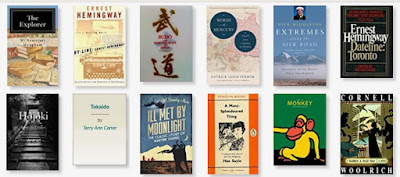
A year in reads: 2021


On the turntable:  The Police,  "Reggatta de Blanc"