Tuesday, April 26, 2022

Gion, 2:02 pm


Watching the world go by from a stoop in Gion, on an April day that hits 29° C. Architecture bound in wires; delivery trucks unloading fish iced in Styrofoam boxes; a pair of Geiko chat beneath parasols; the rigid gait of a well-coiffed okamisan; and an older woman tumbles painfully into the street.


On the turntable:   Robyn Hitchcock, "Fegmania!"


Sunday, April 24, 2022

Sunday Papers: Hans Brinckmann


"Trying to run Heisei with a Showa mindset is like retrofitting a Boeing 780 with propeller engines.  It won't fly."


On the turntable: Ravi Shankar, "West Meets East "


Monday, April 18, 2022

Hiking Down the Kamogawa


Just received the latest issue of Kyoto Journal, in which I’m pleased to have a short piece about walking the Kamogawa. This Number 101 is visually stunning, and I’m quite looking forward to diving in.


On the turntable: Rick Wakeman, "Journey to the Centre of the Earth" 


Friday, April 15, 2022

Knowing Tranquility XXIII (Tamashima)


As we have the car, we detour over to Tamashima.  Donald Richie never made it this far, though it was historically an important part of the region.  The suffix shima hardly applies anymore, as nearby mountaintops gave their crowns to attach the former island to the outer suburbs of Kurashiki city. A narrow canal bisects the old town, though the proper sea is far off, out by those block-shaped man-made islands that extend to the south like a robotic prosthetic.     

All of this is visible from the heights of Entsu-ji temple, whose picturesque grounds are filled with ponds, thatch buildings, and stone statuary that climb the hillside, all beneath spreading cherry trees.  A torii-like gate formed by tree-trunks leads to an array of trails made for light hiking.  As we make our way through the shade, I imagine myself in the footsteps of one of my Zen heroes, Ryokan, who trained here two centuries before.  Stone figures silently watch as we spiral toward the top of the mountain, upon whose summit is a towering statue of Ryokan himself, at play with a group of children, as was his wont.  The scale of the thing seems out of place with the simplicity of his life, and of his haiku:  


The thief left it behind:
the moon
at my window.


Down at sea level, we walk through what had once been the center of Tamashima.  The Saisō-tei was once the home of the Yunoki family, who ran the town on behalf of the Lord of Bitchu-Matsuyama, whose atmospheric and original castle still sits majestically in the mountains an hour from here.  Among the displays within the house, I discovered that the reclamation went back as far as 1671, creating a important port which at its height hosted over 200 warehouses.  None of these were visible today, but a handful of trade houses still existed across the canal in Nakaigai-cho, all repurposed into shops or trendy eateries.  We did a quick spin through the area, before excitedly crossing the canal again to buy a gelato at a colorful little shop near the water.    


On the turntable:  Grateful Dead, "1983-04-12, Broome County Arena"


Sunday, March 27, 2022

Sunday Papers: Wes Anderson


"Self-reflection is a vice best conducted in private or not at all." 


On the turntable:  Joep Beving, "Henosis"

On the nighttable:  Soejima Teruto, "Free Jazz in Japan"

Thursday, March 24, 2022

Crawling Curmudgeonly along Hiei’s Eastern Hills


Thank you to Writers in Kyoto for hosting my latest piece, detailing an errant walk beneath Mt. Hiei:

Crawling Curmudgeonly along Hiei’s Eastern Hills 


On the turntable:  George Fenton, "Gandhi (Sdtk)"   


Sunday, February 20, 2022

Sunday Papers: Edward Seidensticker


"The relationship between tradition and change in Japan has always been complicated by the fact that change is in itself a tradition." 


On the turntable:   Poco, "The Very Best of Poco"


Friday, February 11, 2022

Meet the New Gods. Same as the Old Gods


Thank you to Tokyo Weekender for publishing this piece on Japan's oldest road...   


https://www.tokyoweekender.com/2022/02/tw-creatives-meet-the-new-gods-by-edward-j-taylor/


 On the turntable: Paul McCartney, "Ram"


Sunday, January 30, 2022

Sunday Papers: Suzuki Shunryū


"I think you're all enlightened until you open your mouths."  


On the turntable:  Andreas Vollenweider, "Vox"


Wednesday, January 19, 2022

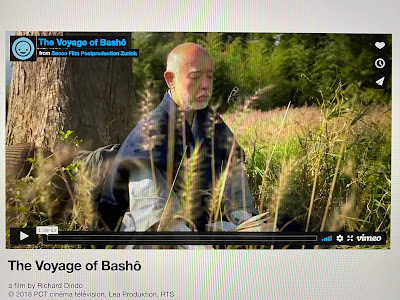
The Voyage of Basho


And from the "I totally forgot about this" file: 


"The Voyage of Basho" is a 2018 release by the renowned Swiss director Richard Dindo. Shot throughout Japan over the course of a year, Roger Walch's photography is a visual feast. I am happy to have played a small role in the production, as "landscape counselor."

 Watch here.


On the turntable:  Quincy Jones, "In the Heat of the Night"


Sunday, January 16, 2022

Sunday Papers: Kenneth Rexroth


“Religion is not something you believe, it’s something you do.”


On the turntable:  David Crosby: "If I Could Only Remember My Name" 


Thursday, January 13, 2022

Unresolved


I snuck in one last hike in the waning days of the year, a large loop around the hills above Uji.  I've mentioned before that I don't usually write much about my hikes unless something particularly interesting occurs, but at one point "writer's voice" kicked in to internally narrate a series of thoughts and impressions.   

Heading toward the start of my hike I passed the Tale of Genji museum, which I had been wanting to visit awhile.  For four consecutive autumns I read one translation of the great tome, so felt I needed to pop in.  Exhibits were few but the layout was tastefully done and it was obvious that they'd spent a great deal of money on the place. But I am always baffled at why the Japanese choose to represent some of the older and dearest parts of their culture with neon and animation.  As I had my eyes on the mountains, I moved through quickly, a metered visit of about 100 yen/minute. 

The prow of my face cold as it cut through the winter air.  This would change later, as the day grew to be a warm one, and the inevitable internal combustion during the steeper ascents.  The first of these was a zig-zag path up a hillside that had all the feel of a city park.  There were two different kindergarten groups doing the same climb, joyfully and effortlessly in the way of little kids.  Their handlers had differing ideas about how to present the experience, evident in the shapeshifting amoebic freedom of the yellow hats vs the dour straight lines of the blue hats.   

A group of old men sat individually enjoying the view over Byodo-in and the west, and I soon left them to find a pleasant ridgeline leading off into the hills.  Before long I came to the peak of Asahiyama, where a pair of old timers chatted beside a fire that burned in a rusted out iron barrel.  I asked them the date of the Kannon statue within a little hall nearby that serves as Kosho-ji's oku-no-in.  They didn't know, and I quickly realized that they probably never felt the need to.  I recognized then the disadvantage of living in the center of the city.  One can't simply walk out the door and make climbing the local peak part of the daily constitution. 

There tends to be an interesting culture in mountains that are near cities, appreciation show in the flourishes of the hands of men.  Along the path, I found stone cairns built up, or strange little dolls and figures left symbolically behind. Informational signs along the way were simply laminated Wikipedia pages stuck to wooden boards.   I'd done close to 100 hikes during these work-free days of Covid, mostly deeper into the countryside.  Winter now presented a great opportunity to explore closer to home, see how the locals relate, co-exist.   

And the further I moved into the hills, the nicer the trails grew, surprising me in being natural growth, and not the ubiquitous coniferous borderlands of Kansai communities.  The best hikes are often those where you expect nothing.  They delight you with their beauty or challenge you with some rough terrain.  And this hike was simply me following a line I'd seen which led to a peak with an intriguing name.  Not part of any guidebook, or on anyone's top 100 list.   And at the end of the day I was left feeling that it was one of the nicer hikes in the region.  

Even the ugly bits had charm.  I came to a massive quarry, its pit cut into terraced sections like something Escher would have done had he a cubist period.  Diggers and dump trucks worked on the various levels, their scales diminishing into miniatures down at the valley bottom. All was as dusty and noisy as Mordor.  Not far away I followed a wrong turn, out amongst the footfalls of the parading giants of utility towers which leveled the forest to provide good views.

Later there would be a criss-crossing scramble over a deep sinuous creek, lunch taken overlooking a quiet reservoir, and a detour to an old cave, followed by a off-trail scramble up to my final peak.  A small park marked the end of the trail, with a group of workmen buzzing noisily with their grass cutters.  One of their trucks was parked in front of a directional sign, causing me to again take a wrong turn (a rookie mistake that I'm usually careful about), but I was rewarded with great views overlooking the Amagase Dam.  I passed over the great concrete monolith, keeping to the center as is my acrophobic want.  

In a lousy bit of timing, a guardman happened to notice me at the far end, and prevented me from crossing the bridge below that I needed to complete my loop.  The detour would take me along a busy road and miles out of my way, but partway along I noticed that I could descend a steep ridge to get me back to river level and to the next bridge downriver.  Mere seconds into my scramble I noted that this was far steeper than I thought, forcing me to literally inch along on my bum, grasping at whatever I could to defy gravity's power. It was slow going, switch-backing rather than in a straight line, sitting for a minute at a time to plan then next move.  Aside from a few scrapes to my hands I got down safely, but spent most of the pleasant riverside stroll back to the station chastising myself for the risks I continue to take, despite knowing better.  A resolution for the New Year perhaps?


On the turntable:   George Shearing, "Personal Collection"


Sunday, January 09, 2022

Sunday Papers: Craig Mod


"[...]Japan, where formalities and walls built through language often conspire to keep a sense of friendship at bay for months or years. Certainly when alcohol isn’t involved. And when alcohol is involved, that itself becomes its own artifice and makes parsing the real from the affected an impossible task."


On the turntable: Lenny Bruce, "Carnegie Hall"


Saturday, January 01, 2022

Friday, December 31, 2021

A year in reads: 2021


On the turntable:  The Police,  "Reggatta de Blanc"


Tuesday, December 28, 2021

Stuff from an Old Notebook #19


Random thoughts and ideas from the last year. 


 -I wonder how much of beauty is taught to us by our parents.  In hiking today, I came to what I would consider a gorgeous little stretch of stream with a waterfall and small pool at one end.  I nearly did this hike with my daughter, and I’m sure had we come to this point, I would have unconsciously said,"How beautiful."  And hearing such things repeated through childhood, does one then learn to appreciate the same beauty (second hand beauty?) as their parents. 


-Did the Beats teach us freedom, or self-indulgent narcissism?  The longing to not only live a life well lived, but also to chronicle it.


-The lobotomizing effect of pop culture.


-English lesson as if inspired by Cage’s 4:33.


-Happo-shu string budget


-Celebration of the Mundane


-Story idea about a guy who’s been in Japan a long time and is starting to spend more time abroad.  Little by little he’s become like a bell curve, moving out of touch with what’s going on here. His reactions and responses no longer quite matching up.  It’s a lot like his early days when he didn’t understand Japanese.  But now he can understand nearly everything, which reflects the disjunct of his situation. 


-You Asaay


-Americans are like puppies, trying to jump up and lick everybody’s face.  The English on the other hand are more like cats;  they’ll occasionally climb up on your lap and let you pet them, but if you try to clutch them too tightly, they’ll become taciturn and (run off.)


-A rotation of Lucinda Williams and Tom Petty waltzing across my iPod.   


-Cognitive Dissidents


-(X), the greatest mass murderer since Noah.  The ark, a metaphor for climate change, some sort of climactic disaster.  Bible fond of incest; Cain and Abel, Noah’s family. 


-Ambiance Chasers


-What the trees give, the ground receives. 


-Yama-Maester Wes 


-Incongruity of Dream


-Typhoon announcements coming, their words lost to the blustery winds. 


-Even God has given up hope.  


-To quote Laurens van der Post:  “I’ve always divided humanity roughly into two main streams, those who work by expansion and those who work by contraction.  The Japanese have a genius for contraction.”  And while perhaps that have once been true,  during the bubble years they were misled to believe that expansion was the preferable new order, and have been expanding ever since, even after the parameters of the bubble burst.     


-In Dream:  Going to Yonago to find the old house in the process of being razed.  From the depths of me emits an inhuman howl of grief.  It’s like the final bits of Ken are definitively gone.  


On the turntable:  Dev Mason, "Live at Perkins Palace"


Sunday, December 26, 2021

Sunday Papers: Monte Hellman


"The only real truth is in poetry and in fiction.  If you want to tell the truth in non-fiction, it's never quite as true as the truth of poetry."  


On the turntable, "Hollywood Vampires, "Rise"


Friday, December 24, 2021

Hunting up Elusive Paths


The internet certainly has made route finding easier.  In the old days, I'd buy any new book that dealt with walking Japan's old roads.  In every case, the maps were primitive and cartoon-ish and near impossible to follow. The now defunct Latlonglab was my only online resource, which was immensely helpful, but as it required a satellite signal, the battery on my phone would be bone dry by the time I was racing toward my home-bound train on the far end.  

Hiking too involved plenty of guesswork, which in a few cases near proved fatal.  Then about two years ago, friends enlightened me about Yamap, and from there I discovered Yamareco.   Their downloadable maps proved a godsend, and as I began to rely on them (especially on the older mountain tracks I seem drawn to, despite common sense), I was no longer sure how I'd managed without them.  Luckily, these sites also have the odd map of an old road, and I have begun to edit previous walks, which I now know I got wrong.  

The first of these do-overs was the Sanin-dō, which I walked with Miki back in 2008.  Memory is a funny thing and mine betrays me.  I remember that day as being a long slog along Gojō which then eventually begat Route 9 as it left the city.  Yamap showed the true path, which served as the initial prompt to return. (Matching it against my old guide book, I saw they both followed the identical course.  Inexplicably, we'd stayed on Route 9 into Kameoka, and had gotten it wrong.)   

Another reason for the return was that I wanted to orient this walk from west to east, as I did so while walking two sections of the route known as the Sasayama Kaidō (detailed here and here), a direction I hope to maintain when I eventually follow the entire road as it leaves Shimonoseki to trace the Sea of Japan. 

So in a westbound movement I returned by train to Umahori Station with my painter friend Joel in tow. We spent a number days last winter hunting up old Buddhas in the hills of Nara and south Kyoto, and he has quickly proved a good companion for these walks through history.  The road leading away from the station was along a charming little path through suburban homes now colonizing the older look of things, but with enough of the latter to hold our interest. (Though the highlight of the day was certainly the beauty salon called "Terrapin Station.")    We popped into a couple of old shrines, one of which had a mound off to one side where warriors once left a single arrow as a talisman of good luck while heading off into battle.  Before another grand old shrine, the road dropped into farmland to trace a small creek.  Joel and I sat and lunched atop the stonework of a wall that defined the property line of one of these farms, bemoaning the ruins of an unusual-shaped thatch farmhouse that had always caught my eye whenever I drove toward Kameoka.  As often happens in this crowded country, a person will turn up when you are doing something possibly verboten, but the farmer didn't seem to mind us sitting there, or perhaps couldn't be bothered to tell us kids to get off his lawn.  

The road narrowed to cut through a series of dense vegetation.  Below us, a fox nibbled along the stubble of rice fields, before rushing off into the trees.  We hopped over the busy Route 9, and up a forest track that had eluded me 12 years before.  It led us down into a little slice of Appalachia, the homes looking poor and a tad eerie.  Most of them were crumbling back into a dank shadowy landscape that must never get much light.  The one active farm was watched over only by an old boombox, serenading the plants as if a desperate attempt to coax some life out of this bleak part of the world.    

I suppose the shrine at the pass above provided some explanation.   Kubizuka is considered a haunted place, named for one of Japan's top three yōkai.  Legend has it that in life he was known as Shuten-dōji, leader of a clan of oni who terrorized either this area or around the similarly-named Mount Oe to the northwest (though in reality they were probably simply bandits).  But the numerous films and stories agree that his decapitated head continued to snap at the five warriors sent by the Emperor to subdue him.  Not wanting to bring the head back into Kyoto, it was buried here, beneath a small mound of gravel at the back of the shrine.  Similarly neither Joel nor myself wanted to bring any of that bad mojo back into town ourselves, so we quickly pulled our attention from the amazing trees there and dropped into suburb.  

Civilization returned in the form of what must be Japan's most depressing high school, hemmed in between this busy road and the expressway behind.  Next up were an array of love hotels, and I'd be curious about the rate teen pregnancy at the neighboring school, though the physicality of the students was more likely directed toward sports, to judge by all the champion banners they boastfully displayed along the roadside.  

As we skirted a large suburban development, the view was mainly of cookie cutter homes, though there was the occasional tell-tale old inn, as well as a parade of small shrines along the hillside.  And town began to build as we moved toward the heart of Kyoto, along with its accompanying traffic.  Light began to fall, as did our enthusiasm, so we jumped a train at Katsura Station, speeding us to coffee taken in a park as we watched the last full moon of the year rise over the eastern hills.  


But ever the completist, I felt compelled to walk the remainder of the road.  It was a cold dark day threatening rain, but I only had an hour worth of walk ahead.  Joel wisely opted out of sucking exhaust, and after winding through a few quieter neighborhoods, most of that hour was indeed spent moving along a busy boulevard.  But it was Shichijō rather than the Gojō of 2008.  

I thus carried on through the usual monotony of west Kyoto, rewarded from time to time with an old house, or a stone marker etched by a chisel that had centuries ago grow rust.   This close to the end of the year I'd expected much activity about, but there was little to capture my eye, save the sight of a boy trying to shyly take the hand of the girl beside him, but she was having none of it.  Then Kyoto Station loomed up with its promised of food, beer, and a warm train home.  


On the turntable:  Charlie Poole, "You Ain't Talkin' to Me"

On the nighttable:  Terry Gilliam, Gilliamesque"

Tuesday, December 21, 2021

What's in a Name


In the twelve years since I began walking the Hōkkoku Kaidō, I was never really sure of the name.  I similarly saw it referred to as the Hokuriku-dō, but was unable to definitively distinguish between the two.  To complicate matters, there is another Hōkkoku Kaidō far to the east in Shinshū, and most books and websites deal with that one, no doubt due to its proximity to the capital.  But the internet finally caught up with me, and I recently learned that the name Hōkkoku refers only to the section that leaves the Nakasendō at Toriimoto, to cross the Tochinoki Pass before terminating at Imajō.  From there it takes the sole moniker, Hokuriku-dō.

And there was a second clue.  Somewhere in north Shiga I picked up an map of old battlefields and ruined castles.  It was my guide through the summer of '21, as I did a dozen day trips exploring a variety of sites before a cooling dip in Lake Biwa.  The map clearly reiterated the Hōkkoku as passing through Kinomoto and continuing north.  All along I had thought it led south from Tsuruga, a route I walked back in 2013.  But apparently I was wrong.  

So it was that I boarded a train in the winter-dawn darkness of Kyoto station.  A waiting taxi drove the dull concrete highway from Imajō to the cobblestone entrance to Itadori-juku, whose thatch roofed houses impressed me as much on this frigid morning as they had when I'd passed through in 2009.   Most of the previous week's snowfall had melted off, but everything still hung cold and wet.  Unlike my previous visit, I turned left to return to Route 365, before following a smaller road that paralleled the highway.

Route 365 continued on above me, though apparently not much traveled here, to judge from all the broken rubbish that had been launched from it.  There was a preponderance of pre-2011 television sets, and weirdly, a bag of unopened bread.  A road-closed sign had me slightly worried, a worry which was quickly amplified when I saw the barricade that had been built midway along.  I scrambled up and over, through thick weeds that sometimes sprang back to slap me in the face.  I suppose that's one way to wake up on a crisp winter morn.  

Where I rejoined the main road I found another barricade, the twisting route beyond now closed.  There was massive construction going on, the concreting of what had been a beautiful, fast-moving river further down.  Much equipment lay about, heavy and light, and the sign here told me that it was to help deal with the snows of future years.  Luckily it was just before working hours, no flag-wavers around to tell me I couldn't carry on.  So I pushed toward the pass, the black ice of the previous night now aglow with the coming rays of the sun.  

This old route continued on awhile, until reaching a set of switchbacks that folded the road near completely back on itself.  I knew that the old Hōkkoku would not have done this, and would have continued along the riverbank.  At the first bend, I sought what could have been part of the ancient highway, then pushed myself up a slick ridge along what was little more than animal trail now.  After a few days of rain, the earth was beginning to give way beneath my feet, forcing me to clutch clumps of grass near ground level where it was stronger.  

With a bit of labor, I made it back up to the road.  The absence of cars made for easy walking, down the center strip.  The iconic Heart Rock I mistook for concrete.  From this height, I could see a lovely open patch beside the creek down in the valley.  This creek fed the dam which I had determined impassible.  That was probably the old road.  I carried on up the tarmac with my eyes aimed down into that valley, trying to maintain sight of that old path, or what I took for old path.  I hate moments like these, when I find my quest for authenticity has been diluted by the modern world. I knew that trail would continue to haunt me over the coming months and years, until in a wild spur of the moment I'd return to walk it. 

Patches of snow colonized the shady northwest corners of the road where it curled to hug the mountain face. This culminated in a small ski resort at the pass, still devoid of snow but with the lifts rotating beneath blue skies.  A few workmen were around, tinkering with this and that, one of them painting his truck with a paintbrush.  As I knew this place was meant to open in about a week, they'd soon begin to turn the green hillsides white with artificial snow.      

I walked over to where the old road would have met the pass, and the faint trail was camouflaged by wave upon wave of high, dense grass.  I'd thought about descending a bit to see how it all connected, but it was damn near impenetrable.  So I instead turned and continued down the other side of the pass, along a road now open.  Here and there the road broadened into overflow parking, but I couldn't imagine the resort got much traffic anymore.  As if to validate this, an old snowboard shop stood shuttered and collapsing into itself.  In fact there was little else here but hills on one side and a strip of open grassland on the other.  A BMW streaked past up to the resort and then back again.  As I knew I'd come to no other structures or hamlets for at least an hour, I thought I'd try to hitch.  But nothing else came.  So I pushed on, popping my earbuds in to distract myself from the monotony with a recording of an old Lenny Bruce performance.     

I finally arrived at a small settlement, at the heart of which was the towering trees of Hiromine Shrine.  The water gods too were active here, in the form of a spring that left the hillside to fill my bottle.  I found myself climbing again, and just before the road entered tunnel I diverted down the old highway, it too closed and traffic-free.  It was lovely, gentle climb beside a small stream before reaching a pair of small Jizo statues and a trio of A-frame cabins that marked the pass.  Down the other side the views opened up for the first time, and I sat awhile against a now useless guardrail, enjoying lunch and Lake Biwa far off in the distance.   


A scattering of deer bones in one of those old snow tunnels was a hint of what was to come.  Rounding a bend, I saw a buck thrashing beside the roadside.  He'd caught his foreleg in a tangle of cable that had peeled off the concreted hillside behind him.  The violence in his movements indicated it had just happened, and when he eventually saw me he went into a frenzy, somersaulting numerous times as he tried to escape. 

I put down my pack and pulled out the wire-cutters of my multi-tool, talking softly and gently to him as I approached.  He continued to pitch and buck as I got up behind him.  As I attempted to cut the wire a meter or so from his leg, he kept trying to gut me with his antlers, lowering his head again and again. The candelabra of sharp points on his head would have gone right through me had he made contact.  I could only imagine both of us dying there that night, side by side on the road.  

I moved a few steps uphill, just out of range and began to cut.  I don't imagine he could understand what I was doing, but seemed to calm some.  Once I'd finished the cutting, he dropped to lay in the mud of the roadside.  I returned to my pack and shouted a few times to get him to run off. But he simply lay there, breathing heavily, and watching me. Probably exhausted from adrenaline, and the struggle.  I'm sure I am anthropomorphizing when I say that I saw almost understanding in his eyes.  

A hamlet stood where I rejoined the main road.  I knew it was some distance to the next one so tried to hitch.  It wasn't long before a car came by, which slowed, then seeing my masked but foreign face, sped off again.  I swore and gestured as he did, thrashing about just as much as the deer had a little earlier. 

The road crossed the Hokuriku expressway, and just below, an older tunnel of stone cut beneath both.  It was here that I finally thumbed my ride. They were an ancient couple, the husband more so than the wife.  He was hard of hearing, forcing me to repeat myself numerous times, and finally leaning forward a bit, which I'd wanted to avoid so as not to create any Covid-related anxiety.  In doing so, I completely missed where I wanted to be dropped off. I laughed as I backtracked about half the distance of my five minute ride. I suppose I was destined to walk the whole thing today.  

Energy flagging, I pushed on through a chain of little hamlets, each increasing in size the closer we got to Kinomoto.  There was the odd explanatory sign, the occasional old Meiji-era building, as we all marched into the future.  And with my arrival at Kinomoto station, the Hōkkoku Kaidō was finally, and definitively, walked.   


https://www.yamareco.com/modules/yamareco/detail-1725166.html

https://www.yamareco.com/modules/yamareco/detail-1724002.html


On the turntable:  Badfinger, "No Dice" 

On the nighttable: Mitch Cullin, Tideland"


Sunday, December 19, 2021

Sunday Papers: Michael Reynolds


"What old men remember is not what young men taste and touch."   


On the turntable:  Phish, "Farmhouse"