Tuesday, June 17, 2014

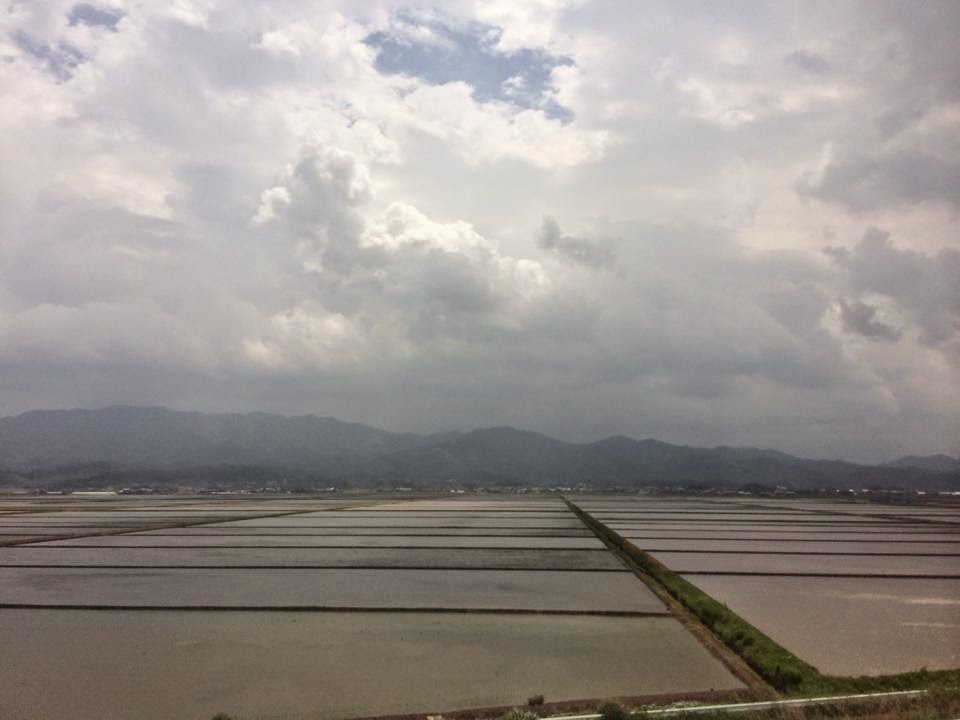
Looking for the 'There' There (Prologue)


If I were asked what defines my life at this particular phase, I would say that it is to research 'place,' to see how a particular place defines the culture, beliefs, and lifestyles of those who live there.  My marathon walks have proven to be the best means to get out into the world and examine these very points.  (An fact obvious to all those who read this blog.)  But what if there is no longer any 'place' left? 


It was with this in mind that I decided to walk through the Tohoku tsunami zone.  I am driven by history, and this event went beyond history, into the realm of epic.  Like many of us, the triple disaster had haunted me.  On the day that it occurred, I was living in New Mexico, and even from that distance, it had been horrific to watch the suffering befalling the country that had become home.  My first instinct had been to pack all my camping gear and hop on a plane, in order to do what I could, to lend the strength of my arms, or utilyze my ability with the language to interpret for the international rescue teams.  But my wife was then seven months pregnant, and I knew that my place was with her.  


Returning to Japan nearly a year later, I had heard the stories of those who had gone to help, and I still felt guilty that I had been unable to offer any assistance.  Another year, then two, passed, where my own immediate needs took precedence.  But the desire to do something continued to work on me.  

When I heard the announcement that Tokyo had been given the 2020 Olympic games, I was crushed.  I felt that this was the ultimate betrayal of the survivors.  This decision seemed immature to me.  It had all the makings of a sympathy bid, but would be much more meaningful were the Tohoku region to be completely stable and rebuilt, a parallel to a 1964 Tokyo rising from the rubble of war. I decided that what I could do was to visit the area and talk with the locals, making their tales known.  We heard many of their horror stories about the disaster and its immediate aftermath, but I wanted to tell how things were today, three years on.

It was an impetuous decision to be sure.  I relish the planning of my walks almost as much as the walks themselves, but this one was much more impromptu.  I had no maps, no idea of the current circumstances.  Whereas my earlier thought of bringing camping gear and food had been more about not wishing to add more strain to an already difficult situation, this time I thought that I'd need the gear since I wasn't sure if there were any places to eat or sleep.  I packed my big backpack for a two week walk.  Then sitting down with Google Maps, I saw that I could break the walk in two parts, so decided to do just that, racing as I was the start of rainy season.  I unpacked the big bag, and packed my medium bag with lighter gear -- a bivy sack, sleep pad, sleeping sheet.  But a few days later I took all of these out and decided to go very light.  I recalled an earlier conversation I'd had with a taxi driver in tsunami-stricken Shiogama, in which he'd mentioned that all the clean up had already been done, but what was needed was a means for the people to move forward economically.  In this spirit,  I'd eat what I could find, sleep where I could, hopefully putting much needed money back into the hands of the locals.  

But how would they take my presence there?  Despite my best intentions, something about all of this felt a bit off, like I was trying to find entertainment or adventure in an area that had been very badly traumatized.  My discomfort continued throughout the preparations, and hung more heavily upon me when I stepped off the train on a Monday morning in the Iwate city of Miyako...   


On the turntable:  Taj Mahal, "The Essential Taj Mahal"
On the nighttable:  Jeffrey Eugenides, "The Marriage Plot"

Tuesday, June 10, 2014

(untitled)


Plum rains
Bring definition
To what's no longer there.

On the nighttable:  The Velvet Teen, "Daytrotter Session"


Sunday, June 01, 2014

Sunday Papers: Kurt Vonnegut


“Do not use semicolons.  They are transvestite hermaphrodites representing absolutely nothing. All they do is show you’ve been to college.” 


On the turntable:  Juli Hendrix, "Are You Experienced?"


Wednesday, May 21, 2014

Deep Kyoto: Walks released!


Just quick note that the book Deep Kyoto: Walks is available as an ebook on Amazon!  A year in the engendering, it's time to release this baby into the wild! Naturally, any help you can give to find this child a home would be highly appreciated! 

More details are here:

http://www.deepkyoto.com/?p=10128 

Amazon link: http://www.amazon.com/dp/B00KFM2J0C  


On the turntable:  Bob Dylan, "Slow Train Coming"
 

Monday, May 19, 2014

Even Further on Basho's Narrow Road... (Narrow Road Signs III)


At the foot of prayers
Etched in stone:

Freshly cut grass.


Suzumebachi
Mimics the chanting of monks
Within the Benten hall


Petals upon the trail,
Envy the longevity of
The maples' fresh green.


Basho, Sora, Ekaku.
Companions drinking sake
On the rocks.


Two ducks sail the waves,
Riding out the tempest
In the rice paddy.


Zen master sea gulls
With their scolding cries of 'Now!'
Follow me from Sado.


Flotilla of fleur-de-lys
Sails up the narrow stream,
Moving toward summer.


After jumping the rooftops
Beneath the full spring moon,
Weary ninjas sleep in.


On the turntable:  Headlights, "Daytrotter Session"


Sunday, May 11, 2014

Sunday Papers: Leonardo da Vinci


"Wipe the dust from awareness."


On the turntable: Air, "City Reading"


Friday, May 09, 2014

Sea of Japan to Biwa...revisted.


Before walking the Hōkuriku-dō last December, I spent a fair amount of time deciding which of the two routes to take to the east shore of Lake Biwa.  What bothered me was that neither of those routes connected with the Nishi Ōmi-ji on the western side.  There was a road by that name, but I knew that it wasn't the real thing.  In Japan there are plenty of highways that take the monicker of an older route which traditionally lay close by, but not necessarily directly beneath.  I found what I thought was the most likely course, and decided that I'd walk that.  

Then one day, I came across a different map which showed the true route I'd been seeking.  The road didn't branch off the Hōkuriku-dō at all, but started its southbound journey from the western outskirts of Tsuruga city.  And rather than follow the broad river valleys, it snaked its way into the mountains, before rushing headlong toward Japan's largest lake.  

And so it was that I once again found myself on the first train bound for Tsuruga.  What is it about towns on the Sea of Japan that makes them look so tired? It took me a good hour to actually walk out of the city and into the rice fields that were in an earlier point in their planting cycle than those I'd been walking through earlier in the week.  

There wasn't a single trace that this had once been an old road.  Rather, it was busy with farm vehicles, with absurdly wide sidewalks, despite the dearth of bicycles out here.  I looked at the parallel roads to the right and to the left, but those too were lined with newer houses, lacking the usual wonderful line-up of old Edo period structures.  

The morning started muggy, but began to cool as I climbed, not due to the change in elevation which was very steady and gradual, but more from the wind coming off the sea, pushing me along, urging me toward the hills.  The landscape never seemed to change, just that bland, broad highway moving slowly on. There was a lone Jizo, and a majestic old tree.   Other than these, the road remained featureless.  I grew bored pretty quickly, and began to sing songs by Paul Weller.  That's entertainment.  

The mountains rose to meet me.  As they did, the road became a single track, which began to trace the bank of a concreted river.  This took me through a number of small farming communities.  Just beyond them, the concrete and the asphalt dropped away, and I happily found myself walking on bare earth.  My eyes were occasionally turned up toward the hillsides, as the memory of a bear warning sign that I'd seen further below resonated within my head.  But it was important to look down sometimes too.  Not too far along into the forest, I saw a sign pointing down a side trail in the direction of a Jizo that had been carved onto a giant, split bolder.  I followed this overgrown and unused trail until I saw a hut covering the stone upon which was imprinted a deity many centuries old.   As I took a step to investigate a smaller statue nearby,  I noticed a snake of a meter or more, moving slowly past my feet.  
  
The rest of the morning I followed the path as it hugged and crisscrossed the river.  It looked as it must have in feudal times, and I mused on this while walking along, climbing gradually into fresh green.  The forest around me was filled with birdsong, and if the constant chatter and squeals were any indication, rife with monkeys unseen in the trees.  On the final approach to the pass, the clouds began to roll in, and it wasn't long before the "potsu potsu" began.  Luckily there was a shelter at the top where I could sit and eat lunch.  The rain didn't last very long, but the clouds remained close.  Rather than linger, I headed quickly down the other side. 

The road here was paved as it moved toward the valley, eventually joining a broader one when it finally flattened out an hour later.  I continued on, chasing the shadows of clouds which blew along the road's surface in the direction of the lake.   Frogs serenaded me as I went.  They were given a standing ovation by two towering rows of dawn redwood trees, which ran in parallel on either side of the road.  It was puzzling that these trees were here, as this species is more commonly found in the Sichuan Province of China.  But here they were, shading me for the next few kilometers.  I've read a great deal about the namiki shade trees that once lined great stretches of the old Japanese highways, offering the traveler respite from the sun and the weather.  I'd seen patches of them here and there during my journeys, but never a strand so grand and unbroken as these.  

The redwoods begat chestnut orchards, which in turn begat rice paddies.  Approaching one, I saw a man standing over a woman sitting on the bank, her arms stretching behind her to support her weight. This was the body language of the young, for no old farm woman would sit like that.  As I drew closer I saw that this couple were probably still in their thirties, smiling and seemingly happy at this rural setting and life in which they found themselves.  I imagined them as recent city transplants chasing a dream, an impression created for no other reason than their newish clothes and the slightly perplexed expression on the man's face as he looked at his newly flooded fields. 

I checked my GPS, which told me I had 35 minutes to get to Ominakasho station, from which my desired train would leave in 30.  The next train would depart an hour after that.  I picked up my pace, nearly speed walking, keeping it up for the final three km, before breaking into an outright run for the last few hundred meters.  God I hate running!  Each slap of foot on pavement brought shooting pains into the lower buttock muscles on the right side, a place that usually begins to ache this far into a walk.  I'd done 30 kilometers on the day, and as usual, the last five began to hurt.  But I was proud that I'd done this distance in six hours, a blazing speed made more remarkable by the fact that I had climbed over 600 vertical meters in crossing the pass.    

I made it to the platform seconds before the train pulled in.  And with that, my feet came to rest.  While there are still a few longer routes I'd like to walk  -- four days on the Ise Kaidō, about a week on the Kumano Kōdō -- in terms of distances that can be measured in day trips, there were no more roads in Kansai left for me to walk. 


On the turntable:  The Beatles, "The White Album"
On the nighttable: Winston Davis, "Dojo:  Magic and Exorcism in Modern Japan"

Wednesday, May 07, 2014

The Road to Kameoka


The bus ride was a film played in reverse, as it followed the course it had the week before.  Where on that journey I had been surrounded by young schoolgirls, today it was their male counterparts, filling the bus with their musky hormonal scent.  Along the way I noticed other hormones in action, that of a blue heron striding across a rice paddy, taking broad deliberate steps through the mud, as if tiptoeing up to its potential mate standing nearby.

The bus dropped me off it Hatta again.  I moved up the road under the bright sunshine, a brilliant example of just how good the weather can be in May.  Entering a village further on, I heard a rapid tapping from around the next bend, and assumed it was a carpenter getting an early start to the morning.  But there in the street was a lion, carrying on its shoulder a man's head, which was smoking a cigarette.  There was another lion a few houses away, swirling and spinning in the gravel yard.  Beside him was the source of the banging, a tall man beating a simple tattoo on a small drum to keep time, as a pair of flutes trilled a repetitious tune into the morning air.

A housewife standing nearby told me that this troupe came up from Ise once a year, traveling and performing around Kansai and the Chugoku areas. As a fan of classic Japanese cinema, I have a number of times seen films that used these traveling actors as protagonists.  I'd like to pursue this more as a subject of research for a book, these old troupes that would wander the roads of Japan, literally singing for their supper.  It was quite fortuitous then to come across this lion dance, this shishimai, going house to house.  I had originally intended to do this walk a couple of days before, but the bad weather had forced me to postpone. Had I done so, I'd have missed this encounter completely.  Blessed by the gods I am.

The villages here were more spread out than they had been over the passes to the west, the patchwork of fields between much broader.  There were fewer shrines and temples as well.  I did find a Inari shrine up a low hillside, weathered and dull.  A trio of dull orange torii leads further up the hill before giving up, almost in exhaustion.  The forest beyond was overgrown and strewn with bamboo fallen in a long ago storm.  Back on the road below, I saw a number of stone lantern written with the characters for Atago, as well as one old road marker pointing the way, a testament to the fact that pilgrims had once followed this road while on pilgrimage to that sacred peak.   

I crested a low pass, then dropped toward Kameoka.  Along the way, I passed Yu no Hana Onsen, or 'Flowering Hot Springs.'  Though what was really flowering was an acidic cocktail of sulfur and burning plastic.  Perhaps what I was smelling was the captive oni of legend, whose tears contributed to the magical qualities of the waters.  Apparently that had been good enough reason for John Lennon and Yoko Ono to once pass the night here.

On the outskirts of town, a series of streams crisscrossed the plain, its clean waters providing raison d'etre for the sake brewery which imposed a proud presence in wattle and brick amongst all the surrounding shops and homes. As the town's density increased,  I grew a little concerned that I'd have difficulties following the path.  I'd already spotted its likely path on my GPS, but was concerned by my rapidly dwindling battery.  Yet the road itself never let me down, never lost the traditional look of low homes lining its narrow passage.   

The townspeople had come through too.  Once in the town proper, the signage began, leading me through a number of right-angled turns befitting a castle town.  And if the direction continued to remain in doubt, both sides of the road were paved with light brick.  I followed this yellow brick road and navigated the turns, paralleling the old castle moats whose waters were partly responsible for the riot of colors in bloom everywhere I turned.

I quite liked this town, having never seen its true face before.  My only experiences here had been traveling the unattractively busy Route 9 along the outskirts, or walking through the bland suburbs up to the hilltop temple of Hōsen-ji where I'd polish my zen a few times a year.  Today I saw well preserved homes, narrow lanes free of utility lines, and ample signage to explain it all. 

I arrived finally at Umahori Station, reuniting me with a section of the San-in-do that I'd followed out of Kyoto back in 2008.  Not far from the station stood a single fifteen-story monolith, rising to flip the bird at the traditional part of town.  I remember many nights sitting in meditation at the temple in the hills above, looking down at these lights ablaze, the darkness beneath cut only by the trains pulling in and out like glow worms.  Since I knew that the trains ran through at twenty minute intervals, I was able to cheat and use them to time the meditation, waiting for the 8:39 to come in to signal a mere minute remaining until I could relieve the pain in my knees.  Today too, the train proved a respite for weary legs, as it bisected the steep gorges that cut into Atago's flanks, then dropped me into the heart of the Old Capital.


On the turntable:  J.J. Cale, "J.J. Cale Live"


Sunday, May 04, 2014

Sunday Papers: Wendell Berry


“Stop somewhere, and begin the thousand-year-long process of knowing that place.”


On the turntable:   Warren Zevon, "The Wind"

Friday, May 02, 2014

The Road to Sasayama


Once again the weatherman lied.  He'd promised me clear sunny skies, but all was dull and grey.  My train moved beneath, pulling out of an equally grey Osaka, and heading northwest into the hills.  In the seat before me, a young high school couple sat, heads close, sharing a look at a smart phone, or perhaps sneaking kisses.  At one stop, the boy abruptly got up and sat down beside me.  I was puzzled, until about fifty other kids wearing the same uniforms filled the carriage.  I liked this whole scenario, of this young couple hiding a love found during a longer commute.

From the train, I saw signs of spring coming back into the land.  A farmer was turning slow circles around his field upon a tractor.  Neighboring fields had already been flooded.  The rice would go into the ground within the week.

I disembarked.  Wisteria crawled upon the trees above the station, purple streaks amidst the new green.  The residents of this small village were a bit taken with my foreign presence, something I wouldn't have expected this close to the cosmopolitan centers of Osaka and Kobe.  I wandered away and out into the grid of rice paddies, the world doubled due to the placid water in the fields. 

Today, I was following the Sanin-do, one of the most ancient of roads, which led from Kyoto to Izumo Taisha. I had lived just off it during my 12 years in Yonago.  This particular section was known as the Sasayama Kaidō, named after the frontier town into which I would walk an hour later.  A castle had been built here by the Tokugawa, in order to keep watch on the powerful lords to the west.  The narrow streets parallel to the castle ruins still retained their feudal look, and the newer shops of downtown could hardly be called contemporary.  The '60s look of their frontages mimicked the stock beyond the doors.  There was the bamboo and wicker shop, the kimono shop, the shops which sold only umbrellas. Black beans seemed to be the coveted souvenir here, being sold out of wooden bins everywhere.  

There was a bizarre double retro vibe going on here, as if fifty years ago the town fathers had decided to celebrate the town's history but preserving it, yet the town of that time had found itself unintentionally preserved as well due to stalled economic growth.  Sasayama appeared to be capitalizing on this, and it was working.  New life had evidently flowed in, personified by the younger, hipper presence here, in the form of a woman in her flowing India clothing, hanging more of the same upon the racks of her boutique.  I saw two cafes run by men in ponytails, and some rather progressive menus written in colorfully swirling chalk lettering.  These artist types had been charmed enough to relocate here, and I too felt the spell.  I promised myself a return trip for further exploration. 

But I didn't linger long, and moved once again out amongst the fields.  They had done some remarkable things with the trees here.   Many of them lined the banks of the fields, hinting that strong winds must blow wild out here.  A pair of real giants towered above the small Jizo hall nestled at their feet.  Many of the homes still retained their thatch roofs, one of which having recently been replaced, glowing bright and green like fresh grass.  Flowers both wild and domestic added such a rich burst of hues that almost made me forget the grey clouds above.   Hand in hand with all this new life came the inevitable partner, death: a snake, and later on a frog, lay crushed into the asphalt.   

The Sanin-do carried the burden of its age with a certain weariness.  All-night lanterns were overgrown with creeping vines.  Memorial stones of an ancient vintage lay in the weeds to the side.   Deities resided in wooden structures that were rotting and covered in mold.  Even the few shrines I passed had simple torii of a few tree trunks merely lashed together, the shrines behind being of an underterminable age. Underlying this all was the immature voices of juvenile frogs who tested their new legs by raising themselves from their beds of mud.      

This valley was broad and easy for farming, the road unobstructed as it moved arrow-straight through a chain of villages.  These communites must have gone back far more than a millenium, back to a time when clans were migrating from the provinces toward a Yamoto state just being born.  The shrines all dated to this time, when chieftains held far less sway than the gods.  The rain sodden gate of one of these gave off the scent of wood as I approached.  I took a rest at a different shrine further on, one even older, with a certain air of mystery.  As I sat before yet another massive tree, the caretaker came out and began telling me a bit of the shrine's history, and about the festivals that were still held every year.  There was a selection of black and white photographs commemorating a time when the shrine was the cohesive bond for the community, a bond that would begin to erode once those same photographs were put into a electronic box and began to move. 


As I left the protection of the shrine, a squall rolled over and unleashed upon the paddies, and upon me.  I took shelter in a bus stop for a few minutes until it relinquished its urgent intensity. The rain itself kept on, so I pulled out my umbrella and followed suit.   As if a co-conspirator with the weather to my misery, my narrow road merged with the busier highway, and I began moving uphill against the trucks that doused my trousers with the mist coming off their tires.  

Approaching Anabiki Pass, I eventually found a section of the old road that helped me to avoid the unpleasantness of a long tunnel.  It wove and wound up the slope, littered with leaves and small branches.  At the pass was the obligatory Jizo, this particular one turned toward the hillside which was in a rapid state of deforestation.   But the forest got its own back, as one section of the road had fallen into the valley below, the white guardrail twisted and extended out over the abyss in a gesture of pleading. 

Until this point the walk had been fantastic, the Sanin-do well preserved, despite a few short sections on the busier highway.  The remaining hour unfortunately stayed with the new road, and though expecting a descent after the pass, I found myself climbing again.  The highway crossed the next pass in a series of S-curves, and without a real shoulder, I had a few tense moments of walking upon the road itself, into blind turns.   Over the top, and I was given perhaps a meter of space, as the oncoming traffic slowed and veered around me.  

Looking down into the valley, I noticed the ghosts of old rice paddies, their terraced shapes obvious and unnatural.  I imagine that the fields had provided the food for the tea houses that had surely been atop this pass.   But even these would be lost soon, judging by the tree-felling being done above, as well as further done the valley.  Based on the curves of the road earlier, I imagine a tunnel is to be bored beneath, the new road laid atop those traces of fields.  But who cares about history when you can shorten the drive by five minutes?  I supposed there's some consolation to be found in the fact that the new road will be true to the original route of the Sanin-do.  

I walked into Hatta, and found my bus stop.  I had about twenty minutes until the bus arrived, so looked for a place to charge my phone.   The adjacent police box was open, with no one around.  It did have an outlet, so I plugged in and sat awhile.   When the bus came I boarded and rode the final eighteen kilometers into Kameoka, joined at some point by two dozen school girls, which served as a bookend of sorts to the day.  I was surprised that the bus avoided the main highway and followed the Sanin-do itself, making us the latest set of travelers moving along this, the most ancient approach to the old capital...


On the turntable:  The Band, "Live at the Academy of Music"
On the nighttable:  Art Davidson, "Minus 148º"


Sunday, April 27, 2014

Sunday Papers: Satō Issai


"One gazes at the moon to appreciate its purity, not its phase or visibility. One gazes at the flowers to appreciate their vitality, not their color or fragrance."


On the turntable: Crosby, Stills, and Nash, "Crosby, Stills, and Nash"


Saturday, April 26, 2014

Walking Blues...


Here's a little something Michael Lambe and I have been quietly working on for the last few months and as it is almost ready for release I thought I would let the cat out of the bag.

Details at Deep Kyoto...  


On the turntable:  Air, "Airities"


Thursday, April 24, 2014

Taking the High Road through Nara (Ise Hon-kaido II)


I found the signs for the Ise Kaidō right away, little white rectangles of plastic tied to low hanging tree limbs and to signs.  They helped me navigate the twisty road through the suburbs.  Housewives lugged garbage sacks from their kitchens to the street.  School kids swerved around me, not expecting my figure to appear before them as they sped downhill on their bikes.   

These suburbs began where I disembarked from the train, just below the Kuragari Pass that I'd crossed a few weeks ago.  Atop the next hill, I left them for forest.  Stone buddhas lurked in the bamboo groves on either side of the road.  Further along were a handful of small industrial compounds, surrounded by high, rusting, corrugated iron walls.  At my approach, a pack of dogs began a racket close by beyond the trees, which had me worried until I passed the gate to the police dog training facility. 

I spent the good part of the morning looking for beauty, something to shoot photos of; something to write about.  But beauty's so thin on the ground down here.  For years I'd considered buying property somewhere in Nara prefecture, a house in a small rural village, somewhat remote yet with easy access to Kyoto.  But this entire area has had so much concrete poured over it.  It was getting more and more difficult to find those ancient pieces of beauty that had existed for a millennium, but now lay beneath. 

I began to move closer to Nara proper.  The road grew straight, lined with the usual suspects.  I think if it were not for Mt. Ikoma, Osaka would've sprawled right into this town.  It's to Nara's great benefit that the mountain is there.  The suburbs lead right up to both flanks.  This final stripmall was absolutely horrible.  The walk kept getting worse and worse.  

The road led directly to the edges of Sarasawa-no-ike, beside whose water I sat, admiring the sun-worshipping turtles who, eyes closed, craned their great necks toward the five-tiered spires of Kōfuku-ji's dignified pagoda.   I wove through the narrow streets, each well marked with history and character.  Most seem to have been converted into small eateries.  Sadly, it was still early.  I began to move south.  

Within blocks, all charm had faded.  I passed a long hour or so moving through more uninspired suburbs, the railway hugging the side of the road.  One house did try to liven things up, its front door framed by wisteria, perfect and purple and in full bloom.  In another season, I'd have walked right by.  

By the time I arrived in Tenri, I was starting to get rewarded.  The villages held onto what they'd always had: the small canals, the tiled roofs, and even one short section lined with arbor.  Tenri itself was founded around its eponymous religious sect, and it showed.  I found myself behind the sect's 'campus,'  the temples stacked high and looking like dormitories.  Everyone I passed was wearing these long sleeved black over-robes, looking like extras in a 1970's sci-fi film.  I've written about Tenri before, and I was actually quite moved by the faith that I saw displayed here.  But I also have a problem with organized religions, in particular those that are this, well, organized.  There incongruously at the southern edge of town was a condom vending machine, bearing the optimistic pitch of  'Cheerful Family Planning.'

I was paralleling now the ancient Yama-no-be-no-michi, which I consider to be one of the premier walking courses in Kansai.  Though still essentially part of the Ise Kaidō, this stretch that I was walking was called the Kami-tsu-michi, or high road to Nara.  (The lower road lay to the west of me, and I intend to walk it later in the year.)  The scenery began to rival the older road, passing before forested shrines, reservoir ponds, and towering hillock burial mounds.  These final two hours walk redeemed the day for me.  

As did the coffee I drank al fresco at a simple cafe beside Miwa station.  The sun remained high and so did my spirit, despite more than 30 km over hard, uninspiring roads.  I've walked the next section of the Ise Kaidō already, and will pick up the road again further on, as autumn leans into winter, when the dry leaves fall atop the fields and hamlets of the deep Mie hills...


MAP: http://latlonglab.yahoo.co.jp/route/watch?id=4cc9415e09dd2d174d0d38987812e0fb


On the turntable:  Ramblin' Thomas, "Ramblin' Thomas and the Dallas Blues Singers"
On the nighttable:  Mark Law, "The Pyjama Game"   

Tuesday, April 22, 2014

In Bloom...


Trusting in the mysteries
Opening one petal at a time.


On the turntable:  Robbie Robertson, "Robbie Robertson"


Sunday, April 20, 2014

Sunday Papers: Galileo Galilei


"I do not feel obligated to believe that the same God who has endowed us with sense, reason, and intellect, has intended us to forgo their use."


On the turntable:  Chinmaya Dunster, "Karma Circles"

Wednesday, April 16, 2014

The Fortunate Earth is Happy


Kyoto Journal has published a review I wrote for them on their webpage.  Please have a look.


On the turntable:  Doobie Brothers,  "Best of..."

Sunday, April 06, 2014

Sunday Papers: Raymond Bradbury


"You can’t learn to write in college. It’s a very bad place for writers because the teachers always think they know more than you do—and they don’t. They have prejudices."


On the turntable:  Brad Mehidau, "A Tribute to Joni Mitchell"

Thursday, April 03, 2014

Mycolic Manifesting


Deep in meditation,
I gradually become the world.


On the turntable:   The Dave Pike Set, "Got the Feelin'"


Tuesday, April 01, 2014

Kyoto's Bountiful Minister


Quite pleased that I had a travel piece appear in last Sunday's Japan Times. The piece was originally conceived as an addendum for the Deep Kyoto Walks book I'm co-editing with Micheal Lambe, scheduled to be released this month.

The link is here.


On the turntable:  The Band, "Across the Great Divide"
 

Sunday, March 30, 2014

Sunday Papers: David Byrne


"Let’s find it within ourselves to give up some convenience and become a little more human."


On the turntable:  Jefferson Airplane, "Ignition"

Friday, March 28, 2014

Return to Forever


There was no reason to think that the two women weren't ghosts.  This peak bore the name Nyotaisan, or body of the woman.  And now there were two, sitting across from us.  They'd appeared at the top of this, the final climb of the Shikoku Henro circuit, having stepped from behind the towering stones that give shape to this jagged peak. 

Japanese folklore is filled with tales of shape-shifters who appear deep in the mountains to prey on unsuspecting travellers, yet I've never heard of any that had taken the form of a Korean nun.  She, through the translation of her Japanese companion, told us that they'd been walking the pilgrimage for exactly a month today, hitching here and there.  It was a plausible story, made somewhat suspect by the clean clothing and shoes that looked new.  

My own road up here had taken 4 1/2 years.  True, Miki and I had already visited the temple that lay at the foot of this peak, a visit that (nearly) completed our pilgrimage in late 2009.  Yet on the way up the mountain, we found a odd, hand-written sign that seemed to imply that the path had been off limits.  This led to a final dash along the valley route, hoping to make it in time to get our final stamp.  Once we reached the temple, we had met a few other pilgrims we knew, who told us that they had come over the mountain.  One of these raved about how hard it had been, eyes wild in a post-adrenal state.  Miki and I felt cheated somewhat.     

I revisited that feeling over the years, but it took until today to actually visit the mountain itself.  I was hired to guide a group over this peak in a few weeks, and something about the old man's raving had scared me.  I needed to do the hike first to confirm that it was safe.

I asked Wes along, wanting another's opinion.  We drove down from Kansai, detouring briefly to Temple 1, so as to set up a later joke that we'd "gone from temple 1 to 88 in a single day."  While there,  the nun I'd met on my actual pilgrimage in 2009 claimed she remembered me, and gave both of Wes and I sandalwood rosary beads to bestow luck on us.  Thus charmed, we returned a quick prayer or two toward the Taishi, then drove off.

A taxi had dropped us at the base of the hike, and what followed was a classic Japanese hike, past farm houses, or the remnants of same, up along quick-moving streams punctuated with the occasional waterfall.  The path remained a steady incline, then about two-thirds of the way along, we were thrust suddenly back to the valley floor, and faced with a final 400 meter ascent over a mere two km.  Very hard work indeed.   The final 100 meters did involve a little rock scrambling, but most could be done with using your hands, and was hardly the object of the raving old man's terror.  

The two women descended first, then we followed, detouring first to the decaying Oku-no-in up a spur trail, then down what amounted to a very long staircase, arriving finally at the temple.  There was a young Czech pilgrim before the Taishi-dō, an obvious walker, judging from his filthy clothing and cracked, sunburned skin.  I tried to chat with him a little,  but he seemed a bit out of it, answering one of my first questions with, "What day is it?"  We also found the Korean nun and her friend, standing with a small group of pilgrims who'd obviously already knew one another from the road.   They were behaving much like I had when I reached here years ago, just sitting and staring at the temple hall, unable to believe it was over, unable to leave. 

I wanted to talk with each of them, but I didn't want to intrude on this private moment.  And my own desire to want to share this with them, to show that I too knew what this felt like, revealed my own desire to return to the pilgrimage.  "Henro-byō," it's called, pilgrim's sickness.  And I suppose that's what prompts me back out on those long hot hard highways time after time, a sort of mad attempt to quiet the painful withdrawal symptoms of the soul.   


On the turntable:  Camper Van Beethovan, "New Roman Times"
On the nighttable:  Jeremy Mercer, "Time was Soft There"


Wednesday, March 26, 2014

Kuragari (Ise Hon-kaido I)


I stepped out of the subway station, and look slightly up the hill toward the castle.  The grounds were a Pollock splatter of pink buds, but I didn't detour to investigate whether they were plum or cherry.  Probably the former, as the sakura weren't due for a another few days still.

I grabbed a cheap 380 yen bento, and walked over to Tamatsukuri Inari Shrine, sitting on the steps since benches weren't provided.  This area was once home to the craftsmen who had carved the magatama jewels that were so sacred to the ancient Japanese.  Today, it was a quiet neighborhood, that still held the same slightly working class vibe, personified I suppose by the man who'd made my lunch.  

More importantly, this shrine was the Osaka terminus of the Ise Kaidō.  Just what I needed, yet another road to walk.  I was already in the process of walking a couple of others.  But this particular old path received priority status as it was considered most auspicious to undertake the Ise pilgrimage in a year following the shrine's renewal, a fact I learned from a recent post on my friend John's Green Shinto blog.  I had already planned to walk the Ise-ji section of the Kumano Kodō later this autumn, but now I felt compelled to undertake this parallel, 170 km road as well.  Good thing I bought new shoes last weekend.

I moved downhill, beneath a massive kusunoki standing in the middle of the road, then rejoined grand Nagahori-dori.  Signage was good here, and it led me seamlessly onto the smaller parallel streets that followed what in these early stages was referred to not yet as the Ise-Kaidō, but rather the Kuragari Kaidō, and old road that led from the capital Nara to an ancient part of modern Osaka called Kōraibashi.  The name was reminiscent somewhat of the word "Korea," proving an interesting linguistic parallel since it means Goryeo bridge, a reminder of the strong contacts between Nara and Korea at the time, and may even be where boats from the continent were moored.   

I was curious when the signage would end, and it didn't take long.  I was moving hesitantly into Higashi Osaka proper, along the busy Rte 15, or occasionally beneath the large factories lining the roads that flanked it.  Very run down and rough looking.  A couple of workmen in their 50s gave me a good glare as I passed.  The lack of signs made sense if you consider that it's difficult to care about history when it's hard enough just to focus on the day-to-day present.  


I had been long intrigued with this area, in particular with the section once called Kawachi, since it and its people had been the setting for Imamura Shōhei's first film called Stolen Desire.  The locations of the film reveal a small rural town surrounded by vast farmland.  Today it was all new, suburban, the absolute worst of Japanese development, right down to the rugby stadium in the middle of town, a testament to the rough and tumble people here.  Any time I passed a person of the film's vintage, I wondered if they might have been within Imamura's frame, as so many residents had been extras.  More important was the changes they must have seen during this last half century.   As I walked along, pondering this, Mt. Ikoma rose like a wall ahead of me.  

Before long I reached her feet.  I paid respects to Hiraoka shrine, as picnickers enjoyed the plum groves nearby.  I stepped back onto the concrete path of Route 308, which wound narrow and steep up the mountain's flank.  It wasn't a long ascent, but it was a tough one, forcing me to stop a few times.  I passed a couple of walkers coming the other way, each of whom nodded but didn't say anything as I came past.  Were they trying to emulate the holy men of old, taking some sort of vow of silence on the climb?  

I finally made it to the small hamlet up top, the tea house closed on this Monday.  I moved beyond it, to admire the view of the Nara basin beneath the seasonal haze.  Then quickly down the other side, past the fields and the Basho stone, the stone statues and the small temple halls. When my feet leveled out again, I was at a train station, tired, hungry, and foot-sore.  But the shoes had performed marvelously.  


MAP: http://latlonglab.yahoo.co.jp/route/watch?id=a1b3380854ca35b251629e89901729d1


On the turntable:  The Clash, "The Story of the Clash"
On the nighttable:  Rob Scheltheis, "Bone Games"

Sunday, March 23, 2014

Sunday Papers: Steven Wright


"Everywhere is walking distance if you have the time."


On the turntable:  Dr. John,  "Gris Gris"

Friday, March 21, 2014

Where the Circle Truly Ends


Almost a year ago,  I was contacted by some people in Canada who, knowing that I had walked and often wrote about the Shikoku pilgrimage, had asked if I'd lead them around the island in April.  I've often joked that since I've yet to finish my own pilgrimage with a traditional return to Koya-san, I must still be on it.  Yet I didn't want that return to be in the context of 'work,' so told Miki that we'd have to go back to pay our respects sometime before.

Monday brought us our chance.  Sora was with us, of course, as we drove south beneath clear blue skies which framed that stunning array of peaks carved out by the Kinokawa.  Many millennia later, these peaks served as the playground for both the gods and those who chased them.  We weaved between two seemly lesser and insignificant mountains, following a tributary of the mighty River Ki, the road ofttimes not more than an ungraded track that tilted us menacingly toward racing waters birthed as snowmelt.      

An early start got us to Koya-san just before lunchtime, and after quickly tracking down the friends who'd come down the day before, we all moved toward Ichinobashi, and the silent world of shadow and moss beyond.  At the second bridge we followed the stream onto what is known as the Nyōnindō Trail.  This particular portion was known as the Sanzan route, so named since it took us along a ridgeline that intersected three peaks of about 1000 meters each.  In following the entire route, you'd eventually go over eight peaks in all, which are held to be the eight petals of the lotus flower that cradles the temples of Koya at its heart.  

But three were enough for today.  The pleasant springtime weather guaranteed sweat on each of the 200-meter ascents toward the individual peaks, then the coolness of mid-March brought on a chill on the way back down.  It was a fair bit of work moving up and down these mounts with my daughter in the child carrier strapped to my back.  Her body weight, combined with that of various things in the pockets of the pack, brought the total close to 25 kilograms, about what I had carried while on the Shikoku pilgrimage four and a half years before.  As I reached the third and final peak, Tenjiku-san, I was glad that the waning light gave us the excuse to put off the remainder of the hike.      


The next morning brought rain and chill, but the flames in the goma ceremony well took care of the latter.  My daughter was taken with the booming thuds of the large drum to our left, but my eyes never left the flames, the flickers spiky and sharp, and often forming the exact shape of Fudo-myo's fiery form.  I sat in amazed witness at his birth, forged once again into existence in the same esoteric ceremonies that have been repeated for more than twelve centuries. 

The rest of the afternoon was grounded in the equally important spiritual practice of trying to keep a two-year old dry and entertained.  This might assume the form of hot tea and noodles, taken in an old cafe whose beams were recycled timber from old temples, joints and notches visible without.  It could also assume the form of walking between temples in the mist, under an umbrella that offered truncated glimpses of the bigger world, a fairly good metaphor for our take on reality at large.  

We walked the wet grounds around Kongobu-ji, then stepped inside to get our nōkyo-chō stamped.  This building serves as the official headquarters of the Shingon sect, and as such it was a young bureaucrat who manipulated the brush, his suit and haircut identical to the others at the desks behind him.  Having now visited the brain center of Koya, all that was left was to visit its heart at Oku-no-in the following day. 

On the way out, we met a young guy who was obviously a walking pilgrim, looking tanned and gaunt and carrying a big pack.  We talked with him as we all walked through the rain.  He was a college student and had chosen to do the pilgrimage in winter since that's when he had the time.  I couldn't imagine going over some of those high passes in waist-deep snow.  We congratulated him as he moved off down the road, and it was only later that I wished I'd given him settai, maybe some cash with which to buy a hot drink on such a lousy day.    
As Miki and Sora went back to our lodgings to rest, I went down to Ekō-in, where we'd stayed the previous night.  (I have nothing but good things to say about this temple and its staff, and will use it as my base for further explorations.)  We wanted to try a temple in a different part of town for our second night, and in our misfortune, we chose Fumon-in.  It proved to be everything we despised while on the pilgrimage, of temples as businesses, and priests as salarymen.  Granted, the temple caretaker was a nice and pleasant man, but the priest was another story.  I was shocked when, as I stepped into the main temple hall to pray, he gruffly asked, "What do you want?"  The monks were little better, rebuffing anything we asked.  Fumon-in is the perfect example of an assembly line temple accommodation geared toward the bus tour market.  Had I seen either the campaign poster or the calendar for the LDP prior to checking in, I'd have taken my mammon elsewhere.

Yet I didn't know this yet, as I sat at Ekō-in for Ajikan mediation. It was quite similar to the practice of zazen, except the eyes are helded on a circular picture of the sanskrit character for "A," which sits atop a lotus.  The seasoned meditator apparently can visualize the embodiment of Dainichi Nyorai.  I only saw the face of a demented cow.


The third and final day rewarded us once again with good weather.  We took the bus up to Nyonindō, and prayed to the statue of En-no-gyoja there for a safe hike.  We entered the forest behind the hall, taking care not to slip on the wet leaves and pine branches.  The trail was narrow as it ran up and down the rivulet valleys that striated the highland that hold Koya town.  It wasn't long before we entered town proper again, stepping around a torii that had been brought down by the harshness of winter.  After a number of suburban zigzags we found the trail that had led us off Tenjikusan two days before.  Atop once again, we prayed to the seated deity in its little hut, then descended into the lotus.  

Tiled roofs and soft light.  Oku-no-in.  We crossed a quick moving stream, then climbed the set of steps that led us directly to where Taishi sits in eternal mediation.  A monk was offering incense and chanting.  We stood here for a moment, quietly, almost surprised at where we were.  Then we too lit our candles, coaxed our daughter to place incense into the bed of fallen ash that was oh so many prayers.  Miki suggested we chant the Heart Sutra, but neither of us had thought to bring a sutra book.  I started to look for a copy of the verse on my smart phone, before quickly realizing how pathetic that was.  So we chanted from memory the best we could, fudging it in some spots.   But at least it was from the heart.

As if on cue, a large group of bus pilgrims came up, pushing and bustling, and I smiled at the irony. We escaped into the darkness of the Hondo.  The booming voice of a priest chanting filled the hall.  Sora was funny here, not wanting to leave our side.  Once back out amongst the statues and trees, she ran happily up the tiled walk, dumping water on the feet of the Jizos.  Then we three stepped up to get our final nōkyo.  With one gentle but commanding brushstroke, our pilgrimage came to an end.  


On the turntable:  Elton John, "Greatest Hits"
On the nighttable:  D.T. Suzuki, "Manual of Zen Buddhism"