

Friday, March 18, 2016
Over the Hills and Galway
In the past, I've posted excerpts from my unedited 2005 Ireland journals in order to mark St. Patrick's Day. Those previous entries can be found here: Part 1, Part 2, Part 3, Part 4, Part 5, Part 6.
The Day began with a horse ride around Killarney National Park. We sat seven in the buggy, knee-to-knee. It was a glorious morning. The storm which had dumped rain on the me the night before had swollen the rivers, knocked down some trees, and frightened off the deer. Seagulls blown 20 miles inland foraged in the grass. The town's cathedral loomed behind the trees liked a two-dimensional backdrop. The good light and atmospheric clouds threw shadows on the high mountains behind the lake. A couple Cromwell ruins stood on small islands. Our driver narrated as we did an hour-long lap. His rap consisted mainly of sex, those bastards the English, and "Go on, Cap'n."
One of the other tour members had gotten lucky last and made us wait 45 minutes. Joey blasted us along in order to catch a 12:30 ferry, speeding through hillside and town. In one, a small Buddha sat above a door. Sod farmers were at work cutting squares from the earth, piled up like wet cord wood. Joey told us that there are certain villages in Ireland that have chosen to speak Gaelic over English. Throughout the country, many signs are posted in both languages. But in these towns, it was only the former.
We made our ferry in time and drove aboard. I stood out on the deck, to feel the wind on my face and to try to steal a glimpse of the Atlantic far off to my left. Huge waves broke on the bow, sending up large plumes of spray. I felt truly happy today, standing under mostly blue skies, damp and chilly from the wind. I felt alive.
When we landed, we were in County Clare. It was soon easy to see why it was considered by many to be their favorite part of Ireland. The hills were low and flatter with no real tress to speak of, offering long views. Houses dotted the green. It was Father Ted country out here. The houses were a bit taller, with thick walls for protection against Atlantic storms. A few had thatched roofs. We stopped for lunch in Tralee, a small beach town known for its surfing (!). I had a bowl of seafood chowder in a pub which stood on the lone road through town. I then hurried to the long beach at the end of the bay here to see the source of my lunch. I glimpsed the Atlantic a couple of times today, but this was the first time I've stood on its eastern shore, looking back to where I had once frolicked. It grew shallow gradually as I'd remembered, so I walked far out in inch deep water. The wind blew foam across its rippled surface, like little Men-of-War. A surfer was coming out and told me that although the surf wasn't so big here, today it was particularly shit. Props to him though, as he was in the cold north Atlantic on this day, February 12.
We drove on up, overlooking the vast space, dotted by multi-colored houses. Large towers built by the French overlooked the sea. The land here along the shore looked like sand dunes that had been painted green. Joey talked of fairy circles where dead children had been buried. He pointed out the kitchens that had once taken on the hungry, and now stood in ruin. He pointed up at an obelisk, the monument to the man responsible for such misery in the land.
Cromwell had continually pushed the Irish west until they were put on limestone land unfit for crops. Potatoes were the only thing that could grow here, yet the blight had changed that. Taxes eventually moved them off. Door taxes could be avoided by using half-doors, but the chimney taxes turned the residents black. Dance taxes led to the devlopment of the Riverdance, where the feet moved but the upper body looked stationary to prying eyes looking from outside.
Before we set off, I asked Joey if there were any holy wells that he knew of, and he told that one of the holiest, St. Brigid's, was near. Thus we stopped at a little stone igloo set into a hillside below a graveyard. Inside, the walls were lined with poems and offerings given by Catholics. In the back was a small spring, filling a rock-lined pool. I put my hand in the water and touched my head and chest. Strangely, I couldn't breathe well for a number of breaths. I had to walk back up to the graveyard until I caught it again.
Next was the Rock of Mohor, huge cliffs falling 700 feet into the sea. On the walk up, I passed a guy playing the fiddle, and was amazed that he could move his fingers in the strong icy wind. Atop the walk was a long flat set of slabs, where truly insane people could lay on their backs and look upside down over the edge. From here, the ridge rose toward the right. Midway up, the strong wind was blowing a waterfall back up, spraying the trail and us walkers on it. (If a waterfall doesn't actually fall, can it still be called a waterfall? And why do we call a dry waterfall, a waterfall?) At the top of the trail was a tall observation tower. (Building a castle here would have been foolish, putting your back to 700 foot cliffs.) The wind here was unreal. At one point I could no longer physically move forward. It was if a hand were holding me in place. The trail was cut a meter or so below the cliff's edge so there was no real danger of being blown over. Still, it felt as it I could be lifted off my feet at any second. I gave up and moved sideways. Heading toward the bottom, the wind whipping through the wire fence sounded like an army on the move, groaning into battle.
We drove on toward the Burren. On this tour, Joey usually told his stories while driving. But for this tale he stopped completely. And as he spoke, his voice was emotional, angry. He talked of the famine and the systematic elimination of 2 million people from the island. The people had been forced to dig up the large stones on the landscape, both to improve the farming conditions for the English, and to break the spirit of the Irish. I had been noticing these walls all day, thinking them beautiful caterpillars crawling across the hillside. Now they looked like stitches. Joey told us that a million folks had been displaced to wander these roads. We drove into this harsh land, with the sun ducking toward the horizon and the uilleann pipes mournful on the stereo.
We tried to catch rugby on TV at a pub, but missed it by minutes. Drove to Galway after dark. Had a meal at a pub near a JFK monument, yet another tribute to this man. A couple of good blues guitars went at it. I stayed for an hour, then led the troops in search of trad music. We popped into every pub that had bands, but it seemed mainly cover bands playing to college aged crowds. Each pub was packed and the streets outside busy. Finally, I followed someone's directions and went over the fast water rushing under Wolfe Tone Bridge, up a maze of stubby streets to The Crane.
Inside its small packed space, a few musicians were going through their paces, playing a slow quiet tune. But there was a second, darker bar upstairs where it was going off, the musicians cooking up a groove. The fiddle player was Asian, and the drummer had Joyce spectacles, braided locks, and long bushy beard. He was jamming on the spoons. I;d come looking for music but had found something better, an organic jam session of dudes who had happened to find each other. The bar was noisy and the music tough to hear, but occasionally someone would shush the crowd and a woman would begin to sing a mournful love song. There would be no other sound in the place. I loved how much music was such a part of the everyone's soul here. You can enslave a people's body or mind, but you can't enslave their spirit.
During a break, I talked to the drummer about how to play Irish style. He was a generous guy who showed me a few tricks. I left the pub at just past one, humming Irish songs as I wandered up the near empty streets, running the gauntlet between weaving drunks...
On the nighttable: Afro-Celt Sound System, "Sound Magic, Vol. 1"


Thursday, March 17, 2016
Wept for my Daddy-o
In the past, I've posted excerpts from my unedited 2005 Ireland journals in order to mark St. Patrick's Day. Those previous entries can be found here: Part 1, Part 2, Part 3, Part 4, Part 5. Hoping to wrap it up a bit more quickly, I will post the final three pieces over the next few days.
In the morning I jumped on a three-day Paddywagon tour of the south. Joey our driver was a bit of a nutter, suddenly launching into song or impressions of Gollum, claiming to hear voices. Throughout the day, he'd sing a dozen or so old Irish folk songs, plus a pop song or two. They'd jump into his head based on what he'd see. (I did the same, being cursed with Spinal Tap's "Hellhole" after seeing the Murder hole at Blarney Castle.)
During the long drive, he regaled us with stories of Irish history. He talked of the Celts covering their bodies with white clay to scare invaders into thinking the island was populated with ghosts. As he said this, I could almost see white figures dashing through the forest. We passed a large open plain where some of the battles in Braveheart had been filmed. Two locals had achieved notoriety by having their van drive through the background during one of the scenes. I guess the producers hadn't expected any Irishman actually going to work at 5 a.m. The passing landscape certainly suited medieval battles. Ruins punctuated the green grids of hedge-bordered fields. Two horses frolicked just off the road.
Our first stop was the Rock of Cashel, a medieval fortress standing atop a rock. The atmosphere of the place was incredible, huge open chambers interconnected by high arches and circular stone stairs. The roof was nearly gone, and the crows looked down and laughed. Defensive slits in the wall looked out onto a graveyard, Celtic crosses high on the hill. Some of the graves had relatively recent dates, forming part of the walk around the back of the cathedral. A small angel marked a child's grave. At the top of the ground was a huge ornately carved stele which had broken two-thirds of the way up, the shattered pieces now littering the base.
We drove down toward Tipperary (which wasn't such a long way). Nearby Cahir Castle was still complete, a testament to its strength. Oliver Cromwell ended up keeping it rather than razing it, recognizing the strategic value. It was at a confluence of rivers which formed a V-shaped drop like a fun park ride. No doubt it had once been a sacred Celtic site. I admired the defenses, not unlike those utilized by the Japanese. Circular stairs rose clockwise as it would be harder for a right handed man to wield his sword. A cannonball was lodged in the wall where it had hit. I had my first look at a wrought-iron spiked gate , as I'd seen in films. The main chamber was quite warm and had incredibly thick walls. Over the fireplace at the room's far end hung the enormous antlers of a prehistoric deer. I enjoyed climbing up and down the curved stairs, popping into damp stone rooms, peering through archery slits, precariously moving along narrow walks high atop the cubist walls. I also learned that prisoners here, as throughout the UK, had an 'M' for malefactor branded on their right hands. This is why we raise it while swearing on a bible.
The land grew hillier the further we drove into Cork. We passed Cob'h and its deep port, the Titanic's last port of call. The ship must have looked immense against the small town and low hills. We passed through a few market towns, noticeable due to their wide streets. Some towns had essentially a single structure running the street length, individual homes demarcated by different colors of paint. At one point, we passed a camp of caravans. It is said that they were perhaps the descendants of farmers uprooted during the famine. Or they may go back 8000 years.
Our next stop was Blarney Castle, an incredibly tall narrow structure that rose out of a beautiful patch of landscape of fast-moving brooks, low stone bridges, and open expanses of green. As at Cahir, I wound round and round the steps. The top was open to the air, paths leading around perimeter to the Blarney Stone. An attendant held you in place while you lay on the stones, bending backward over the wall to kiss a stone hanging perpendicular. The stone was shiny from years of handing and kissing (though I've also heard that the locals come piss on it at night). Back down at the castle's base, I found the grounds amazing, following the paths around the Rock Close and its wonderfully Tolkienesque landscape. There was a peace and stillness that I'd not found since arriving in the Uk the week before. (I later found out that I had been in an old pagan temple.) I walked across the bog to an awaiting pub. I liked the way the earth molded to me feet as I walked it. The feet up, I had a pint of Murphy's drunk more regularly in Cork than Guinness.
Coffee in hand, I hopped the bus and we did our final push to Killarney. The road got wilder from here. As we entered the Cork and Kerry mountains Joey began to sing Whiskey in a Jar. He told us the story of Micheal Collins, killed in these hills. You could see how easy it would be to launch guerrilla attacks from such a landscape, a landscape of large boulders, steep hills, dense scrub, and fast rivers. Waterfalls hugged the ridges as they dropped below the treeline, all a dense mass of small pines. Though a bit inhospitable, everything was in miniature. It was a place where legends began.
We pulled at dusk into Killarney, this perfect little tourist town of narrow streets. Dinner was at a pub. Members of Paddy Wagon's six-day tour came in on their last night. Their body language was completely different to ours, having had nearly a week to bond. We on the other hand were still acting like middle-schoolers at a dance. After dinner, we headed off to another pub for a drink called a car-bomb, which consisted of a shot each of Baileys and Jamesons, dropped into a pint of Guinness and then slammed. It was tasty, like cocoa, but was like an express elevator to the brain. Some live music came on, and like the present company, wasn't terrible interesting to me, so I set off to find some trad music. I'd forgotten to replenish my cash from my room and had only €3.20 in my pocket. Luckily, I found a half-pint for €2.45, which I sat nursing, surrounded by a bunch of old timers grooving to four middle-aged men badly mic'd...
On the turntable: Andrew Hill, "Compulsion"
On the nighttable: Honore de Balzac, "Lost Illusions"
Tuesday, March 15, 2016
Rumination on Ruin
Funny how the ride in to city from the airport is through a landscape familiar--suburbs, box stores, commercial warehouses. That is, through a landscape familiar, one found in most countries. It is only when you approach a city center that you find it begins to take on a distinct cultural character.
On the turntable: Andrew Hill, "A Beautiful Day"
Monday, March 14, 2016
(untitled)

In the footsteps
Of Saracens, Romans, and goats.
They too knew Spring.
Of Saracens, Romans, and goats.
They too knew Spring.
On the turntable: Boredoms, "Rebore Vol. 1"
Sunday, March 13, 2016
Sunday Papers: Antoine de Saint-Exupéry
"Every doctrine swears that it can breed men, but none can tell us in advance what sort of men it will breed."
On the turntable: 10,000 Maniacs, "Our Time in Eden"
Thursday, March 10, 2016
Terre de Hommes

I read books to a degree than can only be called voluminous, and it is a shame that too few of them are stitched together with a quality of prose that enchants me. One writer I was weaned on, Antoine de Saint-Exupéry, has returned to my adulthood where he has begun to work magic. For the second consecutive visit to Provence, I have passed several hours with him and his words, seated upon a patio that lies just over the hill from where he had his aerodrome. And how wondrous still to be pulled from his books by the sound of a prop-engine tracing the lines of this same hill that shadows the valley of La Mole. The narrow confines of that valley could not contain Saint-Exupéry’s restless spirit, which longed to traverse the seams of the world. Off to my left are the waters into which he did indeed find an untimely and ultimate rest, waters across which his spirit continues to fly, piloting the vessel of poetry.
On the turntable: Abecedarians, Resin"
Monday, March 07, 2016
Scandimania

From the fjords to the forest:
Over the border to Sweden
Over the border to Sweden
On the turntable: Tom Paxton, "#6"
Sunday, March 06, 2016
Sunday Papers: Roger McGough
The only problem
with haiku is that you just
get started and then
Saturday, March 05, 2016
Omega Man

And then moving in silently, down wind and out of sight...
On the turntable: Beta Band, "The Best of..."
Friday, March 04, 2016
Congruous

In Lapland, with Argentinian Malbec in the glass and Isaac Hayes coming through the speakers. Why the hell not?
On the turntable: The Beatles, "Black Album"
Thursday, March 03, 2016
(untitled)

After the glaciers recede
And the sea waters rise
Only silence remains.
And the sea waters rise
Only silence remains.
On the turntable: Blackalicious, "Blazing Arrow"
Tuesday, March 01, 2016

Monday, February 29, 2016
(untitled)

With profound delicacy,
The winter light tests
The softness of blue.
The winter light tests
The softness of blue.
On the turntable: Bob Mould "Black Sheets of Rain"
Sunday, February 28, 2016
Sunday Papers: Loudon Wainwright III
"Everything changes but nothing is new."
On the turntable: Grateful Dead, "American Beauty"
Saturday, February 27, 2016
(untitled)

In the English garden,
Sunshine lights upon frost
To mimic the yellow of daffodil.
Sunshine lights upon frost
To mimic the yellow of daffodil.
On the turntable: Blind Melon, "Blind Melon"
Friday, February 26, 2016
The Geometry of Motion

Trimming the fabric of the atmosphere,
As the earth twirls below,
Modeling her winter collection
As the earth twirls below,
Modeling her winter collection
On the turntable: Bright Eyes, "Blood of the Young"
Thursday, February 25, 2016
An Occurance at Cinnabar Bridge
The whistle blew shrilly and the train came to a complete halt. It was just the other side of the crossing, with the conductor and the engineer looking down from the front window. Oh no, I thought, a suicide.
The conductor climbed down from the train and helped escort a young man who had been stuck in the no-man's-land between the drop gates. The train then began to crawl toward where I was standing on the platform.
As I waited reading my book, I felt a rather abrupt shove on my right arm. I thought that someone might have run into me on the near empty platform, but I turned to see a woman in her 70s smiling at me. I thought that she must have mistaken me for someone else, but then she stepped in front of me to enter the train. I took a seat further down the carriage, but she immediately came and sat beside me. I no longer tech English for money, let alone free, I quickly said to her, I'm sorry but I'm not much in the mood for talking. I am, she said. So I quickly disembarked and walked to the next car. From my new seat, I could see that she too had moved, to the end of her car, and was now staring at me through the glass door.
What is it about foreigners that attract the mentally ill? Over the years, I seem to be a magnet for them, a plaything they find on the street. I'm not complaining, but am curious. What do they read in us that makes us approachable? The woman's behavior was harrassment, hands down. I thought that if she were to approach me again I would ask her what she wanted, curiosity begining to win out.
The train pulled away from the platform, seemingly in the wrong direction. Weren't we now heading back toward Kyoto? But my stop was the very next one, and the correct one. I disembarked unmolested, heading toward the gates to begin the day's walk, alone.
On the turntable: !!!, "Louden up Now"
On the nighttable: Simon Arlitage., "All Points North"
Wednesday, February 24, 2016
Japan Visitor piece
My piece on Hokaido's remote Rishiri and Rebun Islands has been published at the Japan Visitor website.
The link is here.
On the turntable: David Bowie, "Changes"
Tuesday, February 23, 2016
Out in the Blue

Wes sat out front of Tenri Station, warming himself in the sun. Someone was sitting beside him, who I thought might be a missionary from this town's eponymous sect of Buddhism, but it turned out to be a farmer, who wanted Wes to commit to nothing more than explaining what he was doing in this remote part of Nara prefecture. As he and I walked off, a nearby pair of proselytizers kept up their rap, until the closing of the taxi door severed the flow.
I was happy that I was able to propose to Wes a hike that he hadn't yet done, as he has seemingly hiked just about everything in Japan, every step well documented in his web site, Hiking in Japan. This particular peak of Ryu-ō-zan was for me the final hike in a book on the Tokai Shizen Hōdō, and while the mountain wasn't on the course itself, it promised a pleasant diversion.
Another goal for the day would be a gear test of sorts, as I wanted to see how a couple of new jackets would fare in preparation for a trip to Lapland later in the month. But the 16 degree skies put an end to that, and inevitably the only thing to get tested was my patience, as a guardman tried to tell us that we couldn't walk through. He wasn't terribly persistent, as we didn't even change stride, not even for the actual workmen further on, who seemed not to see us.
A sign warning us about wild dogs was a brief concern, but they proved to be no obstacle either, probably off sunbathing somewhere. We arrived unmolested at the first promontory of the day, upon a wide open clearing that had once served as the northern castle keep for the Toochi-clan during the mid-16th Century. The views beneath the day's clear clear skies inspired, but were topped by the ruins of the slightly higher southern keep a short walk away. To the south lay Hira and Ibuki, with the Omine peaks far to the south. Osaka lay at the edge of the eye's reach, backlit by the sun. Below, the Yamato plain was nocked and grooved with the dormant paddies of winter, their bounty once the source of economy for the great burial tombs that brought imperfection to their straight lines.
After a quick lunch we made an even quicker descent down past the Fudo-myō statue towering over the stream at Chōgaku-ji's Oku-no-in, then past a shrine for the mountain above, with its warning about dangerous reptiles. While exploring a slightly overgrown side path we came across the entrance for a seemingly nameless burial mound, one that puzzled as it was halfway up the mountain rather than on the plains as was more common. As I prepared to enter, Wes warned me about wild boars, but all we found was a bricked up doorway in the darkness.
There were further mysteries on the way down, including well-kept but forbidden side trails, places for aescetic waterfall practice, and some unusually carved Jizo. Back in the sunshine again, we passed a car that had been driven into an irrigation ditch, and sat a long while in front of a new hiker's center that hadn't been here when I passed through ten years ago. While that had been hot stroll along a mid-summer Yama-no-be-no-michi, todays' weather was far more pleasant, even as we replicated the walk at a much quicker pace, so quick that I completely missed the burial mound for the legendary shaman-queen Himiko just to the west.
The idea had been to get to Miwa station before the train to grab a coffee. We were literally racing the clock, and arrived just as my transport home pulled in. But the day was too nice, the air too warm, so I decided to catch a later one and pick my daughter from school up a few minutes late. So Wes and I leaned into our respective ergonomic grooves in the trunk of an ancient oak, reminiscing about the days when of youth, when the future was open and ripe for building the civilization that is adulthood.
On the nighttable: Ian Buruma, "Anglomania"
On the turntable: 77, "Revolution Rock"
Sunday, February 21, 2016
Sunday Papers: Paul Theroux
"Fiction can be an epistle to the living, but more often the things we write, believing they matter, are letters to the dead."
On the turntable: Boz Scaggs, "The Essential Boz Scaggs"
Saturday, February 20, 2016
Takenouchi Kaido, End and Beginning
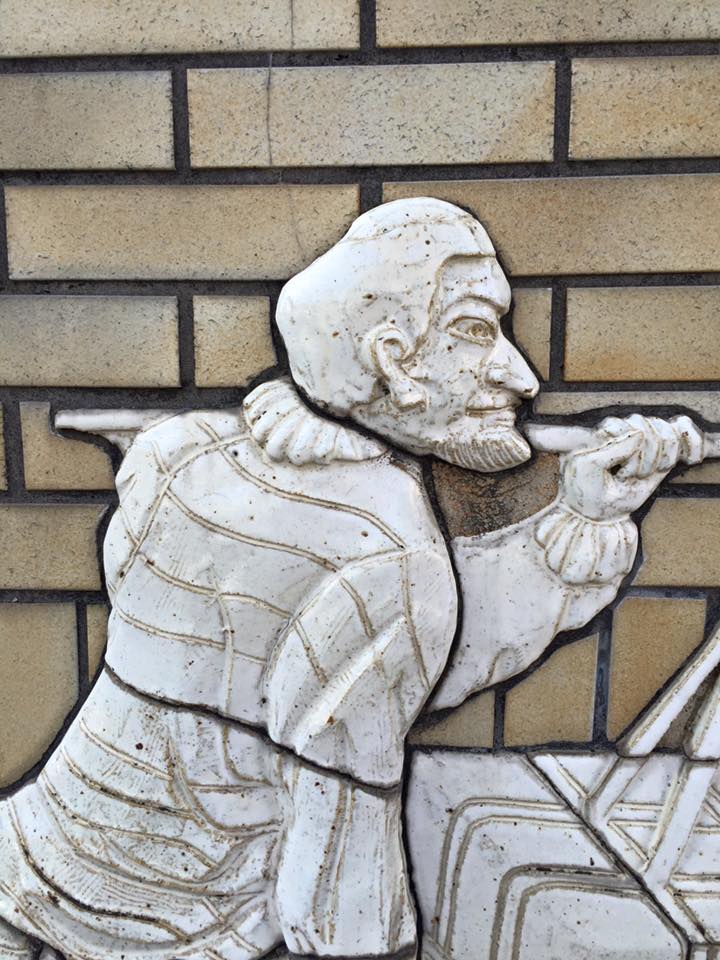
I had had a less than auspicious start. Due to a late departure from home, I was forced to travel during the morning rush hour, something I am careful to avoid, an arrow-straight journey right through the heart of Osaka no less. Standing on the platform to catch the loop line, I realized I was in the wrong place, but a quick sprint over to Nankai set me straight. For some bizarre reason Yahoo Transit directed me to the wrong station, plonked me down in some nondescript housing development, from where it took a good ten minutes for a taxi to pass.
The Takenouchi Kaido traditionally started where Sakai Station currently stands, and after a futile attempt to find some kind of historic marker stone, I turned my back on the station and its massive adjoining shopping mall and walked into the sunlight. Another unseasonably warm February day, in what was proving to be a warm El Nino winter. It was pleasant going in mere shirt-sleeves, along Oshoji-tsuji, what this section had been called in latter eras. The wall of a nearby primary school had a mural highlighting Sakai's connection to the bigger world, as it had once been the only port open to foreigners during the Warring States period. These foreign sailors and missionaries were depicted with the same exaggerated probosces as the late Edo prints of centuries later. I followed my own nose past the restaurants and cafes coming to life in late morning, and after passing the station to which I'd errantly arrived earlier, I found myself in definitive suburban Japan.
The walk from here was rather uneventful yet at least pretty straight forward. The Kaido was signposted surprisingly well, and I only doubted myself twice. Suburban developers pay little heed to old maps, and in both cases I was unsure of which parallel road to follow. I had a fifty percent success rate, and when I did go wrong, I realized it immediately then quickly doubled back to walk the correct route. (I missed it because had been admiring the old stone marker pointing me down the very path I wanted. Looking at the finger, not the moon.)
Where the suburbs began to thin I found a sprawling park that served as a good lunch venue, and it was delightful to bisect the cherry trees and allow my feet a reprieve from asphalt. Throughout the day I played connect the dots with the ancient tumuli that pockmark eastern Osaka prefecture. The massive tomb of Nintoku passed unseen just to the south, but later I sat a long while beside that of Yamato Takeru, whose heroic exploits settled the Yamato tribes firmly and definitely in this area. The only nomads now were the migratory birds enjoying the sun-warmed waters of the ponds that the ancients had used for irrigation when this road was in its heyday.
Aside from these, few other traces remained. Little surprise considering the Takeuchi Kaido celebrated its 1400-year anniversary three years back. I enjoyed how the towns I passed through had an old Showa look, as if nothing has been touched since 1963. I found this most exaggerated in the townof Furuichi, whose name can be translated as 'old market.' That entrepreneurial spirit still exists in the form of shops in the form of suburban homes selling second-hand baby clothes, or functioning as cafes. This American Country Boy lingered in front of one of the latter, called 'American Country,' but ultimately I moved on.
The home stretch then began in Komagatani, a village whose pleasant look was the subtle darkened wood of Edo period temples and homes. Beyond it, I was away from man-made structures for the first time all day, as the Takenouchi made its way to the pass that bears its name. I would stop just short, having begun my walk with that very section years before. As the final kilometer passed beneath my feet, I enjoyed having the twin peaks of Nijo just above me, as well as the higher reaches of the Katsuragi and Omine ranges further out. The history of those places goes even further back, but my own place in that history has yet to begin.
On the turntable: Brian Ferry, "Taxi"
On the nighttable: Ian Baruma, "Anglomania"
Friday, February 19, 2016
(untitled)

Walking --
From the west to the east,
From the grey to the green,
From the present to the past.
From the west to the east,
From the grey to the green,
From the present to the past.
On the turntable: Bob Brozman, "Blue Hula Stomp"
Thursday, February 18, 2016
(untitled)

Warmth upon the face,
As we chase winter from
The dragon's eyrie.
As we chase winter from
The dragon's eyrie.
On the turntable: Bryan Sutton, "Bluegrass Guitar"
Tuesday, February 16, 2016
Deeper and Deeper

February surprised by giving us a Valentine's day weekend guaranteed to warm the heart with 19 degree temps. Monday it was back to work, as the cloudy skies brought things back closer to zero. As I stood on the platform of Kyoto Station the wind rushed around me with the cold determination of the commuters similarly swirling toward the intense heat of crowded transport.
Finding the correct door in which to enter a limited express train is a game of guesswork, with a low margin for error if one didn't want to stand for the duration of the ride. After I confirmed my pole position with a passing railway staff, a gentleman in his 80's approached and complimented me on my Japanese, a compliment that the foreigner in Japan is never truly confident in receiving. We took up conversation in order to ignore the cold. He was a university professor of the journeyman school, which in this country is not necessarily a respectable career path. Being a bit of a journeyman myself, I could appreciate the breadth of knowledge that variety can bring. We talked of his trips abroad, and in the midst of this, he handed me an English book he'd co-written with a Vietnamese professor dealing with the aftereffects of dioxin that had been dropped on that country by my own. (A book that didn't hold much interest for me, one I'm ashamed to say I 'forgot' on the train, not wanting to add additional weight to a backpack already overloaded for a two-day winter walk.) Today he was going up to Tsuruga to attend a conference on hikikomori shut-ins.
The lights of the train cut through the grey from the direction of Osaka. I hope you don't think me unkind to find irony in the subject of hikikomori, but as much as I enjoyed the conversation, the last thing I wanted was to continue it for the next hour. I tend to shun conversing with strangers while on transport, preferring instead to withdraw into the company of book and internal monologue. As it was, he led himself to a place farther down the train, and I found myself in the typical foreigner's position of sitting alone. Shut out, as it were.
The train sped along the cold waters of Lake Biwa. Beyond its northern shore, we exited a tunnel to see the first flurries of snow, falling near horizontally upon the icy surfaces of hibernating rice fields. Further along, my eye fell upon sections of the Hokuriku-do that I'd walked before. Unlike the real snow country of Nagano where they board up the northern windows of houses, here it was merely with mats of reed and bamboo. There was no snow on the ground at the moment, but one restaurant had pushed a small mountain from their carpark into the rice fields below, early irrigation for the blackened and stubbly soil.
The horizontal snow was an indicator that I had better put on the rest of my layers. Thus girded, I returned to where I'd left off my previous walk on a balmy evening in late November. From here 60 km to go, or two days to complete the Hokuriku-do. As this next stretch was lined with well-known onsen resorts, I had thought it best to do in midwinter, when the region's infamous gray skies have been scoured clean by the cold winds of winter.
Goethe warns us to be careful of what we wish for. With an almost Teutonic determination I pushed forward into the storm, the winds mercifully aiding me as I moved south. Visibility was compromised as the skies pressed in, and I could see very little beyond the road I trod. The weather was perfect though for photographing detail; the light ideal for black and white. It's funny but when you begin to shoot black and white, you begin to visualize things in black and white, and how well a photograph of a certain object would look in that medium. And so I carried on, head down, eyes open, getting my Domon Ken on.
Komatsu was a rather small city, if it could be called a city at all. Somewhere along the way was a stone marking an old ichirizuka, and another marking the site of an old technological school whose mere 13 year life had overlapped the years of the Second World War. This may or may not have had a relationship with the large factory that was my companion for at least 30 minutes. About midway along, it dawned on me that the Komatsu corporation may have indeed been founded here (Wikipedia tells me it was). Once a small rural enterprise, those same war years were good to the company, when its tanks and howitzers saw good use. It has since grown to become the world's second largest producer of construction equipment, contributing in part to these very walks I do, providing not only the medium, but the impetus to see things before they are all paved over.
Town ended where the factory did (both literally and metaphorically), and the road began to undertake a series of right-angle turns through the rice paddies. As my body shifted in space, the wind buffeted me from this direction and that. By the time I reached the windbreak of the next town, the nature of the snow had changed. Until now it been falling in large clumps, usually an indicator of accumulation, but the earth had been too warm to receive it. Now, it was small cold pellets. Frozen rain. The road surface was beginning to go white. As the road began to build up just north of Kaga Onsen, small turrets raised themselves from the central stripe and began to spray water in four directions. This moving water prevented the road surface from freezing, but as it ran off to the sides of the road, it mixed with the freshly fallen snow to form a slushy bog. Walking atop it was like walking through porridge, neither too hot, nor too cold, but just right to slow my progress by a third. Not good.
Today's plan had been ambitious. I had been forced to start the walk in late morning, hoping to move quickly to cover my intended 32 kilometers within the six hours before dark. And now, only halfway through, my pace was impeded even further by the ice beginning to form beneath the sludge.
I pushed on for thirty more minutes until reaching Kaga Onsen, a town I was quite fond of as we'd shot scenes for Children of Water there seven years ago. I toyed with the idea of staying the night and doing a long 40 km day tomorrow, but the weather forecast was less than optimistic. A train it would be.
Somewhere around Tsuruga, the wet snow had devolved into a sort of dust, blowing past a surprised plum tree opening toward partial bloom. Tunnels and more tunnels and more tunnels again. And to my disbelief, I arrived back in a Kyoto basked in the warmth of sunny skies.
Map: http://latlonglab.yahoo.co.jp/route/watch?id=55055cb88bec2a62d3651a12bdd63bfe
On the turntable: Keb Mo, "Slow Down"
On the nighttable: George MacDonald Fraser, "Quartered Safe Out Here"
Sunday, February 14, 2016
Sunday Papers: Dwight Eisenhower
“Every gun that is made, every warship launched, every rocket fired signifies, in the final sense, a theft from those who hunger and are not fed, those who are cold and are not clothed. This world in arms is not spending money alone. It is spending the sweat of its laborers, the genius of its scientists, the hopes of its children. The cost of one modern heavy bomber is a modern brick school in more than 30 cities. … We pay for a single fighter plane with a half million bushels of wheat.”
On the turntable: Frank Zappa, "Bongo Fury"
On the nighttable: Mary Richie, "A Romantic Education"
Thursday, February 11, 2016
(untitled)

Minus 10 is a plus:
Mount Iwate lifts her hat
And bestows us with gifts.
Mount Iwate lifts her hat
And bestows us with gifts.
On the turntable: B.B. King, "Blues Summit"
Wednesday, February 10, 2016
(untitled)

Streaks of color
Wend their way through
A monochrome world.
Wend their way through
A monochrome world.
On the turntable: Bodkin, "Bodkin"
Tuesday, February 09, 2016
(untitled)

Burdened by impossible weight,
Monsters bend their weary forms
Awaiting the advent in spring.
On the turntable: Bon Iver, "Bon Iver"
Monday, February 08, 2016
(untitled)

A day held below zero.
My hair turns to stone
In the outdoor bath.
My hair turns to stone
In the outdoor bath.
On the turntable: Boomtown Rats, "Boomtown Rats"
Sunday, February 07, 2016
Sunday Papers: Chaobang
"Do not expect any respect, humans, so long as you scream about terrorism while celebrating your own countries' war crimes, or insist, as though you have a clue, that people of some ethnicities are more violent than others."
On the turntable: The Amboy Dukes, "Journey to the Center of your Mind"
Saturday, February 06, 2016
Journey through the Past

The weather forecast showed 12 degree temps, which the sunny morning skies confirmed. I decided to spend the day playing connect the dots. I had already walked a series of routes down in south Nara prefecture, but subsequent internet fiddling showed me that I had 'eaten the loaf, but left the heels,' if you will. Where did those routes connect? A fine day to find out.
Nothing terribly special to report, as I'd already consumed the tastiest bits. Nara is world famous for its lengthy history, nearly 1500 years of history, so its no surprise at how lived in the area looks. Even the newer house look weathered, the older ones hanging on. There are the odd small blemishes of industry, and the obligatory highways and rail lines, but I like the way the mountains and fields close in to hug everything. In particular the first section of the day, along the eastern reaches of the Yamato Kaidō, as the valley walls grow closer and closer as if to shield its kiss with the Hase Kaidō, a kiss I'd missed on my walking the latter road two years ago.
Not far away is the junction with the Kami-tsu-michi. I had thought that I had covered this 2-km elbow of the Ise Hon Kaidō while on a walk of the Tokai Shizen Hodō in 2009, but the TSH is further up toward the hills, a fact I discover as I sit sunning myself beside Shiroyama Jinja, perusing a series of online websites and refueling on a rice ball and some cold chicken. The Ise Kaido proper follows the river below, and so now do I. A handful of children play in its dry bed, two grannies gossip on a bench above. I criss-cross someone's farm, passing a number of signs pointing toward the seemingly infinite shrines and ruins that dot this, the Yama-no-be Michi, one of my earliest walks in the area, and still one of my favorite walks in Japan. I move through the village of Miwa, following the shrill sound of a flute to an Hatsu Ebisu festival and its giant red fish omikoshi. This is an affiliate shrine of nearby Miwa Jingu, where the god of alcohol is deified. I smile at the smaller shrine's eponymous beer, and realize that I have yet to drink that particular brand this year. Hatsu Yebisu is most definitely called for, but will have to wait, as February is generally a dry month for me. (Perhaps then, a Super Dry instead?) A handful of steps away brings me to Miwa Jingu's massive torii, supposedly the tallest in Japan. Not long after arriving in Japan, knowing that sake is enshrined here, I sat drinking a cup in the shadow of that very gate, watching the sun set over the Katsuragi range. This gate more or less marks where I had thought I'd finished my walk of the Kami-no-michi in 2014.
But now, my walk of the Ise Kaido can finally be called complete.
I toast this with a tea and some chocolate, before heading down Route 169, into the heart of Sakurai. It is a modern road, yet thankfully lined with mom and pop shops rather than box stores. It never ceases to amaze me just how many beauty salons and eyewear shops there are in Japan. It is as its citizens want not only the perfect coif, but also the ability to clearly see the perfect coif of everyone else. (This is where I will insert a snarky quip, saying "for a people so dead set on 20/20 vision, it is amazing how astigmatic is the government's hindsight view, in following the definition found in Merriam-Webster: 'showing incapacity for observation or discrimination.'" Perhaps my own lenses are rose-tinted.)
The Kami-tsu-Michi is now cut by a rail line and a river, but after a little creative detouring, I am walking the section known locally as the Yamada Kaidō (confused yet?). It is more or less the rural Route 15, which curves itself toward Kashima Jingu. The sky clouds over for the first time all day which brings the wind and chill. Alternately, the mists of time part to reveal the landscape of the sixth century capital Asuka, dotted with dozens of key-shaped burial mounds. A village, then a town escort me back to the rail-line, which I follow south a few kilometers until I enter the train station.
This ending will too serve as a beginning. I have one last road to walk down here, leading from this tomb kingdom of Asuka to the later-era Heijo Palace of Nara, paralleling the temporal progression that marked the transition from newly sedentary hunter gatherers to a more established civilization defined by collective agriculture and a new import -- Buddhism.
No map links per se, due to the nature of the day. Instead:

On the turntable: Annie Lennox, "Medusa"
On the nighttable: John Nathan, "Living Carelessly in Tokyo and Elsewhere"
Friday, February 05, 2016
(untitled)

Winter chill be damned.
Beer and meat,
Meat and beer.
Beer and meat,
Meat and beer.
(..with a couple of well-loved bloggers.)
On the turntable: Boredoms, "Super Roots 9"
Wednesday, February 03, 2016
(untitled)
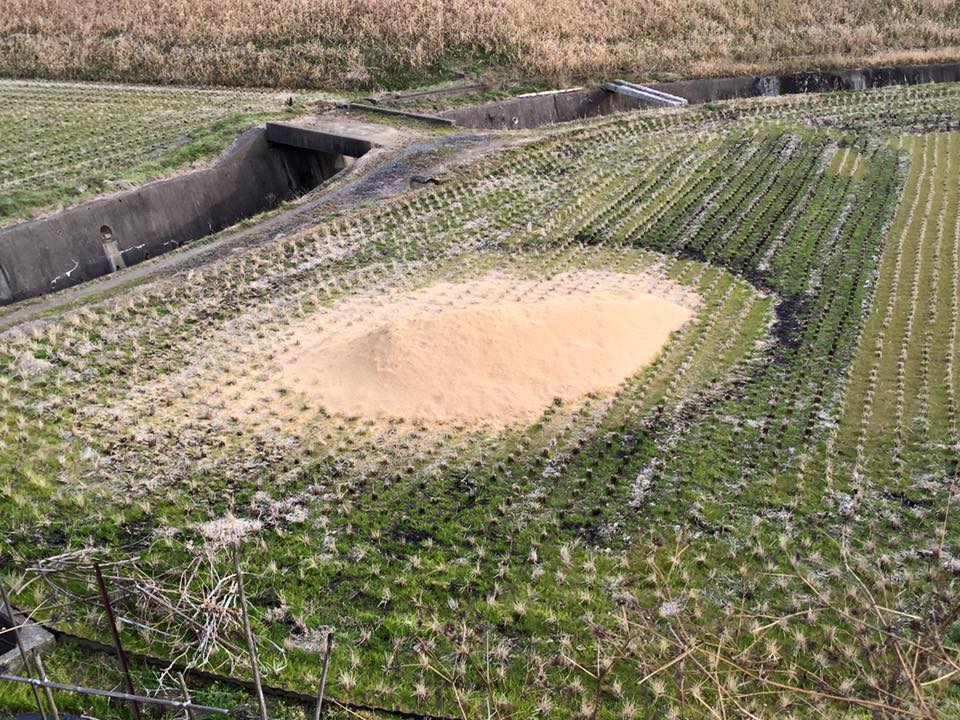
Tracing figure eights in Nara:
Following the clouds of my breath,
And those centuries dead.
Following the clouds of my breath,
And those centuries dead.
On the turntable: Buffalo Springfield, "Box Set"
Subscribe to:
Posts (Atom)