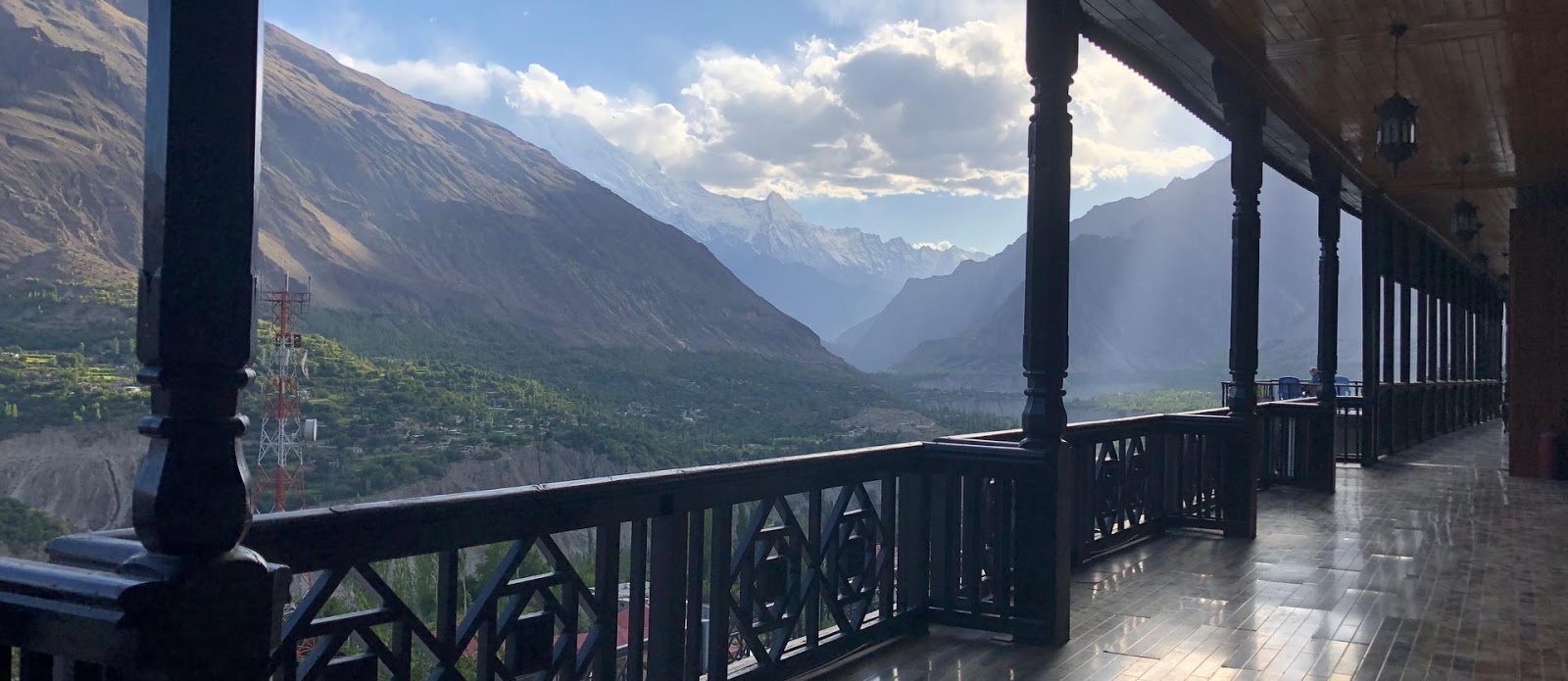
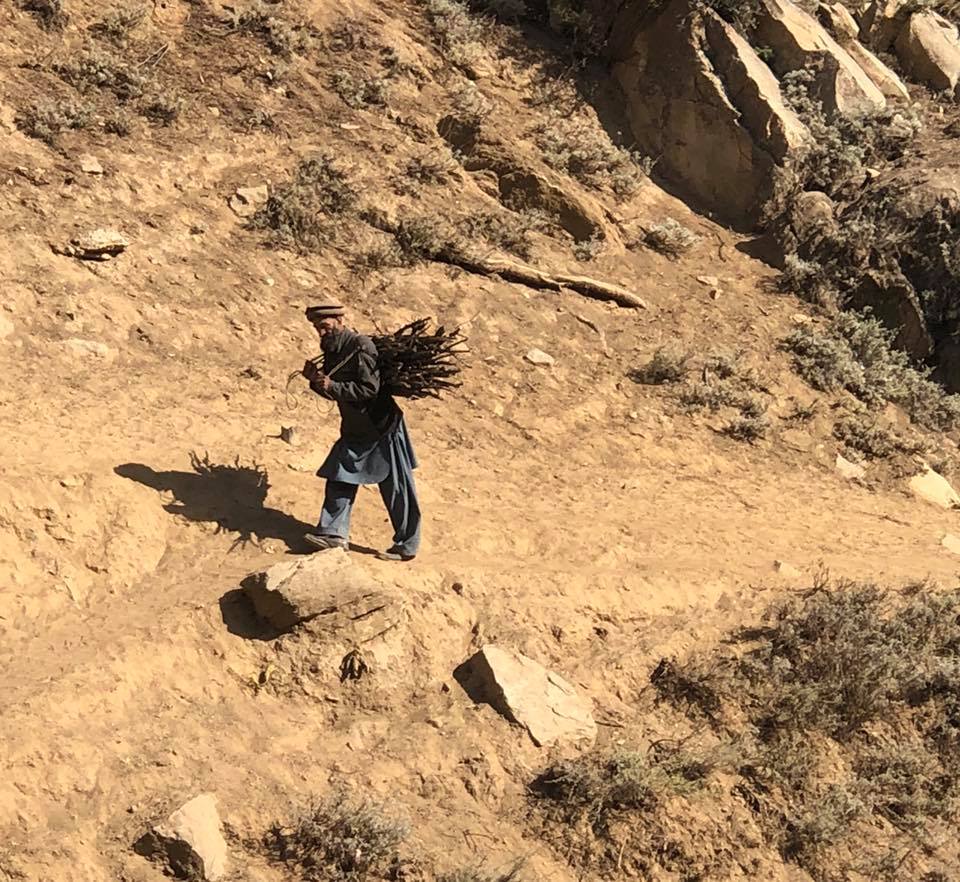
Showing posts with label Karakorum. Show all posts

Monday, November 23, 2026

A Passage to India: Zanskar


The usual manic traffic on the road east out of Leh.  Buddhist India gave birth to the land of interdependence, the land of coexistence, but people don't seem to know how to coexist. Me, me, me, me, me.  And the scrum lunges on, klaxons ever screaming.

Basgo Gompa looms above.  I'd later see it in a film as a location, and regret that we didn't stop.  But I suppose we can't stop everywhere, and all these Ladakhi gompa are stunning, especially if filmed well.  On the road below is a scene similarly cinematic, police circling around the husk of a recently burnt car.    


Alchi is an oasis, its narrow lanes shaded with poplars.  The temple is a beauty, with Hindu-style carved woodwork more familiar in the south, even as far south as Thailand, Laos. It bring a cross-media flourish to the already picturesque nature of Vajrayana architecture.  Hall after hall is stunning.  It is one of the most picturesque places I've seen, but naturally photos are not allowed. I wish I could overnight here.

Lamayuru sits in a long thin valley, a stream running through it. Poplars wave in the breeze. 
 This entire region looks like the moon. By now that's a cliche, but the color and texture of the landscape is truly unique.  And the gompa perched above all, perhaps the oldest in Ladakh.  Despite the out-of-breath elevation, climbing up and around these little man-made mountains never ceases to delight. 


I pass the afternoon reading on my veranda, drinking masala chai. The scene is repeated in the chill of the following dawn.  The sun takes such a long time to rise over the towering peaks of these narrow valleys, perhaps two full hours from first light to the warming caress of beams on one's cheek.   

The brakes of the lorries working the curves above sound like the whine of an abused dog.
 A field of wheat lies below my veranda. A woman sings to herself as she walks down the dirt path. 
The path is lined with rusting electrical poles, looking like the tridents of Shiva. 
Yet they've got no power running through them, no shakti.  

There seems to be more traditional clothing in the countryside. I finally feel like I've arrived in Ladakh . Out here, it's not as watered down by the Indian culture to the south and the administrative pressures to the west. 


The river valley we follow south is green and lush, until the walls hem in and we're on the moon again.  Canyons still in progress, fast-moving water hard at work, criss-crossed on iron bridges.  The road eventually rises into true Himalayan landscapes, impossibly high mountains, broad glacial valleys, scattered settlements of brave people somehow eking out a living.   

This feels like one of the remotest places of earth, another cliche.  It takes ages to wind to the top of Sirsir-la pass, a tad under 4800m.  We are the only vehicle here.  I get out to gaze down the long valleys to either side, buffeted by wind strong and cold. It takes an equally long while to wind back down, past a meadow of grazing yaks to a settlement far below at river level, nestled in the crotch of a confluence.  This village of Photoskar is almost eponymous.


Repeat again up the climb to Singe-la.  The land on the far side is unlike anything I've ever seen, an origami of spiky rocks jutting out and folding over and over upon itself. If I'm allowed to mix metaphors, it's a porcupinal landscape, each ridge the tail of a stegosaurus. The number of curves here is ridiculous, as the terrain forces us to drop vertically and radically down the pitch steep face.  And each curve presents a new angle, a new viewpoint, each equally dramatic.  More metaphors -- its all so symphonic, crescendoing until we arrive at another confluence and a busier road running through the opposing valley. We had stopped at the northern end the previous day, discussing the new road that will present a quicker trip to Zanskar to Leh.  But to have missed all that I've seen since morning! 

We have lunch in a shabby little shop in the village, sharing food with a pleasant couple from Agra, who are doing the trip by motorbike.  I had never realized the popularity of bikes here, but it makes sense, the appeal of being closer to the land.  The problem is being closer to all that murderous traffic.

Which is heavier now, but still reasonably few vehicles.  We'll leave them again not long afterward, following a side canyon which wends and bends before depositing us into Zanskar proper. The white rocks are a far cry from the hue of those on the pass above, a hue closer to that of chocolate chip cookie.   


The valley has more life due to the river at its center. Groups of people appear again and again, farming, cleaning clothes.  I read too late about Zangla Palace, and how it hosted Hungarian scholar Alexander Csoma de Kőrös, who compiled the world's first Tibetan-English dictionary.  Had I known I would've asked to stop and wander the abandoned site's empty chambers.  

Instead we carry on toward the Himalayas, which have returned.  If I could see past them I'd be looking at Lahore.  But the only settlement I see on this high plain is Padum, our base for the next two days. That is, if the ice sheet covering the peak just above hangs on that long.  


My legs need straightening, after eight hours spent at right angles.   I walk the high street of Padum, straight out of the wild wild west.  A long wall of mani stones stretched toward where the town ends.  In the opposite direction, I come to the ruins of the old Padum Gompa, its tiny main hall intact (but locked), but the surrounding village below looks to have been abandoned long ago.   As I move through its lanes, I pass a group of shady looking characters, which has all the look of a drug deal in progress, though I'm not sure due to the Muslim culture here.  Safe again on the main road, I'm passed by a convoy of wedding vehicles, as if a counterpoint.  Quiet roads again, trailed now by a pair of men which gets my guard up, until they overtake me and smile.  A very drunken man is coming from the other direction, and is collected by the two men, shouting and ranting as he is led to the safety of home.  Along the water's edge, I find the old Kushan Buddhist carvings I'd been seeking, dating to the 8th and 9th centuries, a combination of Gandhara and early Kashmiri artistic traditions.  I sit awhile with them, longing to follow the migration of Buddhist culture even further, which has become a sub-sect of my Silk Road journeys overall.  

In the morning, we drive up to the surrounding hills, to Karsha Gompa, after a quick detour to a new monastery unattractively modern, with a massive carpark for coaches. The old gompa is a delight, and I wander the Escher-like maze of stairs, popping in and out of rooms, sitting awhile with a group of country-bumpkin pilgrims  as they receive a blessing. 


Lunch is at a house in the village below. Yak pats are piled high against the walls of the courtyard, fuel for the winter ahead.    Ironically, the Gompa's head priest sits in the living room, playing with a cat.  He is called into another room to give a blessing here too, which delays lunch awhile.  Like most spaces in this part of the world, nearly every surface is carpeted, and it is all I can do not to stretch out for a nap in the warm sunlight coming through the windows.  Momos and noodles finally appear, delicious as always, but once again I reflect on the culinary limitations in these high regions where little can grow.  As if to prove it, our hostess at one point bursts out shouting and runs to the window.  A pair of yaks are eating the piles of grain collected in the courtyard to dry in the sun.  They display a surprising amount of dexterity as they hurdle the wall to escape the scolding.    

Bardan Gompa south of town sits on a rise above the river.  A priest is doling out containers of water to a handful of monklets collected in the carpark.  The weight proves too much for a few, so we help them cart the water up.  I'd read in a few sources that the dog here was pretty vicious, but the resident one must be a descendant, a young pup that licks at our heels as we pass.  From the courtyard, I look south along the river, wishing we could follow along the rough road toward Manali, following the Kushan Buddhists even farther.  They've left more carvings out they way, and the remote, hovering Phukthal Gompa looks beautiful in photos (and whose name is great fun to say).  


Instead, we head north the following day, stopping briefly at Sani Monastery to parallel its walls and look at the collection of old Kushan carvings collected and fenced to look like a Boot Hill graveyard.  Sitting on a flat plain, this too looks wild wild west, an old fort in the wilderness.  We meet again the country-bumpkin pilgrims of the previous day. The women in the group take turns load a heavy stone on their back, to carry during a  circumambulation of the courtyard.   They'll later make their way across the wetland toward to recently built Big Buddha statue, which gazes out toward the hills.     

The road north could be in Colorado, Wyoming, Montana.  The road climbs to a lookout point for the Drang-Drung Glacier, quickly receding into the high peaks above.  The sheer absence of glaciers is a frightening reminder of truly how fucked we are, and how we somehow don't care.    


I doubt the monks of Rangdum Gompa are chanting about that.  There are five of them, all in very advanced age, reciting mantras and performing a ceremony in the sunny courtyard.  We sit awhile and watch, as one monk blows through a conch, its sound emanating in all directions, including the one in which we are heading.  Within an hour, we enter the Sulu Valley...


On the turntable:  Stephane Grappelli and Yo-Yo Ma, "Anything Goes"       


Friday, November 20, 2026

A Passage to Ladakh: Nubra


There was a definitive increase in people around, on our last day in Leh, preparing for a marathon that would be held a few days hence. Luckily, we'd be leaving beforehand, but runners preparing for the altitude served as waypoints as we twisted our way upward out of town.

The land opened up dramatically as we traced the switchbacks.  At every turn, I pulled out my camera to try to capture the beauty, only for it be even more breathtaking around the next bend, and I'd pull out my camera again to try to capture the beauty.  This process repeated itself all the way to the 5359m Khardung La Pass.

The two guards poking their guns over a low concrete wall seemed a bit ineffectual against the selfie crowd jostling around the summit marker.  (They'd look even less effective amongst the massive crowds on our return over the weekend, where our vehicle nudged its way through what was essentially a parking lot.)  We too got our shots, then dropped rollercoaster-like over the opposite side.  The entire mountainside was dotted with those elaborately painted trucks of India, crawling their way upward.  While the road was broad enough to accommodate the traffic, the sight of the wreck of a car far below brought little comfort.  

We made a tea and pee stop at the Hor-lam Cafe, run by a friendly long-haired photographer who narrated how he was able to capture on film the elusive snow leopard, shots of which decorated the pleasant terrace. While we talked, an old woman never ceased making her way around the prayer wheel on a rise just above.  

Moving on. Long jagged cracks in the earth where rivers once lived, the eyes moving along them to see what was framed beyond.  In this way, I caught my first view of the waters of the Shyok, broad and running fast through the canyons, with an urgency spurred on by the high Karakorum that birthed them, K2 being the highest of all.      

We'd follow the river for the rest of the day, and later "camp" near her banks.  The dusty roads of Diskit enabled us to stretch our legs.  (Its name brought to mind, "disco biscuit."). There wasn't much to the higher town, but the lower tree-lined sections wound atmospherically between chortans and modest homes and small temples.  This could have been one of the small villages of Northern New Mexico, if one could paint in aspens and acequia.      


We decided to watch the sunset from the dunes north of town, but arriving there we found a horror show--mass tourism crossed with Mad Max.   Camel trains moved gracefully amongst the sands, but the surrounding  campsite was filled with partying Indians. A group of four sat upon a dune, their music blasting, or whatever passes for music with the young people these days.   

We popped into a tent where four Ladahki ladies swayed to a traditional dance, covered with turquoise and long flying cotton robes, and these curled up Santa shoes on their feet. We didn't stay long. 
The dances were basic, and we well knew how these things go, that it was only a matter of time before we were pulled into it. Besides, the whole place reeked of human waste, overflowing from the toilets about twenty meters away.
  A savage metaphor for the ongoing marginalization of the indigenous culture. 

Back outside, an array of archery and air guns seemed a mockery of the larger weaponry we'd seen as we passed earlier through a number of military camps, housing the men guarding borders that don't exist, borders penciled in by 
Europeans at a time before there even was an India or a Pakistan, or a unified China. It reminded me of Tibet's Everest Base Camp, a tent site in the middle of a broad open valley, ringed in by towering peaks.  Plus the obligatory monastery clinging to the steep hillsides above.
 

Our own digs were beneath this Diskit Gompa, a cozy little cabin upon whose broad porch I'd perch upon with books and masala chai, my eyes pulled time and again to surrounding mountainscape.   

We'd join this scenery on a morning hitting 4 degrees, despite the calendar still reading September.  Driving the valley was like traversing the walls of time.  In the dim light of dawn, I felt like I was in Japan, the surrounding hills wrongly unreachable. As full light came out, the rock faces showed themselves, reminders that you were hemmed in by walls, high, continuous walls. 
And in the places where they dropped, even bigger things appeared, coated in white.     


Amongst the dry hills I kept mistakenly making out petroglyphs on the road sides, so much did it remind me of New Mexico.  We followed the Nubra River now, toward its source at the Siachen glacier. This was Silk Road territory, where summer caravans once moved outward to Yarkand. If geopolitics allowed it, I could make my way to Skardu and the later Hunza, of which the scenery also reminded me, connected geologically if no longer politically.  

But today I'd satisfy myself with this valley, tracing the river along dusty roads, carting a lot of it away 
in my nostrils.  Road-building camps lined the desolate sections, while closer to towns, schoolgirls flagged rides.  The monks of Samstanling Gompa invited me in to watch them make a sand painting.  Lunch with the members of the Women’s Alliance of Nubra, a surreal meal in an old ramshackle farmhouse.  We expected demos of the local traditions, or at least some conversation, but we were merely fed and subsequently seen off.  


We kept following the river, just shy of the point where we'd get ourselves shot by "border" guards.  There a short hike up to Yarab Tso Lake, situated at the center of an ancient volcanic plug jutting from the river valley, marked with copious prayer flags that ringed its sacred waters.  A quick purifying soak of the feet would later be paralleled at a nearby hot spring.  The Indian tourists around the perimeter of the pool laughed at my expressions as I slowly glided my feet deeper into water as hot as I've ever felt.  I could only manage a minute or so, before pulling them out, red and steaming.   As I returned to our vehicle, I fell into conversation with an Israeli motorcyclist.  He was a soft and gentle guy, and I just couldn't picture him amongst the usual tougher sort often met in travel, freshly released from their conscripted military service.  When I asked what he was looking for, he shyly told me, "freedom."  "I hope you find it," I said, and he smiled broadly.  
 

The sun was dropping behind the peaks as we crossed the Taksha Iron Bridge and moved gingerly along a narrow path that reminded me of the jeep track up to Fairy Meadows, though nowhere near as perilous.  The waters were never more than a few meters below, but to overturn into the cold and fast water here would surely be fatal.  As we climbed on foot up toward Ensa Gompa, LYL and I joked about the shoddy workmanship of the team constructing a new set of concrete stairs toward the monastery above.  It proved a peaceful spot, with a tree-shaded courtyard and vast views from the upper buildings.  The temple apparently has but a single monk in residence, who brought us tea and biscuits to enjoy in the slowly dimming light.  


I awoke as dawn on the last day, to join the morning service at Diskit Gompa.  It was a surprisingly brisk climb up through the white washed buildings.  I found a place to sit, as the ever increasing sunlight began to warm me.  A boy monklet served butter tea, into which the resident monks dumped tsampa, creating a Himalayan version of breakfast cereal.  Upon finishing, the chanting began, and at some point, I dropped away into meditation, without really intending to.  My eyes naturally settled, lost focus, and I was gone awhile.  Past present future be damned, whatever, but these moments remind me of who I once was, though that "I" is ever changing, and doesn't exist anyway.  But I miss my old meditation practice, I miss being swept away by the spirit of sacred places...      


On the turntable:  Grateful Dead, "1970-09-18, Fillmore East"


Wednesday, November 18, 2026

A Passage to Ladakh: Leh


The Himalayas have been awake awhile already. But when the sun finally pops up over the Karakorum range, it first hits the prayer flags of Tsemo castle, bringing them all aglow.

I start most mornings in Leh atop the roof of Tsokar Retreat, bundled against the cold, a thermos of coffee just within reach.  I read with cold hands, the circulation only beginning when hit by the rays of sun.      

I pass a few days wandering the old part of town. Leh is pretty compact, so by lunchtime I'm usually back to Tsokar, reading in the garden.  Or drop into Haha Cafe, run by a woman from Shiga who has been in Leh for 18 years.  She's naturally surprised when I speak Japanese, and will occasionally toss a comment or a question my way when she passes my table.  


Repeatedly I find myself at the market, watching the shapes and faces pass by. Jamia Masjid holds court at one end. I drop in one day to admire its intricate woodwork, its carpets alive with color.  It seems more Tibetan than Islam. That sect's slow creep  into Ladakh is already three centuries old.  I had been expecting the region to be far more Buddhist, befitting its reputation as one of the last bastions of Tibetan culture.  So it was hardly surprising when I read that Ladakh is now forty-nine percent Muslim.   

Leh has some of the worst attributes of Indian culture now, namely traffic, noise, pollution. Only the pedestrianized streets felt safe. My twenty-year old guidebook called the old quarter at the base of Leh Palace the world's last remaining collection of traditional Tibetan houses.  What I walked through was an abandoned maze of structures crumbling back into the dust.  Even the two gompa just above were locked tight, and appeared to have been idle for some time.  The only movement was the thundering of a half dozen guesthouses being simultaneously hammered together.  The ruins which surrounded them are sure to share a similar fate.   


All the books I carried were written at least two decades before, be they guidebooks or travel narrative.  Such it was that I could move through the narrow streets like an old explorer, attempting to follow incomplete maps.  I moved through these arteries that radiated from the central market, marveling how it all looked like the backpacker towns I'd known back in the 90s, an oasis from the hardship of the road: cafes offering a semblance of western food; shops selling local art, clothing and statues; bookshops with English texts and irregular hours; DIY travel companies launching identical trips into the surrounding countryside.  I had loved this world three decades ago, and had thought it long replaced by digital known-it-all-ism.       

I pass part of an afternoon at the Central Asian Museum, looking like an old caravanserai, its tidy lawn shared with Tsas Soma, Ladakh's oldest mosque.  The museum reminds me of folk museums often found in rural Japan, as if local governments had called on all the old timers to empty their attics, with the relics to be centrally gathered and divided by theme. But the exhibits were a refresher on my broader Silk Road travels, names and photographs from all across the region.  It provided a hint of explanation for what I had initially considered a watering down of the Himalayan culture.  Leh had always been a crossroads for caravans heading across the glaciers to Yarkand, or west through impossibly high passes toward Baltistan, and all the other Stans west further still.  I climbed the steps to sit awhile on the uppermost veranda, looking over the market, and the dull brown peaks, while just across the lane, the Gurudwara Datun Sahib Ji stood white and pure, majestic like a Punjabi wedding cake.         


One afternoon, I caught a ride up Tsemo Hill, to poke around the old castle, climbing Escher-like steps up and around the paired monasteries. In the carpark, a group of boys sang and preened. The muezzin's echoed upward as I made my way down the trail to Namgyal Tsemo.  I had my own spiritual epiphany partway along.  I previously assumed reptiles couldn't live above 3000 meters, but here in front of me was a spotted lizard doing push ups on the rock.
 (Apparently, the venomous Himalyan Viper is often spotted around the 4000m Everest Base Camp.) The trial abutted at Leh Palace, itself like a Japanese castle with multiple staircases leading to empty rooms and a handful of exhibits.  The roof was the main draw for the selfie hordes, with fantastic views across town and the valley, second only to those offered from Tsemo above.  

My wife was happy to just doze and read in the room, but she did join me for meals: backpacker favorites at Gesmo Cafe; pseudo-Chinese at Chopsticks; faux-French at Bon Apetit.  Tibetan Kitchen was the highlight, itself an old cultural crossroads right out of the film Casablanca, somehow balancing the lively with the subdued, with people queuing across the courtyard in order to join in the action.   


On the turntable: Phish, "2009-08-16, Sarasota Springs, NY"


Monday, November 16, 2026

A Passage to Ladakh: Leh Valley


 It was a worrying sight. My wife, lying upon the bed with an oxygen mask affixed to her face. When she flashed me a peace sign, I knew her spirits were high, though not nearly as high as the 3500 meter elevation that had brought her to this state. It's never a good idea to fly into places of high altitude. Even as I write this, I regret that we hadn't undertaken the three day drive from Delhi, up through the Himalayas to this hotel room in Leh. 

We'd booked a group tour, but unbeknownst to us, we were the only clients on it.  Perhaps people were scared off by last year's terrorist strike in Kashmir, or the overall distressing state of geopolitical affairs worldwide. 
Our tour included a day in Delhi, taking in sights that we'd already seen, and in further hindsight, I wish we had flown into India a couple days earlier, allowing time to cover the old trade route through Manali, Jispa, Sarchu. 
I think this will always haunt me, this gap in the map.


But the flight in had its own appeal, cruising low over Himalayan peaks, mainly devoid of snow on this late summer day.  Yet the empty glacial valleys equally devoid of ice was a sight that should worry us all.  I scanned the cloudy skies to the north, hoping and failing at a glimpse of K2.  Then an abrupt left turn into the Leh Valley, whose surrounding hills housed villages surprisingly high, tell-tale due to the strips of green amidst the arid grey otherwise devoid of any vegetation.  At the base of these hills stood proud gompas, their cubist buildings coating the top of small hillocks that could only be ancient undersea volcanoes.   


Lai Yong rested and recovered over the next couple of days, while I visited the bigger monasteries a short hop from Leh. My guide Surya and I would leave early to avoid the crowds, thin on the ground at the tail end of the season.  When we did meet other westerners, they all seemed to be Israelis, motorbiking through the high terrain.  


The courtyard of Matho was all ours, and I sat quietly while Surya ran through an explanation of Tibetan Buddhism.  It was a good refresher as I hadn't been in this part of the world for eight years, nor had I read much about it during that time.  Surya had I shared a common background as yoga teachers, so I well appreciated his uniting Vajrayana with Vedenta, which further plugged some knowledge gaps.  We ducked in and out of multicolored temple halls, offset by the brilliant white of the higher Himalaya above.  The numerous thangka almost brought light to the dim halls, radiating colorful deities.  One small room was the seat of the Oracles, who would dazzle crowds during Matho's festival by leaping from roof to roof.  A new oracle was undergoing training, chanting and swaying before a trio of teachers.  We knelt before them, on a floor covered with grains brought by villagers to rest in the monastery until being recovered for planting the following spring.        

Thiksey Gompa rose across the valley like a mini Potala.  It was a steeper climb, tough going with my unacclimatized lungs.  There were a number of tourists about, far more than I'd seen anywhere else, each undergoing their own challenges with respiration.  The main Maitreya statue rose from a story below, with only its head and shoulders looming above us.  In another hall, a photo of the Dalai Lama propped upon a chair looked at first glance as if he were actually in attendance.  This apparition was repeated in all the gompa I'd visit, across the region.  The Dalai Lama summers for two months in Leh, and he'd departed mere hours before our own arrival.    


Stunning views from the roof were of a broad fertile valley, into which we dropped for lunch, into the oasis of the Cafe Cloud.  There was a basketball hoop beside the car park, and it only took a few shots before I was completely winded.  Shey Gompa was just up the tree-lined road, its importance dwarfed by the ruined fortress with which it shared space on the arid hillside.  The scale of the landscape was made evident from its heights, in this broad plain between two soaring ranges. The 1200 year old Dhyani Buddhas rock carvings along the road at the base of temple were a reminder that I was back on the Silk Road, leading to similar carvings in far-off Hunza to the west.  

I nearly didn't go to Hemis Gompa, as the tour company visits only during its famous festival every May. As we were the only clients on the tour, I was able to choose it over a walk in the Stok Valley nearby.  It was the perfect choice, as Hemis appeared in a good number of the books I'd read during the trip.  (I was amused that the Rimpoche who makes such a major appearance in Andrew Harvey's brilliant A Journey in Ladakh,  I would meet again as a young boy in Beyond the High Himalayas by William O. Douglas, with the reincarnated (and current) Rimpoche turning up in Tim Ward's The Great Dragon's Fleas.)   Besides the impressive collection of buildings, Hemis is rich in myth, allegedly housing some lost gospels of Jesus. The grounds are looked down upon by the hermitage of 13th century sage Gonbo Dorjey.  I opted out of this tough climb, visiting instead the museum in one corner of the courtyard.  I found myself quite taken with the peace work and travels of the aforementioned current Rimpoche, the 12th Gyalwang Drukpa.  To think that I'd nearly not visited this place, a quiet oasis amidst the waves of stone that crested steeply all around...


On the turntable:  Vangelis, "The Collection"


Friday, November 08, 2019

On the Karakorum: The Hunza


Wild Frontiers Adventure Travel posted a piece of mine on their blog, based upon a trip I took with their company:
On the Karakorum...
Edward J. Taylor travelled with us on our Kashgar to Kashmir Karakorum Adventure recently and wrote a series of blogs documenting his epic journey.
 In the beautiful Hunza valley in Pakistan, believed by many to be the setting for the mythical Shangri-la, Edward relishes in the local hospitality and ponders religious intolerance in remembrance of slain prophets...

Click the link to read more...


On the turntable: Joe Jackson, "Night and Day II"

Thursday, November 01, 2018

On the Karakorum: Lahore


Moving though the checkerboard farmland of the Punjab, counterbalanced by the near-desert of rutted arroyos and broad sandy riverbeds.  Above, the sky was the palest blue, feathered with the lightest of clouds.  The latter was spotted by raptors with great tails.  

One of the greatest of tales begins at our eventual destination, opening with a line immediately familiar to an older generation of schoolboys: 

"He sat, in defiance of municipal orders, astride the gun Zam Zammah on her brick platform opposite the old Ajaib-Gher - the Wonder House, as the natives call the Lahore Museum. Who hold Zam-Zammah, that 'fire-breathing dragon', hold the Punjab, for the great green-bronze piece is always first of the conqueror's loot."

Much of this loot was behind the cannon in the museum itself, spreading outward in four stubby wings that created a cross-like shape, betrayed not at all by the proud Victorian facade, and accented atop with steep Moghul domes.  Overall, the interior and its exhibits looked neglected, forlorn, and one almost expected to come across a scabies-ridden taxidermied tiger, snarling before the faded carpets, and a few token chipped Buddhas.  The second floor seemed almost a rebuttal to the first, merely photos and documents that betrayed a definitive anti-British tone.  These are always the best parts of these kinds of museums, the things that foreign guests are not meant to see, a nation's political medicine cabinet.

As the museum didn't take much time to get through, I lingered awhile in Kim's Book Shop, named of course for Kipling's novel quoted in the passage above.  Here too was a treasure trove of old titles, run by a man nearly of their generation.  I always enjoy meeting the owners of second hand book shop;  one feels that you already know their character after scanning their shelves.   

I eventually left to find a few of our group in conversation with three young men of college age. One of them was pontificating about the charms of his hometown of Quetta.  He did this with the enthusiasm of a politician (despite specializing in economics), entreating us repeatedly to come for a visit.  I didn't have the heart to tell him that Quetta had the reputation as the most dangerous place for foreigners in Pakistan, as the majority of the killings and kidnappings during the last decade had taken place there.  

The past is always a troubling subject in Asia, as memories are long in this part of the world.  But the eye continues to gaze forward.  Pakistan's tourist industry completely collapsed in the decades after the fall of the Twin Towers, and has yet to reassert itself.  Economic growth since has been slow, but there is some momentum with the emerging middle-class, a parallel found throughout the rest of Asia.   The newly moneyed are rarely sentimental, and the first to go are the monuments to history.  Our bus drove beneath the hulks of former Victorian glories, either abandoned or with marble facades impaled by gaudy signs and bound by power lines that crawled across their faces like vines.  Progress, whatever that means, had been superimposed upon the past, as Lahore moved unapologetically toward its destiny.  

We finally escaped the clangoring bustle of traffic to the safety of our hotel.  We were originally supposed to go out again later to have dine in a local haveli but had been bumped to allow for a party of government ministers (in a neat parallel with the same occurrence back at the Chini Bagh in Kashgar, when we'd been forced to shift our dates).  We ate instead in the hotel dining room, the buffet again allowing for some variety, though the taste of cumin still impressed upon us its versatility.   Ours was the lone group until a large wedding party arrived, each and every member clad in the outer limits of exotic beauty.  Though we never engaged them, it was a wonderful end to our time in Pakistan, and the eye was drawn again and again to the dark-eyes of the bride, the slim and sequined dandy of the groom, the bejeweled nose of the grandmother, the geometrically perfect rising slope of the uncle's moustache.  

Often in travel you feel like the locals going on about their business around you are extras in the story that is your trip.  But here I felt the extra, that my presence here was mere background to the more important business playing out throughout the room.  


In the morning we left the mothership of the main group, or should I say they left us.  They'd be crossing into India where after a couple of days in Amristar, they'd be enjoying an extended stay on the houseboats of Kashmir.  We of course had also intended to go, but during the visa process, Indian bureaucracy did what it does best. Despite having all my papers in order, the new Indian consul in Osaka decided he wanted to sit down with me and hear a bit more about the trip.  I was not given a specific time when this would occur, and after a few days passed, I worried that I wouldn't be able to get my visas for Pakistan and China, which were allegedly much more difficult.  So I returned to the Indians and told them I'd no longer be needed their services.  They were a bit surprised and I decided to twist the dagger by fibbing in saying that the one or two thousand dollars  I would have spent in their country I'd now be spending in Pakistan.     

So LYL and I would be spending this last day exploring the sights of Lahore.  We began on the outskirts of town at Jehangir's tomb, with a design now familiar after previous visits to similar Moghul monuments across the border.  But this one charmed in being far more run down and refreshingly unrestored.  Ironically there was more life, in the boys playing cricket on the stone lanes, in the adult men wrestling in the grass, in the families out enjoying a sunny morning.  A caretaker had to be roused to let us into the main tomb, as sweepers brushed the night's leaves and debris from its porticos and walkways.  The other buildings were in greater disarray and as such were less visited, creating the perfect rendezvous point for covertly cuddling couples.  

The old fort was in better condition, a large rambling spot that had hosted the Moghuls, Sikhs, and British, as they made their own personal mark.  We wandered in and out of its rooms, across its courtyards, peered into hidden nooks.  Our progress was slow due to being asked to pose for photos with dozens of families, which seemed to annoy our guide.  From then on it was strictly, "No Paparazzi!"   


I'd hoped to walk from there to the Old City, but we instead began from a gate on the opposite side, closer to the baths and market.  Once inside I could understand why, with all the motorbikes zipping through the narrow lanes.  When quiet it was timeless, a bazaar going about yet another day, the ordinary piling up as it has for centuries.  In contrast to the labyrinthian passages of the Royal Baths was the open courtyard of the Wazir Khan Mosque, delightfully tree-shaded and devoid of people.  We sat awhile on a bench, and enjoyed the cool marble beneath our feet.  It felt a nice respite from all the movement of the previous weeks.

But as always, there is more.  We pushed across town for a brief stop at the Shalimar Gardens, whose named brought to mind an R&B group from the 1980s.  And like that group, the garden's heyday had been brief, though it appeared in the book The Golden Oriole that I'd read not long afterward.  The fountains were dry, as was most of the grass, though it did provide locals a nice spacious counterpoint to the encroaching neighborhood pushing in from all sides.  


It seemed most fitting that we'd finish our time in Pakistan with a visit to the border closing ceremonies at Wagah.  I'd seen it on a travel show from the '90s, and it was even greater in person.  After the expected intense security checks (a bombing here had killed 60 in 2014), we were able to get good seats in the arena that had been built to offer the locals a free show every evening. Across the way, we saw the friends we'd left that morning climbing the grandstand on the Indian side.  I tried to wave, but a man sitting beside me told me it was better I didn't.

It was early, but already the music was pumping, the crowd beginning to come alive, with all the adrenal build up of a rock show.  I was impressed with how the organizers created an air of tension, which rose and rose with the appearance of the drummers, with the perpetually-spinning one-legged man, and peaked just as the soldiers came out to perform their silly walks.  It was impossible not to notice their height, each individual standing close to two meters tall, obviously cherry-picked from the ranks for intimidation purposes.  The biggest and burliest one Cleese-stepped his way to the border, and with a sideways glare twirled his moustache across at the Indians, who were probably doing the exact same thing.  Then, another soldier stepped up to the border, gave a quick salute and handshake to his Indian counterpart (I imagine under his breath a "Nice to see you Sanjay, how's the family?"), followed by the flags being lowered in a sort of competition to see whose would be last to furl.  As a coup de gras, the border gate was slammed shut, just as the sun left the sky.     

Our guide rushed us through the crowd in a parody of the quick walking soldiers earlier, to our car which rushed us to the airport and our flight.  Having two hours until check-in we sat in the near empty lobby, which slowly began to fill with an array of fantastically clad figures from throughout the Middle East.  Most impressive were the Bedouin types in their flow of robes. One old man came and gestured to me to allow him my seat, which I gave up.  Having spent the day in the muggy heat, I walked off to the handicapped toilet to prepare for the red-eye flight, washing off in the sink, changing into clean clothes.  When I returned, LYL too had lost her seat, as a whole clan of nomads had pushed in to overtake our bench.  Thus, we too pushed onward, eyes looking across the horizon of check-in desks, moving on the wing to whatever place comes next.       


On the turntable: Grateful Dead,  "1977/05/09 Buffalo War Memorial"
On the nighttable:  Peter Hopkirk, "The Great Game"

Wednesday, October 31, 2018

On the Karakorum: Taxila & Islamabad


There once was a town called Taxila,
That had all of the charm of Manila.
The showers'll scald you to death,
And avoid all deep breaths,
For the filth of the place is a killer.

Our hotel was an odd mix of clashing styles, as if the decor was bought at a rummage sale in the late '70s.  Still, it was a pleasure to have pizza for dinner after so many bowls of dal, and our room's placement reduced the ceaseless roar of the Grand Trunk Road to a dull throb. 

We joined its ranks in the morning.  Joining us in the long scurrying queues were bullocks and other livestock being transported to the morning market.  This culture of bringing meat to the table came piecemeal with the Muslim invasions that moved in on what had for centuries been a series of Buddhist kingdoms.  

The word "Gandhara" had always meant magic to me, signifying a conjoinder of Indic, Persian, and Greek civilizations. Years ago at the Tokyo National Museum I'd seen some of the beautiful standing Buddhas with their flowing Greek robes.  It was fitting to start once again from that perspective, to meander the broken bodies of the statuary in the small museum rising from a tidily manicured patch of shaded lawn.  Nearly every piece was damaged somehow, but at least they were here at all, saved somehow from destruction that accompanied the invading newcomers to the Valley.  As ever, it was the hands of the Buddhas that most impressed me, a commonality seen throughout Asian.  

Many of these artworks had been saved by being forgotten for centuries underground. We walked these next, moving along the narrow passage that had been Sirkap's main street.  Little remained but for symmetrical squares of brick that had once been the foundation of Bactrian houses.  A couple of ruined stupas allowed for some variety in the geometry. It was easy to find a parallel with Pompeii, which I'd visited earlier this summer, but here the damage proved that even when compared with nature, the devastation wrought by man can be much more thorough.    

There was a little bit more remaining at nearby Dharmarajika, namely a tall stupa rising from the grass.  Two pairs of feet stood shaded by ruined brick halls, but the towering figures they'd supported were long gone.  I relied on my own feet to wander beyond, climbing up a small rampart to look over the dusty plains and lows hills beyond.  It was little wonder the Buddhists felt comfort here, in a landscape familiar from their homeland of Bihar over a thousand kilometers west.      

    
Islamabad was much closer than that, and our first stop was at an outdoor food market for lunch.  The women in our party were the only to be seen here, but there was more variety in the costume of the local men dining around us, here in the nation's capital.  Afterward we were given some free time, so I wandered in search of some books I'd been looking for:  Human Records on Karakorum Highway, John Marshall's classic Buddhist Art of Gandhara, and the 2006 edition of Lonely Planet's Pakistan, the last one dedicated to this country and one growing increasingly rare, secondhand copies now going for $200 in the States.  Saeed Book Bank proved to be a treasure trove, many of its titles concerned with recently history in the region.  But the real find was Mr. Old Books, a second hand bookshop I found a block over, with literal stacks of travel narratives dating back to the earliest days of British involvement in the region.       

On the walk back to the hotel we dropped into Junaid Jamshed to buy some traditional duds for the evening.  Our guide seemed stunned to see us dressed so, and later, each and every one of the local men in the Lok Virsa Heritage Museum stopped me to take a photo together.  The museum itself was incredible, dedicated not only to Pakistan but to all the 'Stans, and the dozens of peoples that had shaped them over the centuries.  Being a former anthropology Master's student, I relished the detail and the wealth of what was presented.  Most of all, I began to envision a future visit to meets the Tajiks and Kyrgyzs.  Out in front of museum, a quartet was playing through a series of qawwali songs, sung with an intense passion and beauty by a large man whose dexterous dance moves betrayed his size.  

The sun was setting as we climbed the steps to the Shah Faisal Mosque, named for the former Saudi king who'd donated the funding.  The four towering minarettes framed the massive courtyard and worship space, all bustling on this Friday eve.  Compared to most mosques in Central Asia, the look was very modern, as if Escher had constructed a university in California, but there was peace to be found in its beauty.  I wandered off from my group, seeking anonymity in my shalwar kameez, and stood awhile watching some boys, similarly clad, played cricket on the lawn below.  

The peace of this night continued, as we dined on divans before the partially restored ruins of a Hindu temple.  This village on the outskirts of the city was attempting to reclaim its older heritage, and its most overt expression was in the amazing meal we had here, the light continuing to fade, the music wafting up.  It was most pleasant meal of the entire trip.  Islamabad is a planned city, and a very modern one, dating only to the 1960s.  It looked like Colombo, like Delhi, a South Asian capital city with broad tree lined avenues and spacious homes for the wealthy.  Yet some of this money had been earmarked for cultural preservation, and as such, I found it very attractive indeed.  I'd love to spend a longer period here, exploring the riches of such an intriguing part of the world.


On the turntable: Grateful Dead, "1974-03-23 Cow Palace"
On the nighttable:  George Orwell, "My Country Right or Left"

Tuesday, October 30, 2018

On the Karakorum: Huzara


The Indus continued to run rough and wild, with dodgy looking rope bridges and even a flying fox or two.  The KKH that ran alongside this stretch seemed thus inspired, rutted and crumbling far more than it had up until here.  It was closer to how I'd imagined the road to be, which I first saw in a handful of travel programs made in the 1990s, the last decade when travel used to be an adventure.  

Though the town where we stopped for lunch had some lingering traces of it, mainly in the faces of the locals who didn't look too happy that we were here.  This town (whose name I can't seem to recall, nor find) and Gilgit were the only places in Pakistan where I didn't feel welcome.  Little wonder, for it was from here that the Taliban had launched their fatal attack on Nanga Purbat base camp in 2013.  I was projecting perhaps, but I was certain that some of these scowling men may have had a hand in the event and had gotten away clean.  I wouldn't say that I ever felt unsafe, finding comfort in the fact that there had been no kidnappings nor slaying of foreigners since that same year, 2013, though when I expressed this very point to one of the Englishmen in our group, he replied that this was because foreigners no longer come. 

It did feel pretty wild west out here.  A jeep rolled by, unsafely loaded high, with a rough looking character clinging to the back. We passed through an abandoned village (which might be a tourist site in five hundred years), then pulled into a military checkpoint.  We'd be leaving the KKH here, to follow a road up to the Babusar Pass.  This road had always been somewhat unsecure and prone to violence.  Rather than Taliban it was more village vs. village, as vendettas ran high here.  We were warned to be careful what we photographed.  Then an armed guard climbed into a literal shotgun seat, and off we went, curling through the turns that passed between farms and hamlets, their fields long bare since winter comes early up here.  The steady climb took its toll on the engine, and our driver stopped awhile to cool it down, spraying water into the bonnet.  This seems to be common practice here, as a number of other drivers followed suit.  We disembarked to stretch our legs in a small walled compound with a few food stalls, under the constant stare of some hard looking locals.  They in turn were under the gaze of an M60 mounted onto the back of a small SUV, its turret pointing between the shoulders of two soldiers, the gunman asleep in the back.

After a few more twists, we reached the pass, as the wind kicked up into gusts that carried with them frozen rain.  We arrived just as it broke, and the peddlers selling from under tarps and upon blankets rushed for shelter.  Low-land tourists seemed to relish a weather unique to them, and as ever, called out to us to be photographed.  The road on the opposite side was broader, thankfully, with the harvested land in the valley below striated white.  We cruised along this high plateau, passing a number of high altitude lakes.  Finally, the Kaghan Valley appeared.  

Unlike the deep river cut V of the Hunza, the valley was carved broad and round, with the steady precision of ancient glaciers. It was lush and green in natural way, unlike the man-made irrigated paradise of the Hunza.  Life here too seemed less sedentary, with sheep and motorbikes and the tell-tale yurt.  Boys stood beside the road selling eggs, and one, in an act of poor business acumen, actually chucked one at us as we raced by.  At the other end of the scale, an entire town seemed to be sprouting up beside a bend in the river, as workmen built a series of hotels into existence, brick by brick.


Nowhere was more beautiful than at Naran, where we pulled up for the night.  The grounds of our hotel were open and spacious, tucked into the confluence where a glacial fed stream met the Kunhar river.  In the morning I watched an assemblage of people toting firewood, piled inconceivably high upon their heads.  We had a quick wander through Naran itself, which served as a staging area for trekkers heading further on.  Young men in jeeps called out with rides up to the glaciers, and and the town's far end, Kochi nomads were in the act of breaking their summer camps, prior to heading south.  

It was a bucolic ride, the scenery never short of breathtaking.  We felt the building up of heat at a lunch stop, and by the time we arrived in Abbottabad  it was in full roar.  During a petrol stop I got out to have a pee, and as such I may have been the first American boots on the ground since Osama bin Laden's killing here in 2011. The town hosts a handful of military camps, which makes bin Laden's choice of hideout even more brazen, under the very eyes of those looking for him.  It was stated that no Pakistani officials knew beforehand of the raid that killed him, but the proximity to the military bases made this hard to believe, as the helicopters flying in and out would have certainly been detected.  As it is, the Pakistan government was wise to destroy his compound soon afterward, to prevent it from becoming an Islamic shrine.

The land was flattening, and for the first time in weeks, no mountains could be seen on the horizon.  As the sun was settling in to the west, a long line of lorries were parked in a river, waiting their turn to lose the day's dust.  Not much further on, we rounded a turn into a snarl of screaming machinery that was the Grand Trunk Road.  We had arrived in the Punjab and the KKH was no more.  


On the turntable:  "Rushmore (Sdtk)"